• Research
  • About
  • Experts
Carnegie India logoCarnegie lettermark logo
{
  "authors": [],
  "type": "pressRelease",
  "centerAffiliationAll": "",
  "centers": [
    "Carnegie Endowment for International Peace"
  ],
  "collections": [],
  "englishNewsletterAll": "",
  "nonEnglishNewsletterAll": "",
  "primaryCenter": "Carnegie Endowment for International Peace",
  "programAffiliation": "",
  "programs": [],
  "projects": [],
  "regions": [
    "Middle East",
    "Egypt"
  ],
  "topics": [
    "Political Reform",
    "Democracy"
  ]
}
REQUIRED IMAGE

REQUIRED IMAGE

Press Release

Press Release: New Carnegie Analysis on Egypt’s Constitutional Amendments

Link Copied
Published on Mar 23, 2007

FOR IMMEDIATE RELEASE: March 23, 2007

In advance of Monday's public referendum in Egypt on the controversial constitutional amendments introduced by President Mubarak, experts from the Carnegie Endowment for International Peace today released new analyses of the amendments and their potential impact on Egyptian politics and democratic reform.

The extensive amendments have sparked a political battle in Egypt between the government, led by President Hosni Mubarak, and Egypt 's largest opposition movement, the Muslim Brotherhood. Mubarak has defended the constitutional amendments as giving greater powers to the parliament and cabinet, as well as providing increased opportunities for licensed political parties to win seats in parliament. Carnegie scholars raise concerns about the amendments, noting that while they appear to offer liberalizing reforms, many of the changes are actually more restrictive than previous constitutional provisions.

In Egypt's Controversial Constitutional Amendments: A Textual Analysis, Senior Associates Nathan J. Brown and Michele Dunne point out that the amendments actually lessen judicial supervision of elections, bypass human rights protections, empower the president to dissolve the parliament, and prevent the Muslim Brotherhood from forming a political party

In addition, Senior Associate Amr Hamzawy provides an analysis of why the amendments are being made now in Egypt's Controversial Constitutional Amendments: Political Motivations and Implications. He argues that the government hopes to restrain the Muslim Brotherhood, divide Islamist and secular opposition movements, and create a new set of constitutional tools to further entrench its hold on Egyptian politics.

Also available is an Appendix with the full text of the proposed amendments in Arabic and excerpts in English, compiled and translated by Research Assistant Dina Bishara.

Notes:

  1. To read the analyses and appendix, please visit: www.carnegieendowment.org/publications/index.cfm?fa=view&id=19075&prog=zgp&proj=zdrl,zme
  2. For more information about the Carnegie Endowment's Middle East Program, visit: www.carnegieendowment.org/middleeast
  3. Amr Hamzawy is a senior associate in the Democracy and Rule of Law Project at the Carnegie Endowment. He is a noted Egyptian political scientist whose research focuses on the changing dynamics of political participation in the Arab world, and the political role of Islamist movements.
  4. Nathan J. Brown is a senior associate at the Carnegie Endowment and is also professor of political science and international affairs and director of the Middle East Studies Program at the George Washington University.
  5. Michele Dunne is a senior associate at the Carnegie Endowment and the editor of the Arab Reform Bulletin. She was formerly a specialist at the State Department and White House on Middle East affairs.
  6. Press Contact: Trent Perrotto, 202/939-2372, tperrotto@ceip.org
  7. The Carnegie Endowment for International Peace is a private, nonprofit organization dedicated to advancing cooperation between nations and promoting active international engagement by the United States. Founded in 1910, its work is nonpartisan and dedicated to achieving practical results.
Political ReformDemocracyMiddle EastEgypt

Carnegie India does not take institutional positions on public policy issues; the views represented herein are those of the author(s) and do not necessarily reflect the views of Carnegie, its staff, or its trustees.

More Work from Carnegie India

  • Article
    Risk and Retaliation: Israel, Iran, and the Evolving Situation in West Asia

    An Israeli response to Iran’s October 1 attack is imminent. The key question is of its intensity and potential fallout, both within Iran, in terms of nuclear security policy changes, and across the broader region. The coming days are likely to reshape West Asia irreversibly.

      Gaddam Dharmendra

  • REQUIRED IMAGE
    Commentary
    Is U.S. Foreign Policy Too Hostile to China?

    Experts weigh in on whether the United States is too hostile toward China.

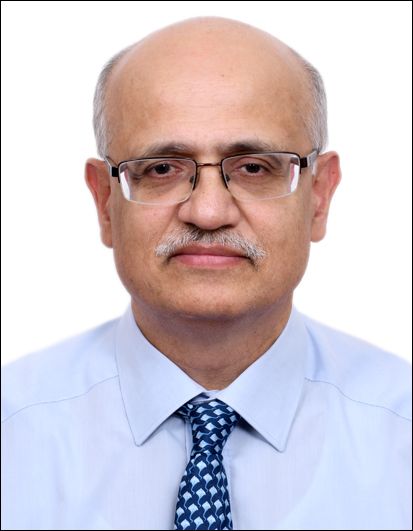
      Stephen Wertheim, Evan S. Medeiros, Vijay Gokhale

  • Paper
    India’s Sustained Economic Recovery Will Require Changes to Its Bankruptcy Law

    As India’s economy recovers from the coronavirus pandemic, Indian businesses need efficient financial structures to regain their ground. Key reforms to India’s Insolvency and Bankruptcy Code could fill these gaps.

      Anirudh Burman

  • Paper
    Cross-Border Data Access for Law Enforcement: What Are India’s Strategic Options?

    Access to cross-border data is an integral piece of the law enforcement puzzle. India is well placed to lead the discussions on international data agreements subject to undertaking necessary surveillance reforms.

      Smriti Parsheera, Prateek Jha

  • Article
    The BRI in Post-Coronavirus South Asia

    After the coronavirus pandemic wanes, how will China’s reorientation of the Belt and Road Initiative to address global health concerns influence its relationships with South Asian countries?

      Deep Pal, Rahul Bhatia

Get more news and analysis from
Carnegie India
Carnegie India logo, white
Unit C-4, 5, 6, EdenparkShaheed Jeet Singh MargNew Delhi – 110016, IndiaPhone: 011-40078687
  • Research
  • About
  • Experts
  • Projects
  • Events
  • Contact
  • Careers
  • Privacy
  • For Media
Get more news and analysis from
Carnegie India
© 2026 Carnegie Endowment for International Peace. All rights reserved.