

Article
This piece argues that India’s central challenge is not managing a single flashpoint but resolving the underlying tension between expansion and institutional coherency of the BRICS grouping.
Vrinda Sahai
{
  "authors": [],
  "type": "pressRelease",
  "centerAffiliationAll": "dc",
  "centers": [
    "Carnegie Endowment for International Peace"
  ],
  "collections": [],
  "englishNewsletterAll": "ctw",
  "nonEnglishNewsletterAll": "",
  "primaryCenter": "Carnegie Endowment for International Peace",
  "programAffiliation": "SAP",
  "programs": [
    "South Asia"
  ],
  "projects": [],
  "regions": [
    "North America",
    "United States",
    "China"
  ],
  "topics": [
    "Military",
    "Foreign Policy",
    "Nuclear Policy"
  ]
}
REQUIRED IMAGE
FOR IMMEDIATE RELEASE: June 22, 2007
- NEWS RELEASE -
WASHINGTON, June 22--In a provocative new policy brief, Ashley J. Tellis challenges the conventional wisdom that China’s antisatellite test (ASAT) was a protest against U.S. space policy, arguing instead that it was part of a loftier strategy to combat U.S. military superiority and one that China will not trade away in any arms-control regime.
Far from a response to assertive U.S. space policies, Tellis contends in Punching the U.S. Military’s “Soft Ribs”: China’s Antisatellite Weapon Test in Strategic Perspective that the ASAT test was part of a more ambitious goal—namely defeating superior U.S. conventional forces, both in a potential war over Taiwan, as well as other long-term, geopolitical scenarios. The author states that Chinese analyses of U.S. military operations since Dessert Storm concluded that U.S. military might depends inordinately on space-based systems for its operational effectiveness and hence must be targeted if China is to be able to stand up to the enormity of U.S. conventional military power.
Key conclusions:
Notes:
###
Carnegie India does not take institutional positions on public policy issues; the views represented herein are those of the author(s) and do not necessarily reflect the views of Carnegie, its staff, or its trustees.

This piece argues that India’s central challenge is not managing a single flashpoint but resolving the underlying tension between expansion and institutional coherency of the BRICS grouping.

Vrinda Sahai

A partnership between India, a country of subcontinental size, and Africa, a continent of fifty-four countries, may seem asymmetric until one notes that both are home to nearly the same number of people—1.4 billion. This essay spells out the existing challenges to the partnership, its optimal potential, and the possible pathways to realize it over the next quarter-century.

Rajiv Bhatia

The U.S.–India semiconductor cooperation story is well-stocked with top-level strategic intent. What remains unresolved, however, are some underlying challenges that will determine whether the cooperation actually functions. Three such friction points stand out.

Shruti Mittal

The India–EU Free Trade Agreement (FTA) is shaping up to be one of the most consequential trade negotiations, both economically and strategically. But, what’s in the agreement, what’s missing, and what will determine its success in the years ahead
Vrinda Sahai, Nicolas Köhler-Suzuki
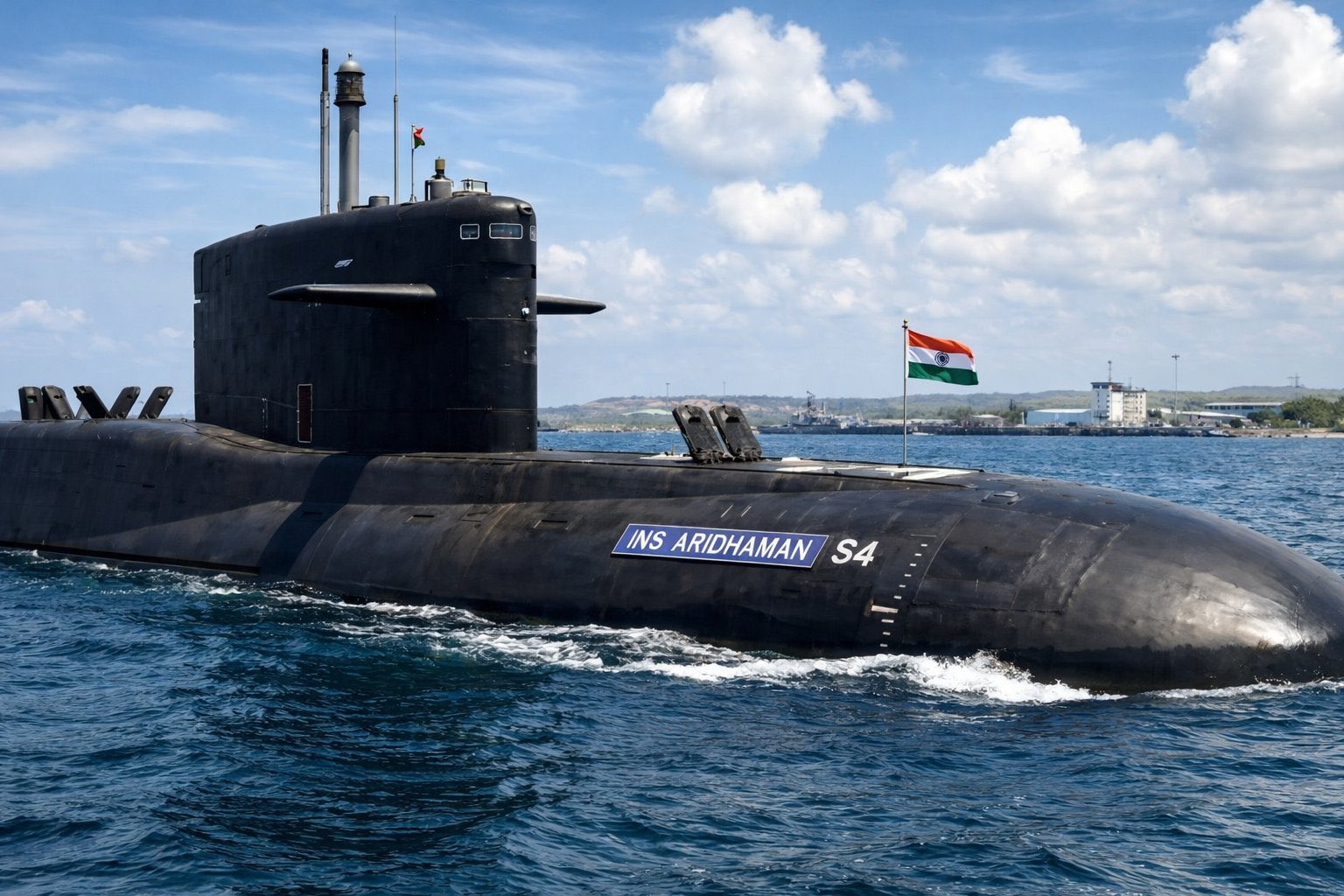
The induction of INS Aridhaman, which features several technological enhancements, now gives India the third nuclear ballistic missile submarine to ensure continuous at-sea deterrent.

Dinakar Peri