• Research
  • About
  • Experts
Carnegie India logoCarnegie lettermark logo
{
  "authors": [],
  "type": "pressRelease",
  "centerAffiliationAll": "dc",
  "centers": [
    "Carnegie Endowment for International Peace"
  ],
  "collections": [],
  "englishNewsletterAll": "ctw",
  "nonEnglishNewsletterAll": "",
  "primaryCenter": "Carnegie Endowment for International Peace",
  "programAffiliation": "russia",
  "programs": [
    "Russia and Eurasia"
  ],
  "projects": [],
  "regions": [
    "Central Asia"
  ],
  "topics": [
    "Security"
  ]
}
REQUIRED IMAGE

REQUIRED IMAGE

Press Release

Press Release: Sufism in Central Asia - Force for Moderation or a Cause of Politicization?

WASHINGTON, June 7--Sufism—a mystical form of Islam that has flourished in the Muslim world for centuries—has enjoyed a strong revival in Central Asia.

Link Copied
Published on Jun 7, 2007

FOR IMMEDIATE RELEASE: June 7, 2007


- NEWS RELEASE -


WASHINGTON, June 7--Sufism—a mystical form of Islam that has flourished in the Muslim world for centuries—has enjoyed a strong revival in Central Asia.  In a new Carnegie Paper, Sufism in Central Asia: A Force for Moderation or a Cause of Politicization? , Martha Brill Olcott explores Sufism’s potential to become a political movement in Central Asia by analyzing the movement’s history and current leaders in Central Asia, particularly Uzbekistan.

The future role Sufism will play in Central Asia is dependent on both secular and religious circumstances.  Olcott contends that political leaders will require a political subtlety that has been lacking in recent decades in order to construct a reasonable balance between Sufis and fundamentalists.

Olcott also argues that while Sufism currently poses little threat to the secular ideology of Central Asian states, there is potential for a dangerous backlash if governments openly try to use Sufi ideology as a way to gain support.

Notes:

  1. To read this Carnegie Paper, go to www.centralasianvoices.org/research-analysis-archives.cfm  
    Direct link to the PDF:
    http://www.carnegieendowment.org/files/cp84_olcott_final2.pdf 
  2. Martha Brill Olcott is a senior associate in the Russian and Eurasian Program at the Carnegie Endowment, directs the Central Asian Voices website, and co-directs the Carnegie Moscow Center Project on Religion, Society, and Security in the former Soviet Union. She specializes in Central Asia and the Caucasus and is the author of Central Asia’s Second Chance (Carnegie, 2005). 
  3. Sufism in Central Asia: A Force for Moderation or a Cause of Politicization? , is the third paper in an ongoing project for a forthcoming book on Islam in Central Asia. 
  4. For more information about the Carnegie Endowment’s Russian and Eurasian Program, visit: www.carnegieendowment.org/Russia   
  5. The Central Asian Voices Portal is a multilingual website featuring timely analysis of regional issues and a forum enabling the exchange of ideas among policy makers, analysts, journalists, bloggers, and informed readers across the globe www.centralasianvoices.org 
  6. Press Contact: Jessica Jennings, 202/939-2265, jjennings@ceip.org   

The Carnegie Endowment for International Peace is a private, nonprofit organization dedicated to advancing cooperation between nations and promoting active international engagement by the United States. Founded in 1910, its work is nonpartisan and dedicated to achieving practical results.

###

SecurityCentral Asia

Carnegie India does not take institutional positions on public policy issues; the views represented herein are those of the author(s) and do not necessarily reflect the views of Carnegie, its staff, or its trustees.

More Work from Carnegie India

  • Commentary
    The Impact of U.S. Sanctions and Tariffs on India’s Russian Oil Imports

    This piece examines India’s response to U.S. sanctions and tariffs, specifically assessing the immediate market consequences, such as alterations in import costs, and the broader strategic implications for India’s energy security and foreign policy orientation.

      Vrinda Sahai

  • Article
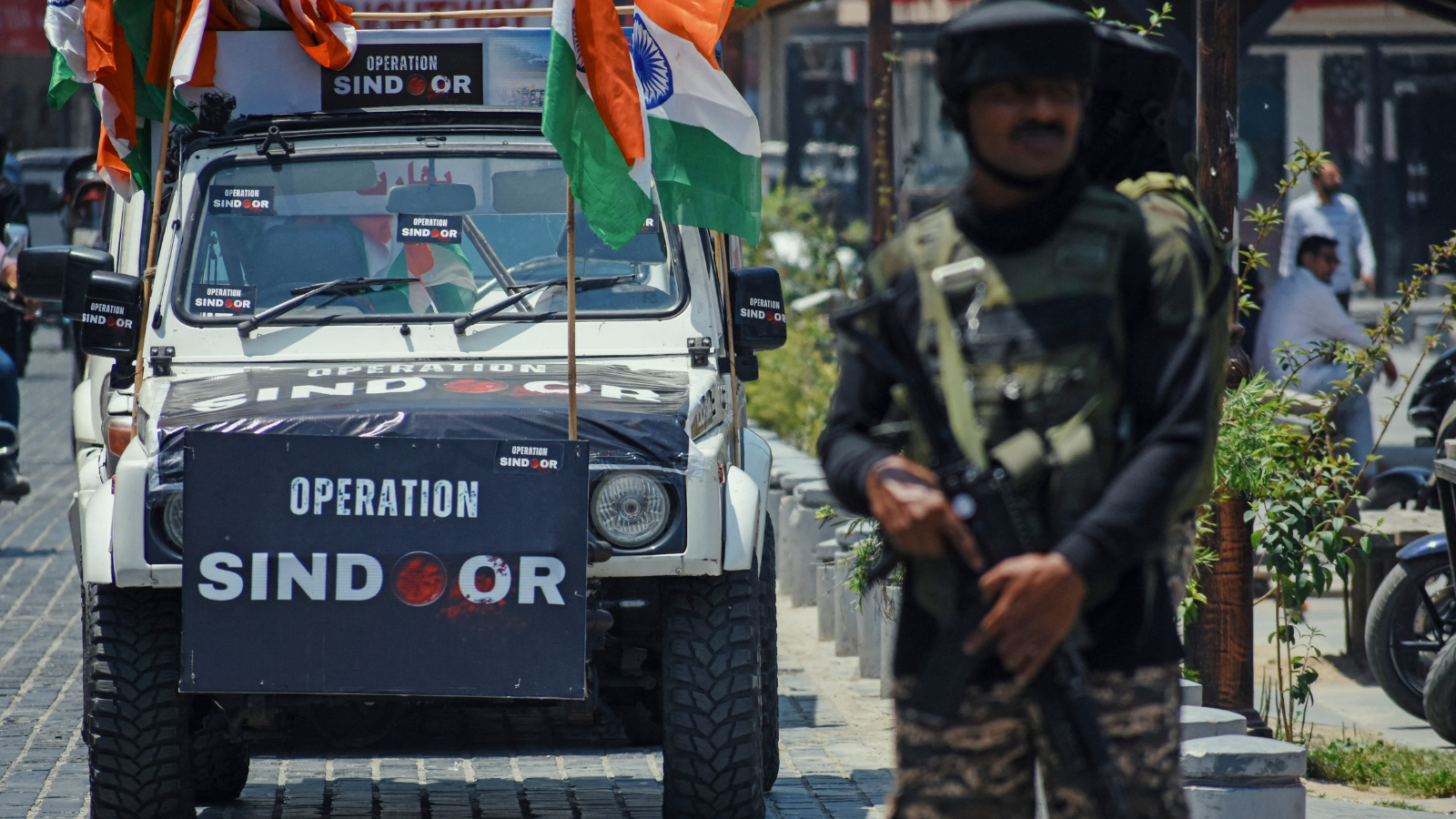
    Military Lessons from Operation Sindoor

    The India-Pakistan conflict that played out between May 6 and May 10, 2025, offers several military lessons. This article presents key takeaways from Operation Sindoor and breaks down how India’s preparations shaped the outcome and what more is needed to strengthen future readiness.

      Dinakar Peri

  • Book
    India and the Sovereignty Principle: The Disaggregation Imperative

    This book offers a comprehensive analysis of India's evolving relationship with sovereignty in a complex global order. Moving beyond conventional narratives, it examines how the sovereignty principle shapes India's behavior across four critical domains—from traditional military power to contemporary data governance.

      Rudra Chaudhuri, Nabarun Roy

  • Article
    Hidden Tides: IUU Fishing and Regional Security Dynamics for India

    This article examines the scale and impact of Chinese IUU fishing operations globally and identifies the nature of the challenge posed by IUU fishing in the Indian Ocean Region (IOR). It also investigates why existing maritime law and international frameworks have struggled to address this growing threat.

      Ajay Kumar, Charukeshi Bhatt

  • Book
    Violence and Development Along the India-Pakistan Border in Jammu and Kashmir

    This book examines the impact of cross-border violence on communities living along the Line of Control and the International Border in Jammu and Kashmir, India.

      Deep Pal, Surya Valliappan Krishna, Saheb Singh Chadha

Get more news and analysis from
Carnegie India
Carnegie India logo, white
Unit C-4, 5, 6, EdenparkShaheed Jeet Singh MargNew Delhi – 110016, IndiaPhone: 011-40078687
  • Research
  • About
  • Experts
  • Projects
  • Events
  • Contact
  • Careers
  • Privacy
  • For Media
Get more news and analysis from
Carnegie India
© 2026 Carnegie Endowment for International Peace. All rights reserved.