

In The Media
Jessica Tuchman Mathews
{
  "authors": [
    "Jessica Tuchman Mathews"
  ],
  "type": "other",
  "centerAffiliationAll": "dc",
  "centers": [
    "Carnegie Endowment for International Peace"
  ],
  "collections": [],
  "englishNewsletterAll": "menaTransitions",
  "nonEnglishNewsletterAll": "",
  "primaryCenter": "Carnegie Endowment for International Peace",
  "programAffiliation": "MEP",
  "programs": [
    "Middle East"
  ],
  "projects": [],
  "regions": [
    "Middle East",
    "Iraq"
  ],
  "topics": [
    "Foreign Policy"
  ]
}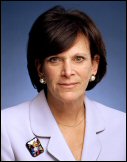
Source: Getty
By tacitly conceding that there has been no political progress in Iraq since the launch of the surge, Mr. Bush admits it has failed, but asks for more time. He raises some important fears of the consequences of withdrawal (and some wildly exaggerated ones), while saying nothing about the positive reasons to keep on trying. That is what the upcoming debate must address: more time to achieve what?
Source: Carnegie Endowment

The purpose of the surge was an enlarged security force so that, as the president said, over time, “daily life will improve, Iraqis will gain confidence in their leaders, and the government will have the breathing space it needs to make progress.” That progress was to include a raft of fundamental political changes. Al Qaeda was a relatively minor factor. (“As we make these changes, we will continue to pursue al Qaeda.… Al Qaeda is still active in Iraq.”) Until midsummer, the administration insisted that the escalated military effort was not to reduce violence per se, but to reduce it because political reconciliation would follow.
To continue reading, click on the link above for the full text of this Carnegie publication.
This is a web-only publication.
About the Author
Jessican Tuchman Mathews was appointed president of the Carnegie Endowment in 1997. Her career includes posts in the executive and legislative branches of government, in management and research in the nonprofit arena, and in journalism.

Distinguished Fellow
Mathews is a distinguished fellow at the Carnegie Endowment for International Peace. She served as Carnegie’s president for 18 years.
Recent Work
Jessica Tuchman Mathews
Jessica Tuchman Mathews
Carnegie India does not take institutional positions on public policy issues; the views represented herein are those of the author(s) and do not necessarily reflect the views of Carnegie, its staff, or its trustees.

After the chill in ties between 2020 and 2024 that brought India–China relations to their lowest point in several decades, the two countries have engaged each other afresh. This paper argues that there are predominantly four imperatives guiding India’s approach to China, and they exist in an order of priority.

Saheb Singh Chadha

This piece argues that India’s central challenge is not managing a single flashpoint but resolving the underlying tension between expansion and institutional coherency of the BRICS grouping.

Vrinda Sahai

A partnership between India, a country of subcontinental size, and Africa, a continent of fifty-four countries, may seem asymmetric until one notes that both are home to nearly the same number of people—1.4 billion. This essay spells out the existing challenges to the partnership, its optimal potential, and the possible pathways to realize it over the next quarter-century.

Rajiv Bhatia

The India–EU Free Trade Agreement (FTA) is shaping up to be one of the most consequential trade negotiations, both economically and strategically. But, what’s in the agreement, what’s missing, and what will determine its success in the years ahead
Vrinda Sahai, Nicolas Köhler-Suzuki
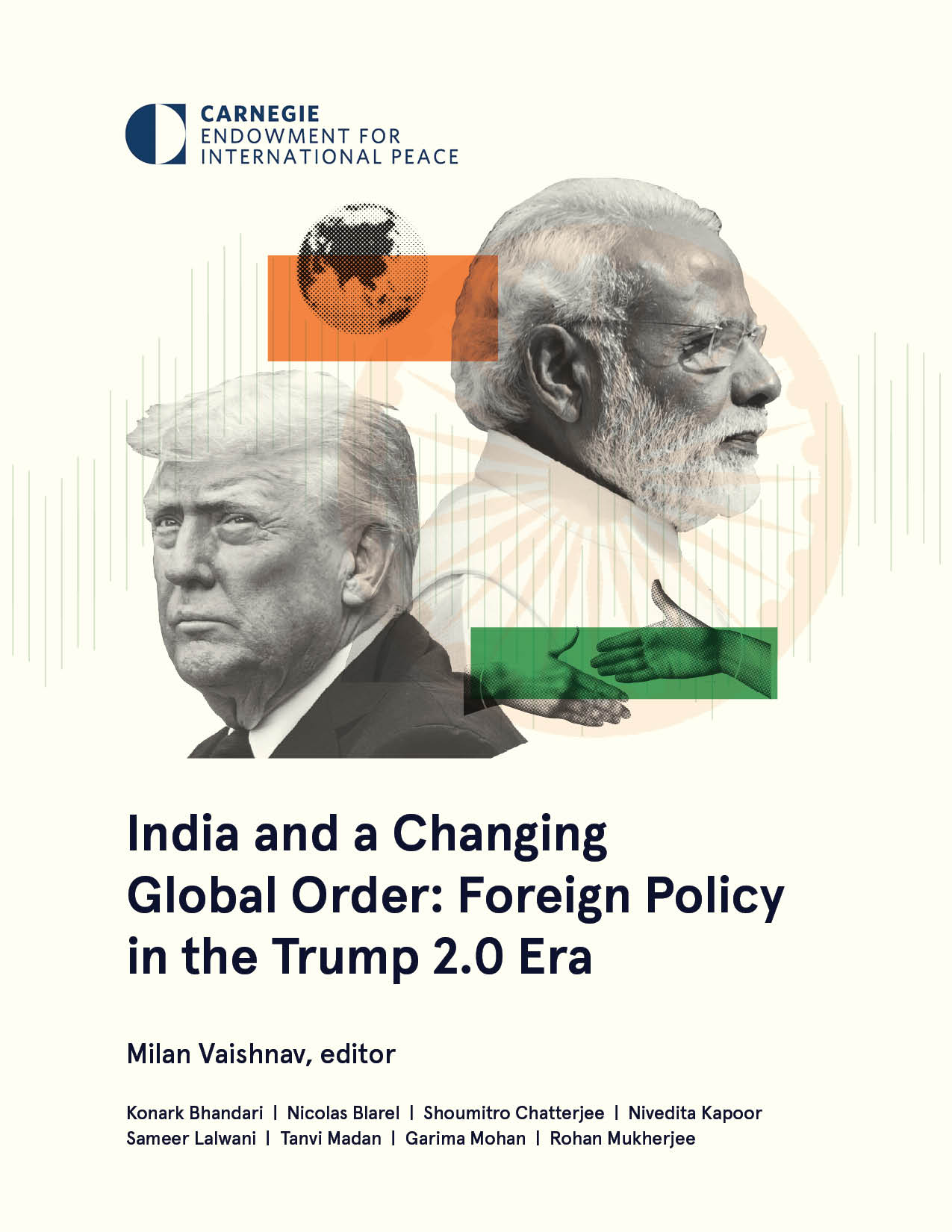
Trump 2.0 has unsettled India’s external environment—but has not overturned its foreign policy strategy, which continues to rely on diversification, hedging, and calibrated partnerships across a fractured order.


Milan Vaishnav, ed., Sameer Lalwani, Tanvi Madan, …