

Paper
Ashley J. Tellis
{
  "authors": [
    "Ashley J. Tellis"
  ],
  "type": "other",
  "centerAffiliationAll": "dc",
  "centers": [
    "Carnegie Endowment for International Peace"
  ],
  "collections": [],
  "englishNewsletterAll": "ctw",
  "nonEnglishNewsletterAll": "",
  "primaryCenter": "Carnegie Endowment for International Peace",
  "programAffiliation": "SAP",
  "programs": [
    "South Asia"
  ],
  "projects": [],
  "regions": [
    "North America",
    "United States",
    "Afghanistan",
    "Pakistan"
  ],
  "topics": [
    "Foreign Policy"
  ]
}
Source: Getty
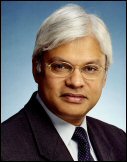
Many blame the Musharraf regime for not doing more to combat terrorism, despite receiving significant U.S. aid, but in a new report Ashley J. Tellis contends that if the United States wants a stronger Pakistani commitment to the “War on Terror,” it must first recognize that Pakistan’s poor performance cannot be attributed simply to malfeasance by Pakistan’s military elite.
Source: Carnegie Endowment

In Pakistan—Conflicted Ally in the War on Terror, Tellis argues that Pakistani counterterrorism efforts have been impeded by Islamabad’s military ineptitude, Pakistan’s political deterioration, a lack of public support for “Washington’s war,” and the ineffective Afghan government. He says that the majority of Pakistani military officials, despite fears over domestic repercussions and long-term U.S. interests in the region, support operations aimed at defeating terrorism.
Tellis presents a number of policy recommendations to strengthen counterterrorism efforts, including:
• Convince Pakistanis of their own self-interest to defeat terrorism,
• Demand the systematic targeting of the Taliban leadership within Pakistan,
• Assist Pakistan with technology and training to monitor critical border crossing points,
• Link counterterrorism support funds to specific tasks, rather than simply reimbursing Islamabad,
• Double U.S. aid to Afghanistan, and
• Challenge NATO to meet its security obligations and commit to combat operations in southern and eastern Afghanistan.
Making U.S. aid conditional on Pakistan’s performance in the war on terror would only inflame Pakistani public opinion and embarrass moderate Pakistanis who cooperated with the United States, says Tellis, while recent suggestions by U.S. presidential hopefuls for unilateral military action could re-cast Pakistan an adversary.
“If unilateral military action were to become the announced policy of the United States, such a policy would likely conclude eventually in the designation of Pakistan as an adversary of the United States. Whatever Islamabad’s failings may be, the prospect of having to treat a large and precariously poised Muslim state, armed with nuclear weapons and with an unsavory record of proliferation, as a mortal adversary should give pause to even the most jaded politician.”
Click on the link above for the full text of this Carnegie publication.
A limited number of print copies are available.
Request a copy
About the Author
Ashley J. Tellis is a senior associate at the Carnegie Endowment, specializing in international security, defense, and Asian strategic issues.
Former Senior Fellow
Ashley J. Tellis was a senior fellow at the Carnegie Endowment for International Peace.
Recent Work
Ashley J. Tellis
Ashley J. Tellis
Carnegie India does not take institutional positions on public policy issues; the views represented herein are those of the author(s) and do not necessarily reflect the views of Carnegie, its staff, or its trustees.

How is AI reshaping space security, creating governance challenges, and where does international diplomacy stand today?


Tejas Bharadwaj, Almudena Azcárate Ortega

After the chill in ties between 2020 and 2024 that brought India–China relations to their lowest point in several decades, the two countries have engaged each other afresh. This paper argues that there are predominantly four imperatives guiding India’s approach to China, and they exist in an order of priority.

Saheb Singh Chadha

This piece argues that India’s central challenge is not managing a single flashpoint but resolving the underlying tension between expansion and institutional coherency of the BRICS grouping.

Vrinda Sahai

A partnership between India, a country of subcontinental size, and Africa, a continent of fifty-four countries, may seem asymmetric until one notes that both are home to nearly the same number of people—1.4 billion. This essay spells out the existing challenges to the partnership, its optimal potential, and the possible pathways to realize it over the next quarter-century.

Rajiv Bhatia

The U.S.–India semiconductor cooperation story is well-stocked with top-level strategic intent. What remains unresolved, however, are some underlying challenges that will determine whether the cooperation actually functions. Three such friction points stand out.

Shruti Mittal