

In The Media
Josh Kurlantzick
{
  "authors": [
    "Josh Kurlantzick"
  ],
  "type": "legacyinthemedia",
  "centerAffiliationAll": "dc",
  "centers": [
    "Carnegie Endowment for International Peace"
  ],
  "collections": [],
  "englishNewsletterAll": "ctw",
  "nonEnglishNewsletterAll": "",
  "primaryCenter": "Carnegie Endowment for International Peace",
  "programAffiliation": "SAP",
  "programs": [
    "South Asia"
  ],
  "projects": [],
  "regions": [
    "South Asia",
    "Pakistan"
  ],
  "topics": [
    "Political Reform",
    "Democracy"
  ]
}
Source: Getty
But the time for mere condemnation is over. It's time for America to cut the cord on Musharraf and throw in entirely with the country's democratic forces.
Source: The New Republic

But the time for mere condemnation is over. It's time for America to cut the cord on Musharraf and throw in entirely with the country's democratic forces. The Bush administration has repeatedly called for elections in Pakistan, and Musharraf has ignored it. The administration has funneled gargantuan sums of money to Pakistan--over $10 billion since the 9/11 attacks--and Musharraf has misspent that. Despite some initial, post-9/11 victories against extremists near the Pakistan-Afghanistan border, Musharraf has allowed radical movements in Pakistan to multiply, while stifling the change Pakistan truly needs: the development of a new generation of democratic-minded leaders that would challenge the generals and corrupt old politicians for power.
As the Washington Post reported earlier this year, although Musharraf vowed in 2006 to launch a campaign against terrorism in his country, Al Qaeda- and Taliban-linked groups are as strong as ever--and they have the new training camps, operation centers, and fund-raising programs along the Pakistan-Afghanistan border to prove it. By July 2007, Frances Fragos Townsend, the White House's homeland security advisor, admitted that the general's supposed campaign "hasn't worked for Pakistan. It hasn't worked for the United States." In fact, Musharraf has an ignominious history of emboldening radicals in his country, whether it's by working with them to ensure support for his rule in 2002; signing a deal with local chieftains in 2006 that allowed militants more room to operate in the country's tribal regions; or by harshly repressing demands for greater autonomy in the province of Balochistan, a move which has sparked local anger at the government and is threatening to provoke an all-out insurgency in the area.
The general has also made little effort to emphasize that terror truly threatens Pakistan, and thus that Washington is not forcing antiterrorism operations on him. By comparison, in Indonesia, President Susilo Bambang Yudhoyono has highlighted the danger of terrorism to his country and overseen round-ups of some of Southeast Asia's most dangerous terrorists. In Pakistan, even after all the American aid, only 27 percent of Pakistanis had a favorable opinion of the United States according to a Pew Global Attitudes Poll last year and the counterterrorism battle is still viewed in Pakistan as Washington's war. $10 billion used to buy you a lot more.
Yet, through it all, Washington has continued to back Musharraf--perhaps, in part, because President Bush seems to have made a personal bond. As Derek Chollet and Craig Cohen note in a recent article in the Washington Quarterly, President Bush announced last year: "When [Musharraf] looks me in the eye and says there won't be a Taliban and won't be Al Qaeda, I believe him." (Of course, Bush's personal radar isn't exactly foolproof--he also looked into Vladimir Putin's soul and saw an ally who wanted a "constructive relationship" with America. Whoops. )
Meanwhile, years of a political vacuum under Musharraf meant that young Pakistani democrats, exactly the type of people the country needs to escape its feudal past, could not organize or build grassroots movements. When Musharraf finally agreed to allow greater political freedoms this year, the only politicians who could move into the vacuum were two feudal dinosaurs, former prime ministers Nawaz Sharif and Benazir Bhutto. Neither are paragons of democracy: Under Bhutto, Pakistan suffered an endemic of extrajudicial executions and torture, while Sharif was dismissed as prime minister for alleged massive corruption.
So, while Sharif's and Bhutto's core supporters welcomed them back to Pakistan after years of political exile, many average Pakistanis grew more disillusioned, seeing their only choice as one between the cynical Sharif, the craven Bhutto, and the army. These feelings of marginalization and disconnect from politics have left many average Pakistanis with nowhere to turn but to extremist groups. Emergency rule will only strengthen this alienation, probably leading to confrontation with the military and more crackdowns on the public.
When faced with past choices about whether to support Musharraf, American officials had to consider whether an alternative would be worse. Today, a realistic alternative would not be. For all their street noise and violence, radical Islamist groups in Pakistan have never won more than a small sliver of the vote, and aren't likely to anytime soon. Pakistan's nuclear program is under a tight command, and Musharraf's downfall likely would not compromise it. As a recent analysis of Pakistani nukes by the Stimson Center showed, "The installations that house Pakistan's nuclear weapons and fissile material, as would be expected, are heavily guarded and among the most secure facilities in all of Pakistan." The article went on to note that Pakistan has actually been through worse unrest in the past without compromising its nukes.
By supporting a return to democracy in Pakistan and cutting links to Musharraf, the U.S. would run the risk of another term of Bhutto's leadership, and possibly further corruption and misrule. But at least democracy under Bhutto, as opposed to martial rule under Musharraf, would provide more space for new political voices that might someday challenge older leaders, reform Pakistani politics, and siphon potential voters from radical Islamist parties. After all, past eras of civilian rule featured vibrant political battles in Islamabad.
Even better, Pakistan might come to resemble Indonesia, where Yudhoyono, coming off a popular mandate in 2004, could openly proclaim his fight against homegrown terrorism without looking like a stooge for the Bush administration. With greater popular legitimacy, a new Pakistani leader could make a more effective case to the public about why terror threatens them as well.
The benefits of a real return to democracy don't stop there. It would allow Pakistan to rebuild other institutions, like its hobbled court system and its once vibrant, independent media. Democracy might also halt the military's growing domination of Pakistani business and civil service. Under Musharraf, the military has spread its tentacles into private enterprise, decreasing opportunity for average Pakistanis and giving them more incentive to turn to extremism.
Perhaps most important to the U.S., though, throwing in with democracy would vastly improve America's image in Pakistan, where a majority of respondents in one recent poll cited free elections, free press, and an independent judiciary as their number one priority, and where average people have learned, through sorry experience, that Washington will stand by the general no matter how badly he missteps. Perhaps for a change, the Bush administration could surprise them. After years of the status quo in Pakistan, Washington needs to consider its other options.
Joshua Kurlantzick is a special correspondent for The New Republic.

Former Visiting Scholar, China Program
A special correspondent for The New Republic, a columnist for Time, and a senior correspondent for The American Prospect, Kurlantzick assesses China’s relationship with the developing world, including Southeast Asia, Africa, and Latin America.
Recent Work
Josh Kurlantzick
Carnegie India does not take institutional positions on public policy issues; the views represented herein are those of the author(s) and do not necessarily reflect the views of Carnegie, its staff, or its trustees.
This book examines the impact of cross-border violence on communities living along the Line of Control and the International Border in Jammu and Kashmir, India.


Deep Pal, Surya Valliappan Krishna, Saheb Singh Chadha
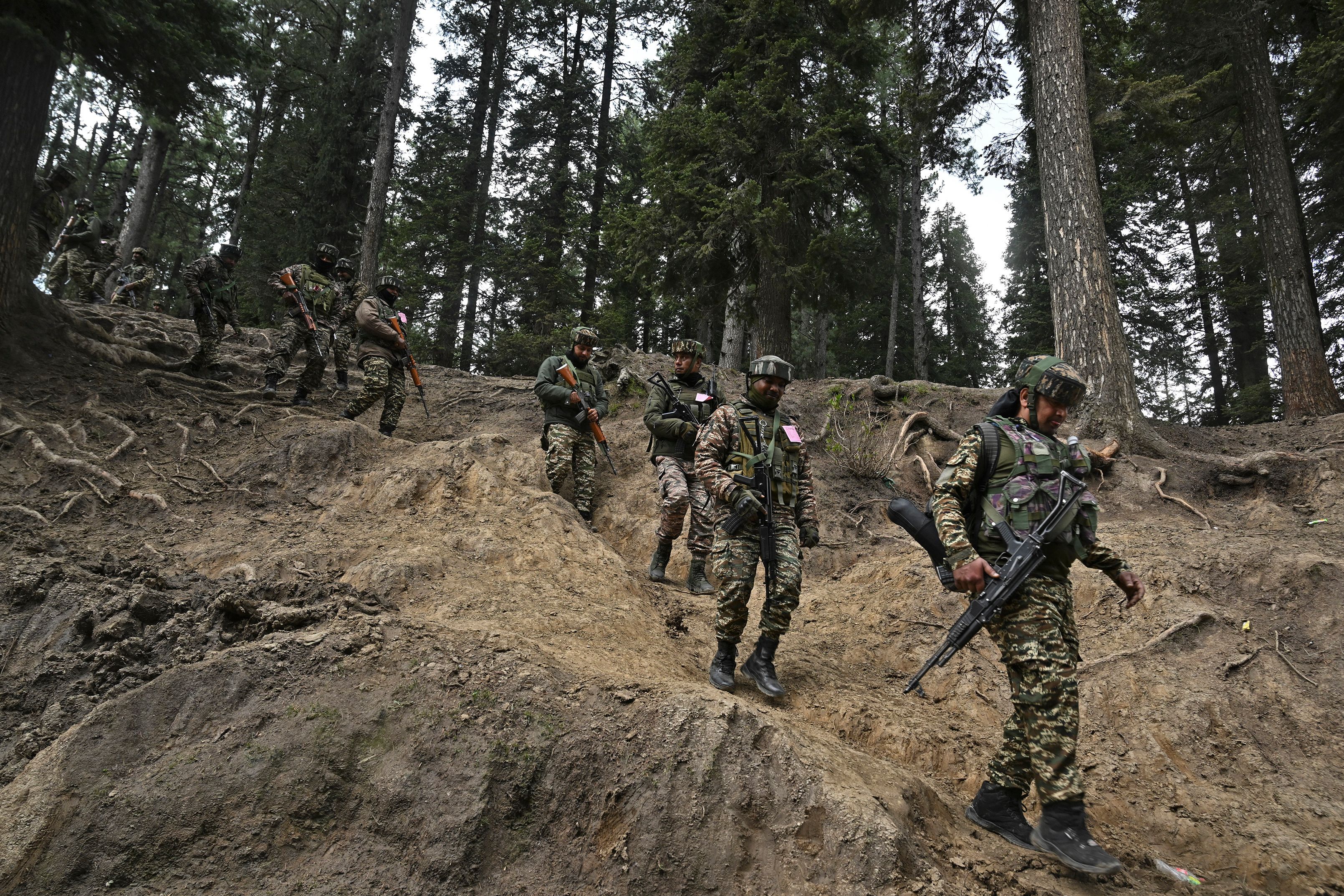
On May 7, 2025, between 1:05 and 1:30 a.m. (IST), airstrikes carried out by the Indian Air Force hit nine locations inside Pakistan and Pakistan occupied Kashmir (PoK). It was codenamed Operation Sindoor.

Rudra Chaudhuri
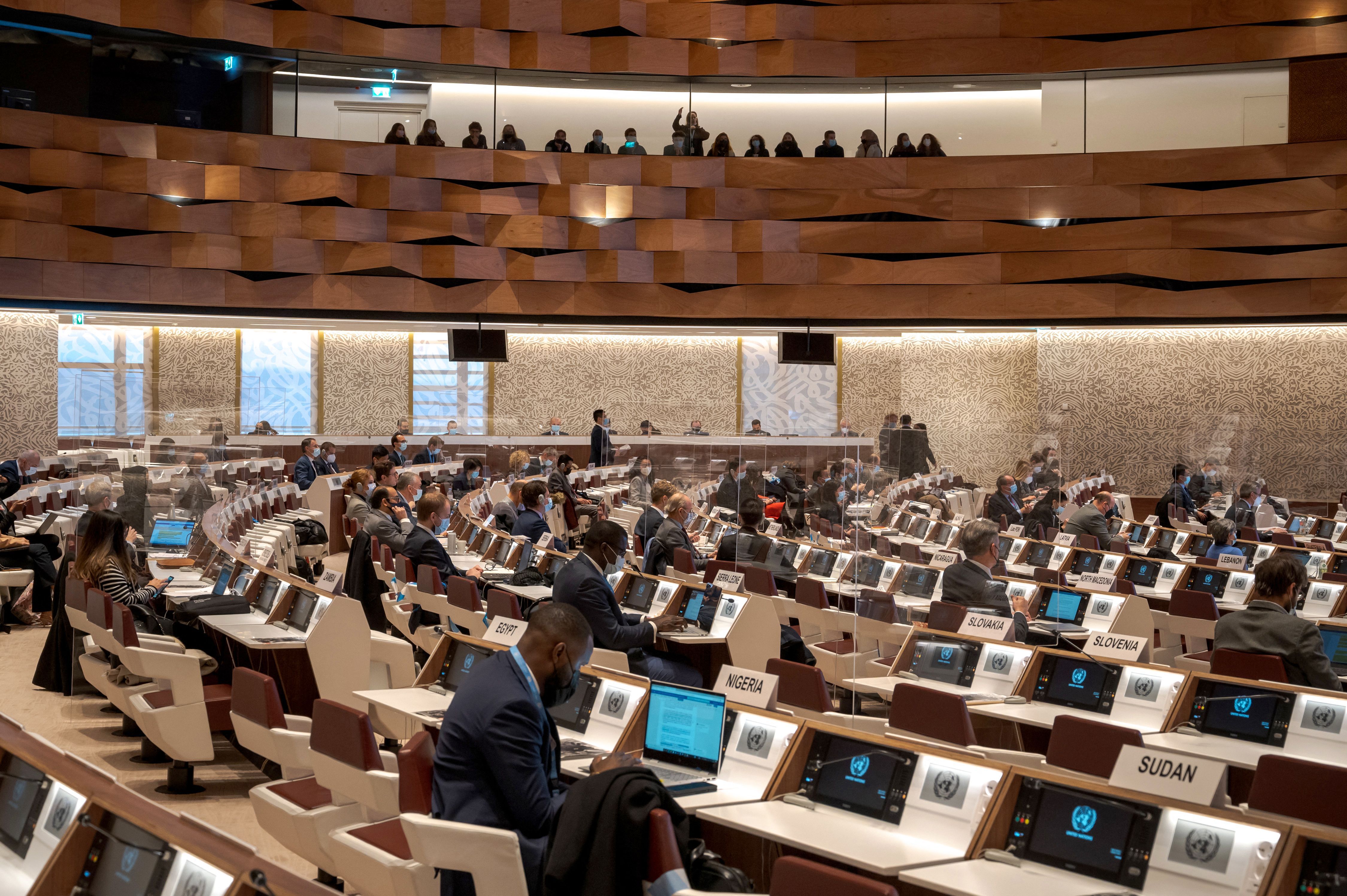
This article explores the global debate on lethal autonomous weapons systems (LAWS), highlighting the convergences, complexities, and differences within and beyond the UN Group of Governmental Experts (GGE) on LAWS. It further examines India’s key position at the GGE and the probable reasons behind them.


Charukeshi Bhatt, Tejas Bharadwaj

This essay is the first of a three-part series that will seek to understand the considerations for building compute capacity and the different pathways to accessing compute in India. This essay delves into the meaning of compute and unpacks the various layers of the compute stack.


Aadya Gupta, Adarsh Ranjan
This piece examines the strategic implications of Bhutan’s diplomatic efforts amid its border dispute with China, highlighting the thin ice it walks on to achieve a resolution without compromising its vital relationships.

Shibani Mehta