

Commentary
Nikolay Petrov
{
  "authors": [
    "Nikolay Petrov"
  ],
  "type": "legacyinthemedia",
  "centerAffiliationAll": "",
  "centers": [
    "Carnegie Endowment for International Peace",
    "Carnegie Russia Eurasia Center"
  ],
  "collections": [],
  "englishNewsletterAll": "",
  "nonEnglishNewsletterAll": "",
  "primaryCenter": "Carnegie Russia Eurasia Center",
  "programAffiliation": "",
  "programs": [],
  "projects": [],
  "regions": [
    "Caucasus",
    "Russia"
  ],
  "topics": [
    "Political Reform",
    "Democracy",
    "Foreign Policy"
  ]
}
REQUIRED IMAGE
It is a hypocritical shell game where Kremlin political strategists dragged political heavyweights onto the ballots to serve nothing more than a decorative function. Then, after the elections, they were replaced by others who are unknown or even unpopular with the voters.
Source: The Moscow Times
The final composition of the State Duma has been established. Over 100 candidates who ran on the federal tickets of the four winning parties have rejected their posts and refused their mandates. They are all prominent figures, President Vladimir Putin foremost among them, but they also included three federal ministers, governors, mayors and speakers of local legislatures. These figures were the steamboat that dragged deadweight into the new Duma.
This is shameful. It is a hypocritical shell game where Kremlin political strategists dragged political heavyweights onto the ballots to serve nothing more than a decorative function. Then, after the elections, they were replaced by others who are unknown or even unpopular with the voters.
It is also shows the authorities' fundamental contempt for the people. Voters were first denied the right to elect governors and then were urged to vote for a system in which Putin and his appointed governors would, in effect, appoint the remaining office holders while referring to this result as the people's choice. It merely proves that Russia has no genuine popularly elected politicians.
The authorities used the Duma elections as a means of cleansing their ranks. The mayors of Pskov and Kaliningrad, as well as the heads of a few smaller cities and the head of the state council of the Adygeya republic, were sent to the Duma as a form of honorable discharge. They had fallen out of favor with the regional heads and left peacefully; their Duma seats served as a retirement package of sorts.
Among the "inconvenient" politicians expected to join the ranks of the Duma deputies are the mayor of Norilsk, the speaker of the legislature of the Ryazan region and a host of minor figures. The arrival of a number of well-known regional politicians into the Duma might have seemed like a cause for celebration. Unfortunately, such deputies rarely make a contribution to the Duma.
It should be noted that the process of cleansing the regional elite will not be limited to the transfer of some of them to the Duma. There will be "election sacrifices" from among leaders who were unable to muster sufficient votes, having aligned themselves with the "wrong" political forces and other "guilty" factions. The first sign of this was when the mayor of Glazov, which is located about 950 kilometers east of Moscow, was dismissed. The night following elections, the electronic vote-counting system stopped working in Glazov and the subsequent hand count gave United Russia a record low 42 percent.
Yaroslavl Governor Anatoly Lisitsyn also became a deputy and was the only one of the 64 regional heads included on the United Russia ticket to do so. Lisitsyn was one of the last holdovers from among the first wave of governors put in office by President Boris Yeltsin. At the time of becoming a deputy in parliament, he was still fighting with the local United Russia leadership.
It seemed he had won, but in the end he was not given the chance to stage the opulent celebration of Yaroslavl's 1,000-year anniversary he had hoped for. Some people see the reason for his removal as being United Russia's low 53 percent result in the region, others see it as stemming from his lack of success in carrying out national projects.
Still others claim it was because Lisitsyn was overly eager to establish contacts with members of various political camps. There is some irony in the fact that this December would have marked the end of the gubernatorial term to which Lisitsyn was elected by voters four years ago but the end of only the first year of the term to which he was appointed by Putin.
One of the main innovations of the electoral law is the so-called postponed mandate, which allows election winners who have refused their posts in the past to change their minds and be first in line for any future vacancies. Prior to such large-scale political reconfigurations of the political system, finding a place for those who refuse their office takes on added importance. Any "retired" governor or federal official, considering his political weight, would be unlikely to stand in line very long.
In this way, the current Duma membership will apparently set new records not only for the number of mandates that were refused by candidates, but also for the rotation of the deputies within the chamber.
Nikolai Petrov is a scholar in residence at the Carnegie Moscow Center.
This comment first appeared in The Moscow Times.
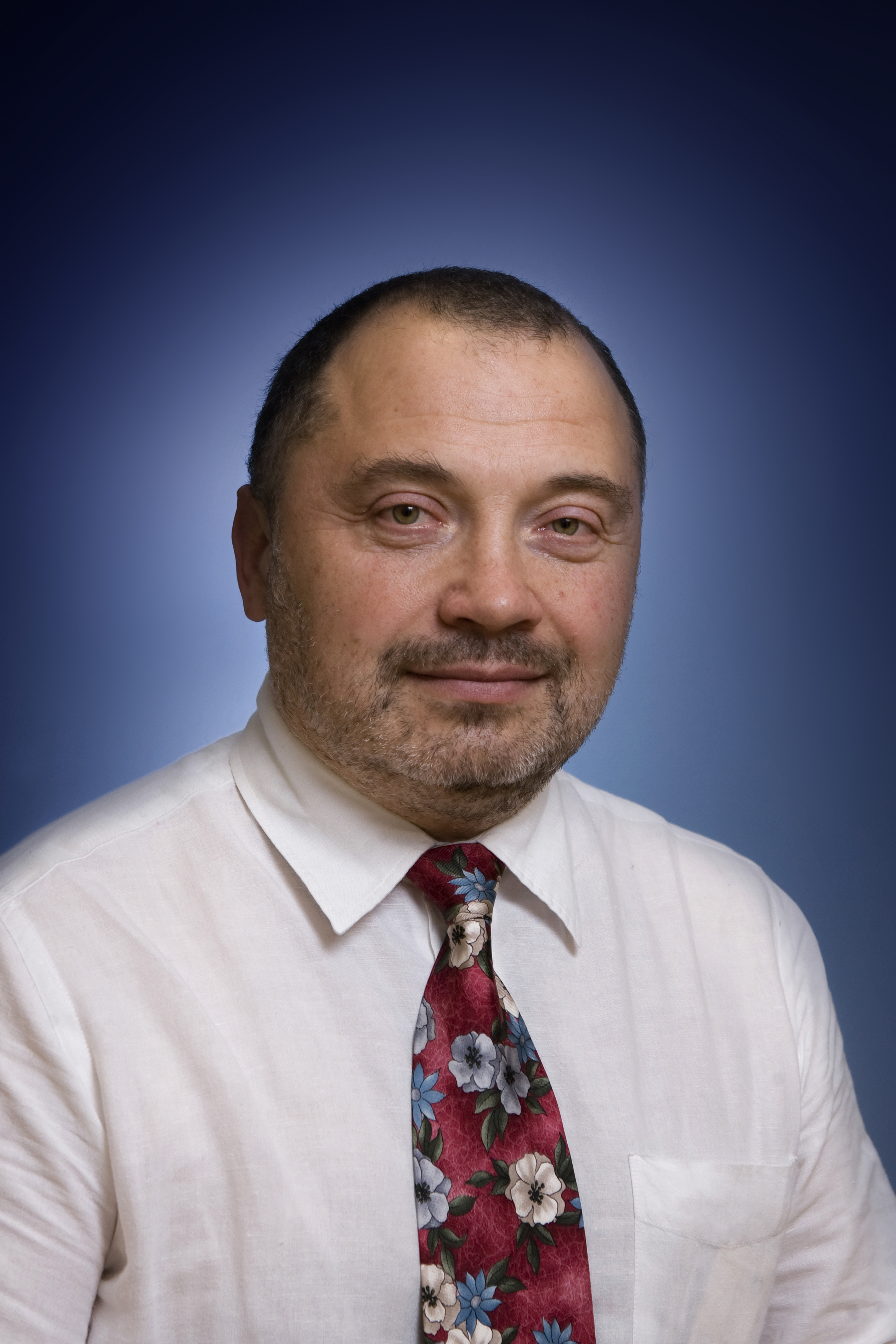
Former Scholar-in-Residence, Society and Regions Program, Moscow Center
Nikolay Petrov was the chair of the Carnegie Moscow Center’s Society and Regions Program. Until 2006, he also worked at the Institute of Geography at the Russian Academy of Sciences, where he started to work in 1982.
Recent Work
Nikolay Petrov
Nikolay Petrov
Carnegie India does not take institutional positions on public policy issues; the views represented herein are those of the author(s) and do not necessarily reflect the views of Carnegie, its staff, or its trustees.

After the chill in ties between 2020 and 2024 that brought India–China relations to their lowest point in several decades, the two countries have engaged each other afresh. This paper argues that there are predominantly four imperatives guiding India’s approach to China, and they exist in an order of priority.

Saheb Singh Chadha

This piece argues that India’s central challenge is not managing a single flashpoint but resolving the underlying tension between expansion and institutional coherency of the BRICS grouping.

Vrinda Sahai

A partnership between India, a country of subcontinental size, and Africa, a continent of fifty-four countries, may seem asymmetric until one notes that both are home to nearly the same number of people—1.4 billion. This essay spells out the existing challenges to the partnership, its optimal potential, and the possible pathways to realize it over the next quarter-century.

Rajiv Bhatia

The India–EU Free Trade Agreement (FTA) is shaping up to be one of the most consequential trade negotiations, both economically and strategically. But, what’s in the agreement, what’s missing, and what will determine its success in the years ahead
Vrinda Sahai, Nicolas Köhler-Suzuki

Trump 2.0 has unsettled India’s external environment—but has not overturned its foreign policy strategy, which continues to rely on diversification, hedging, and calibrated partnerships across a fractured order.



Milan Vaishnav, ed., Sameer Lalwani, Tanvi Madan, …