

Commentary
Nathan J. Brown
{
  "authors": [
    "Nathan J. Brown"
  ],
  "type": "other",
  "centerAffiliationAll": "dc",
  "centers": [
    "Carnegie Endowment for International Peace",
    "Malcolm H. Kerr Carnegie Middle East Center"
  ],
  "collections": [],
  "englishNewsletterAll": "menaTransitions",
  "nonEnglishNewsletterAll": "",
  "primaryCenter": "Malcolm H. Kerr Carnegie Middle East Center",
  "programAffiliation": "MEP",
  "programs": [
    "Middle East"
  ],
  "projects": [],
  "regions": [
    "Middle East",
    "Israel",
    "Palestine"
  ],
  "topics": [
    "Political Reform",
    "Economy",
    "Foreign Policy"
  ]
}
Source: Getty
The Middle East peace process will fail unless Palestinian political institutions are rebuilt. The international efforts to rebuild Palestine are in reality counterproductive. Instead, a long-term international strategy based on restoring Palestinian institutions, encouraging a Fatah–Hamas agreement, and emphasizing regional diplomacy are needed.
Source: Carnegie Endowment

In The Road Out of Gaza, Palestinian expert Nathan J. Brown discusses the economic and political disarray not only in Gaza and the West Bank but within Hamas and Fatah as well, and argues that the international efforts to rebuild Palestine are in reality counterproductive. Brown suggests a long-term international strategy based on restoring Palestinian institutions, encouraging a Fatah–Hamas agreement, and emphasizing regional diplomacy.
Key Conclusions:
“The risks of a strategy of ensnaring Hamas in traps laid by public opinion (expressed in part through elections), Arab diplomacy, and Palestinian political procedures are very real. But the path seems far more likely to pay off—both in security and diplomatic terms—than the current strategy of total isolation, abstract diplomacy, aid, and intermittent military operations,” concludes Brown.
This is a web-only publication.
About the Author
Nathan J. Brown is a nonresident senior associate at the Carnegie Endowment and is also professor of political science and international affairs and director of the Middle East Studies Program at the George Washington University. His past work has focused on Palestinian politics and on the rule of law and constitutionalism in the Arab world.

Nonresident Senior Fellow, Middle East Program
Nathan J. Brown, a professor of political science and international affairs at George Washington University, is a distinguished scholar and author of nine books on Arab politics and governance, as well as editor of five books.
Recent Work
Nathan J. Brown
Nathan J. Brown
Carnegie India does not take institutional positions on public policy issues; the views represented herein are those of the author(s) and do not necessarily reflect the views of Carnegie, its staff, or its trustees.

This piece examines India’s response to U.S. sanctions and tariffs, specifically assessing the immediate market consequences, such as alterations in import costs, and the broader strategic implications for India’s energy security and foreign policy orientation.

Vrinda Sahai

This paper examines the evolution of India-China economic ties from 2005 to 2025. It explores the impact of global events, bilateral political ties, and domestic policies on distinct spheres of the economic relationship.

Santosh Pai

On July 30, 2025, the United States announced 25 percent tariffs on Indian goods. While diplomatic tensions simmered on the trade front, a cosmic calm prevailed at the Sriharikota launch range. Officials from NASA and ISRO were preparing to launch an engineering marvel into space—the NASA-ISRO Synthetic Aperture Radar (NISAR), marking a significant milestone in the India-U.S. bilateral partnership.

Tejas Bharadwaj
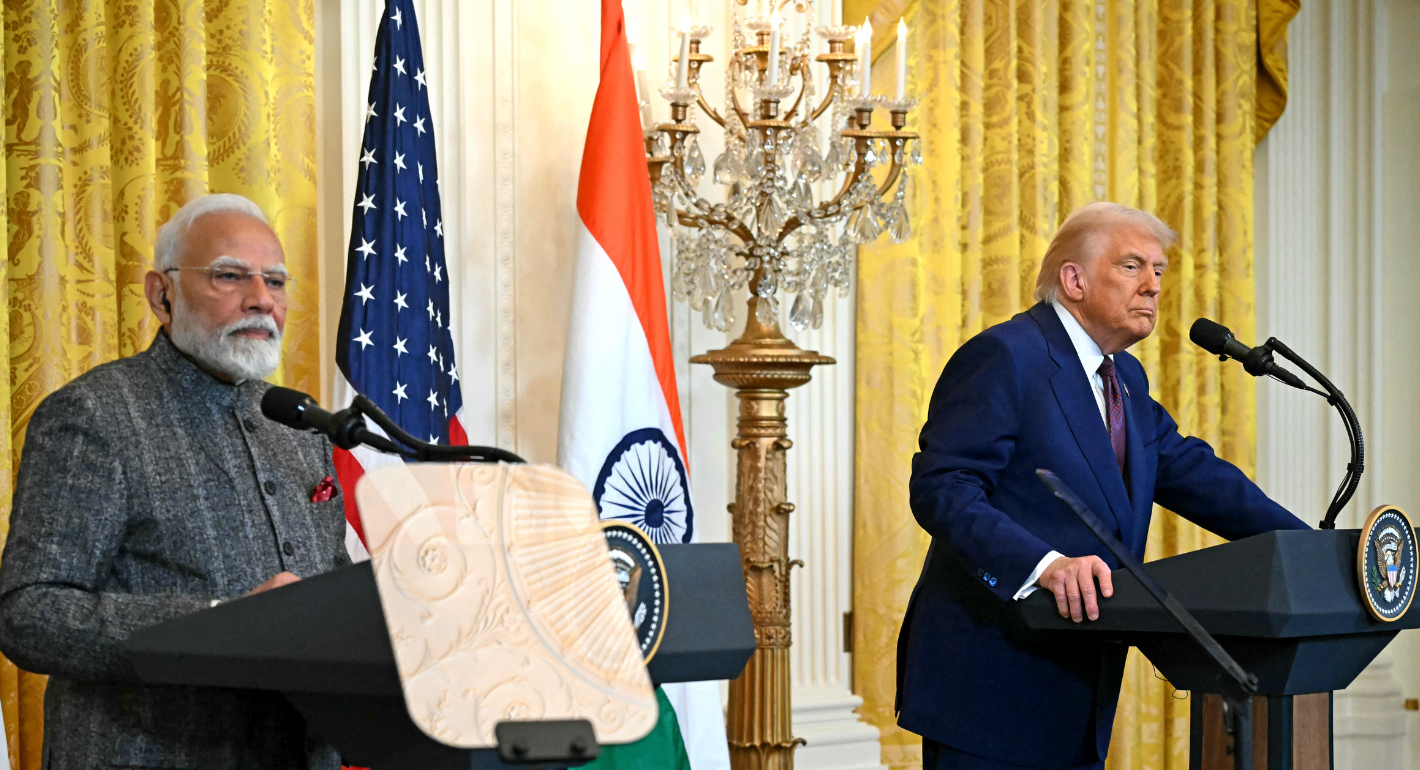
The India-U.S. relationship currently appears buffeted between three “Ts”—TRUST, Tariffs, and Trump.

Arun K. Singh
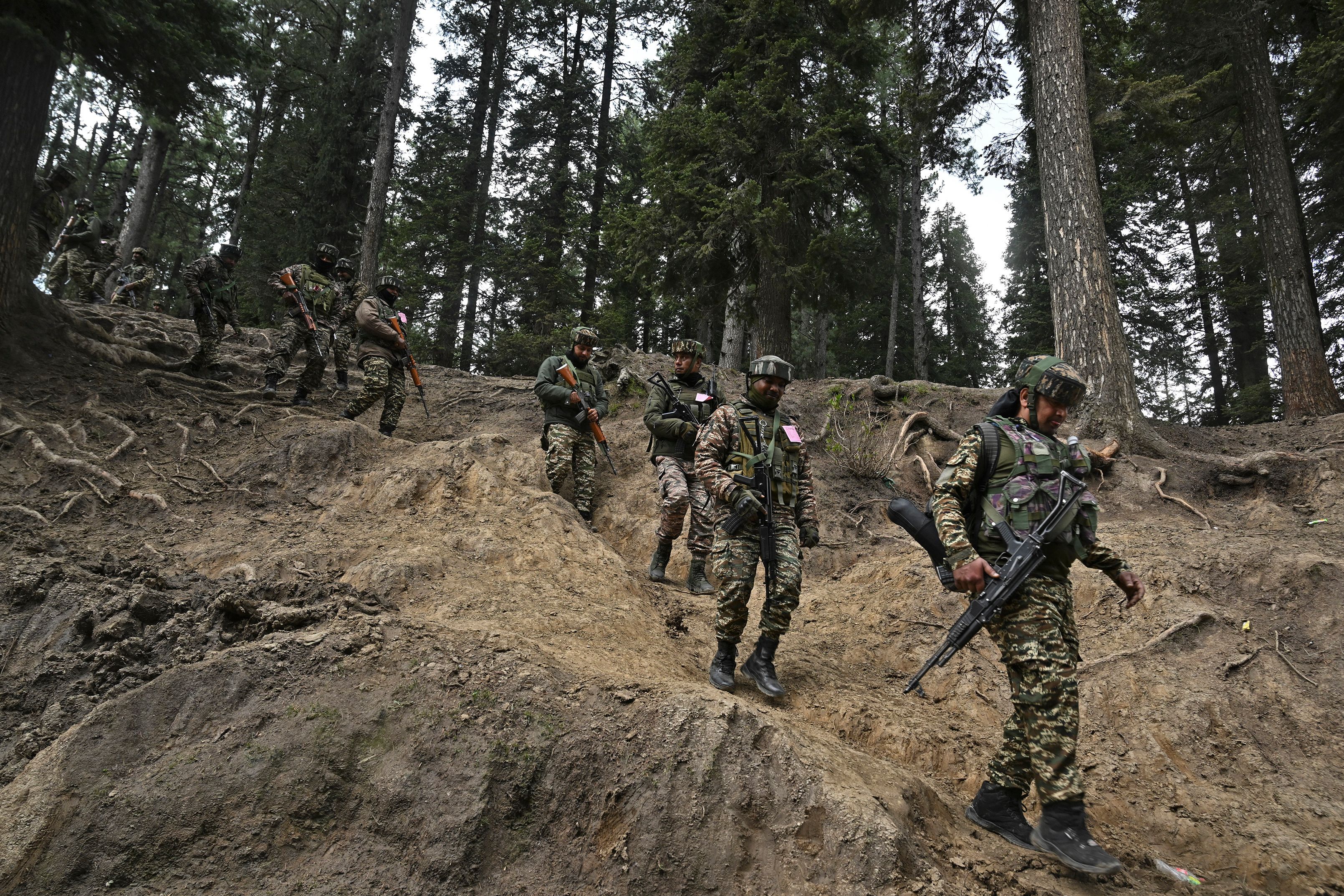
On May 7, 2025, between 1:05 and 1:30 a.m. (IST), airstrikes carried out by the Indian Air Force hit nine locations inside Pakistan and Pakistan occupied Kashmir (PoK). It was codenamed Operation Sindoor.

Rudra Chaudhuri