

Commentary
Maria Lipman
{
  "authors": [
    "Maria Lipman"
  ],
  "type": "legacyinthemedia",
  "centerAffiliationAll": "",
  "centers": [
    "Carnegie Endowment for International Peace",
    "Carnegie Russia Eurasia Center"
  ],
  "collections": [],
  "englishNewsletterAll": "",
  "nonEnglishNewsletterAll": "",
  "primaryCenter": "Carnegie Russia Eurasia Center",
  "programAffiliation": "",
  "programs": [],
  "projects": [],
  "regions": [
    "Caucasus",
    "Russia"
  ],
  "topics": [
    "Political Reform",
    "Democracy",
    "Economy",
    "Foreign Policy"
  ]
}
Source: Getty
The next Russian administration, with Dmitry Medvedev as president and Vladimir Putin remaining at the helm as prime minister, may evolve into something different from Putin's current rule. But the expectations of liberalization that Medvedev's rhetoric and non-KGB background might have raised in some circles are wishful thinking.
Source: Washington Post

Medvedev's campaign was hardly a demonstration of adherence to democratic principles. And his rhetoric, while somewhat softer than Putin's, is barely an indicator of change. Throughout his presidency, Putin repeatedly spoke of the need for the rule of law, free media and other democratic virtues. Yet his policies were increasingly at variance with these principles, and by the end of his presidency the gap between the official rhetoric and reality reached almost Soviet proportions.
Although Medvedev has made several commendable statements, such as his preference for freedom over non-freedom, he speaks only in generalities. He has not touched on any of the many recent cases involving the issues of freedom or democracy, including repeated harassment and detention of liberal-leaning political activists.
Nor has Medvedev elaborated on the relationship between his mentor's policies and the deplorable status of the rule of law and press freedom in Russia. Those policies could also be seen as his own, given Medvedev's status as a top official in Putin's administration.
The system created during Putin's presidency is based on the uncontested primacy of the top executive, with controlled politics and a growing intolerance toward public dissent, let alone political autonomy. In such a system, the judiciary is "independent" and the media "free" as long as they don't interfere with what those in power see as the interests of the state. Genuine rule of law and a genuinely independent media would undermine the very foundations of this regime. Medvedev is not in a position to challenge the system or its creator -- the man who ensured that Medvedev was elected president March 2. Just this week, Medvedev spoke of himself and Putin as a "tandem" and "team of two."
Putin has consolidated the state and enfeebled the society, an arrangement that no ruler would shed unless strongly challenged by those seeking to reclaim and apply their political rights. In today's Russia, however, there is no force laying such claims. And yet, an exact continuation of course under Putin is not a certainty.
But it is simply wrong at this point to regard Medvedev as a vehicle of change or to expect that Russian leadership would opt for political liberalization.
Should the good economic fortunes that accompanied Putin's presidency recede, various domestic problems that until now have been subdued by generous infusions of oil money would be exacerbated. Observers of Russia's economy warn that the successful development of recent years may not be sustainable. Critics have cited the unfavorable dynamics of oil and gas production, which accounts for about a third of the nation's budget revenue, and the looming prospect of a workforce shortage -- the result of an implacable demographic trend. The shortage will weigh heavily on those men and women already working to provide their own safety net and to care for the older generation. Additionally, Russia may not be prepared to handle the repercussions of a global economic recession, which looks increasingly likely.
Putin may also be concerned about the sustainability of his economic achievement. Though he has repeatedly pledged to stay the course, in early February the soon-to-be-ex president unveiled a plan for Russia through 2020. After citing the successes of his administration, Putin spoke about the "extreme inefficiency" of the economy, the "unacceptably low productivity of labor" and the urgent need for modernization -- lest Russia fall behind the world's leading economies.
If the team of Putin and Medvedev really means modernization, it is sure to face tough challenges. First and foremost is the question of whether modernization is even possible in a deinstitutionalized system that has eliminated public participation, cultivated paternalism and opted for heavily centralized control over political competition. Another challenge is the inevitable infringement on the more conservative Russian elites that have thrived under Putin's system of empowered bureaucracy.
Attempts at modernization would further aggravate the tensions among those who control broad swaths of Russia's power and property. Their infighting is mostly kept behind the scenes these days, but if political struggles spill out into the open, they are likely to extend to the medium-tier elites, which are currently depoliticized, or the middle classes, which will be forced to align with one or another of the feuding camps.
Russia's future is uncertain. The outcomes of struggles both likely and unexpected are far from clear -- whether the forces of modernization would prevail or whether nationalists and conservatives could win the upper hand. If such shifts take place during Medvedev's tenure, this might give him a chance to evolve as an independent decision-maker in Russian politics -- something that he is not today.
Masha Lipman, editor of the Carnegie Moscow Center's Pro et Contra journal, writes a monthly column for The Post.
Click here to see the article on the Washington Post website.
Former Scholar in Residence, Society and Regions Program, Editor in Chief, Pro et Contra, Moscow Center
Lipman was the editor in chief of the Pro et Contra journal, published by the Carnegie Moscow Center. She was also the expert of the Carnegie Moscow Center’s Society and Regions Program.
Recent Work
Maria Lipman
Maria Lipman
Carnegie India does not take institutional positions on public policy issues; the views represented herein are those of the author(s) and do not necessarily reflect the views of Carnegie, its staff, or its trustees.

This piece examines India’s response to U.S. sanctions and tariffs, specifically assessing the immediate market consequences, such as alterations in import costs, and the broader strategic implications for India’s energy security and foreign policy orientation.
Vrinda Sahai

This paper examines the evolution of India-China economic ties from 2005 to 2025. It explores the impact of global events, bilateral political ties, and domestic policies on distinct spheres of the economic relationship.

Santosh Pai
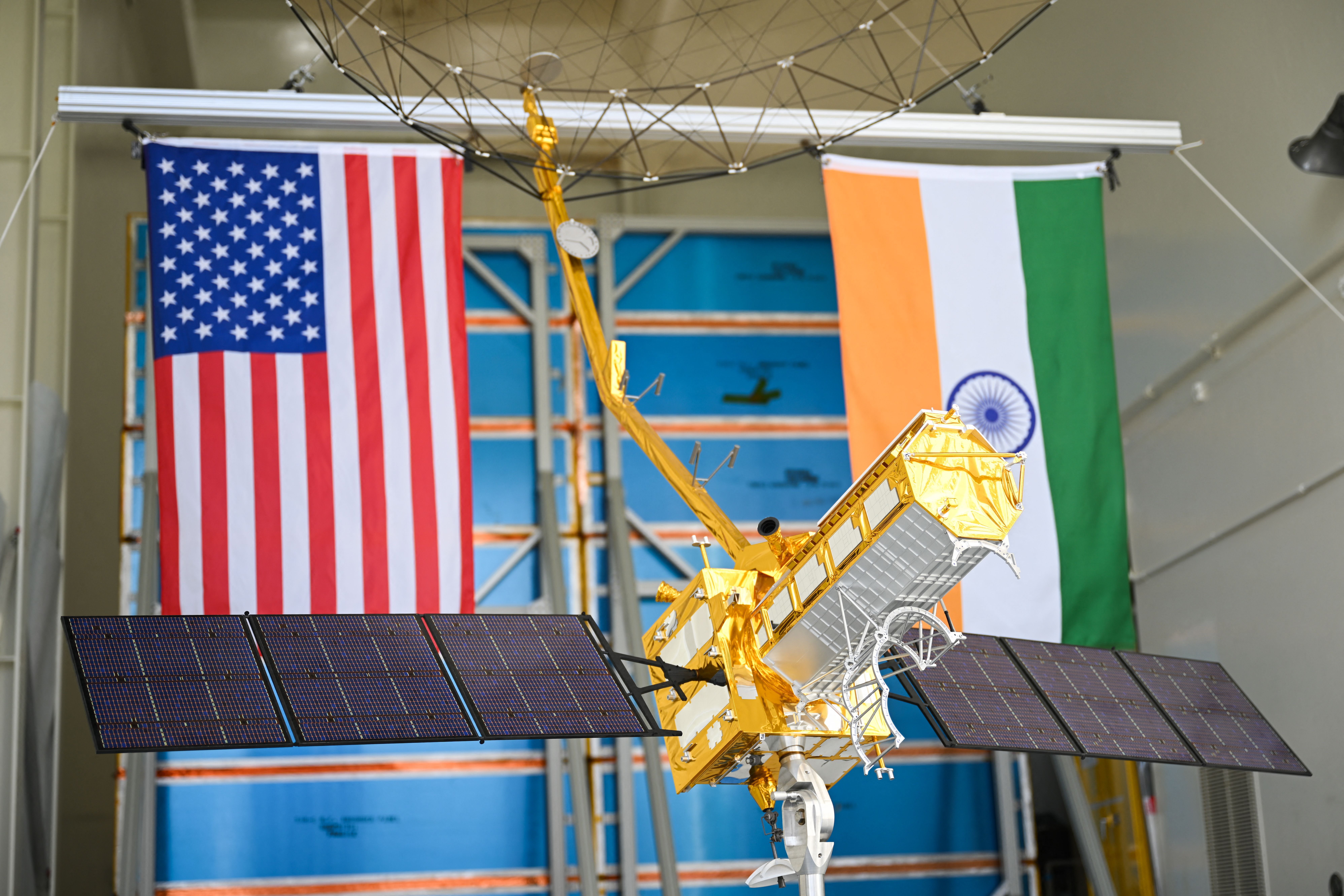
On July 30, 2025, the United States announced 25 percent tariffs on Indian goods. While diplomatic tensions simmered on the trade front, a cosmic calm prevailed at the Sriharikota launch range. Officials from NASA and ISRO were preparing to launch an engineering marvel into space—the NASA-ISRO Synthetic Aperture Radar (NISAR), marking a significant milestone in the India-U.S. bilateral partnership.

Tejas Bharadwaj
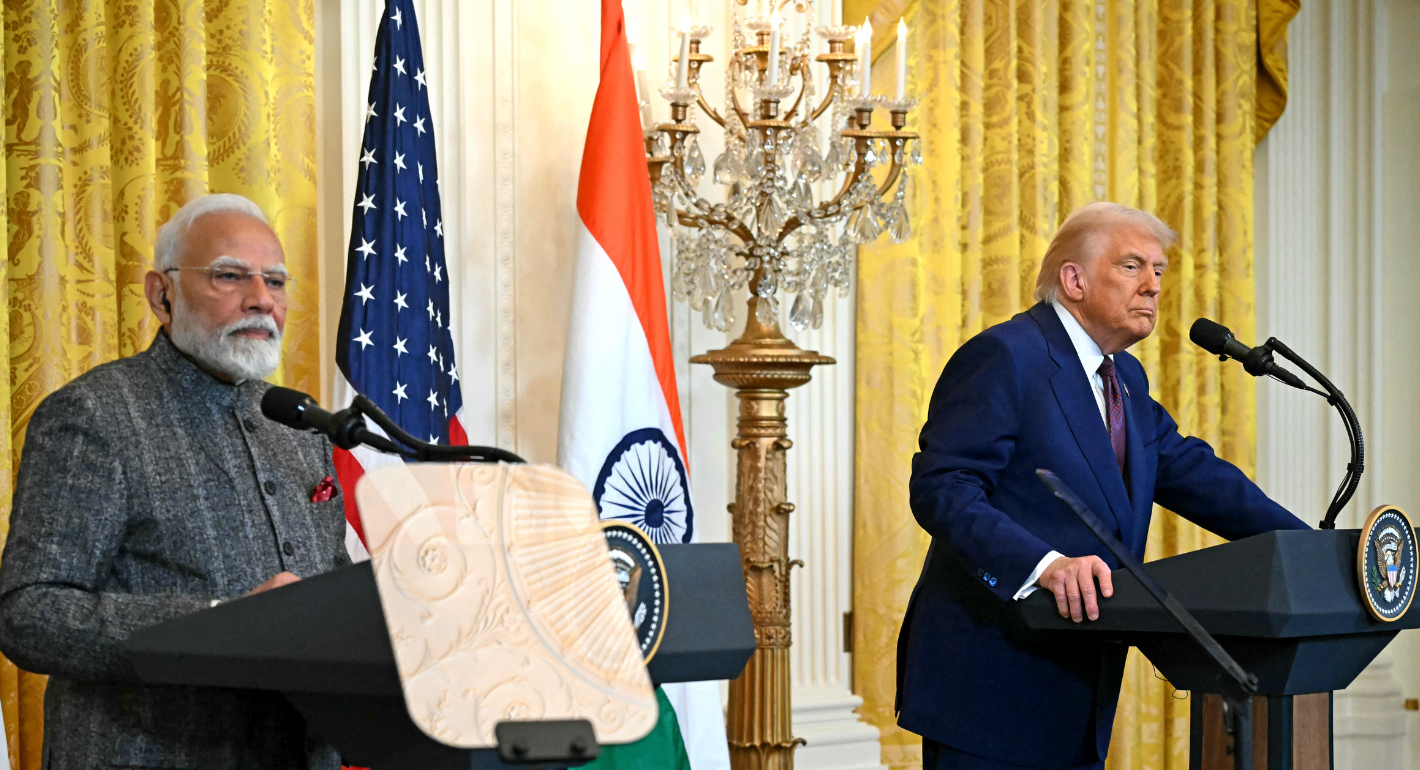
The India-U.S. relationship currently appears buffeted between three “Ts”—TRUST, Tariffs, and Trump.
Arun K. Singh
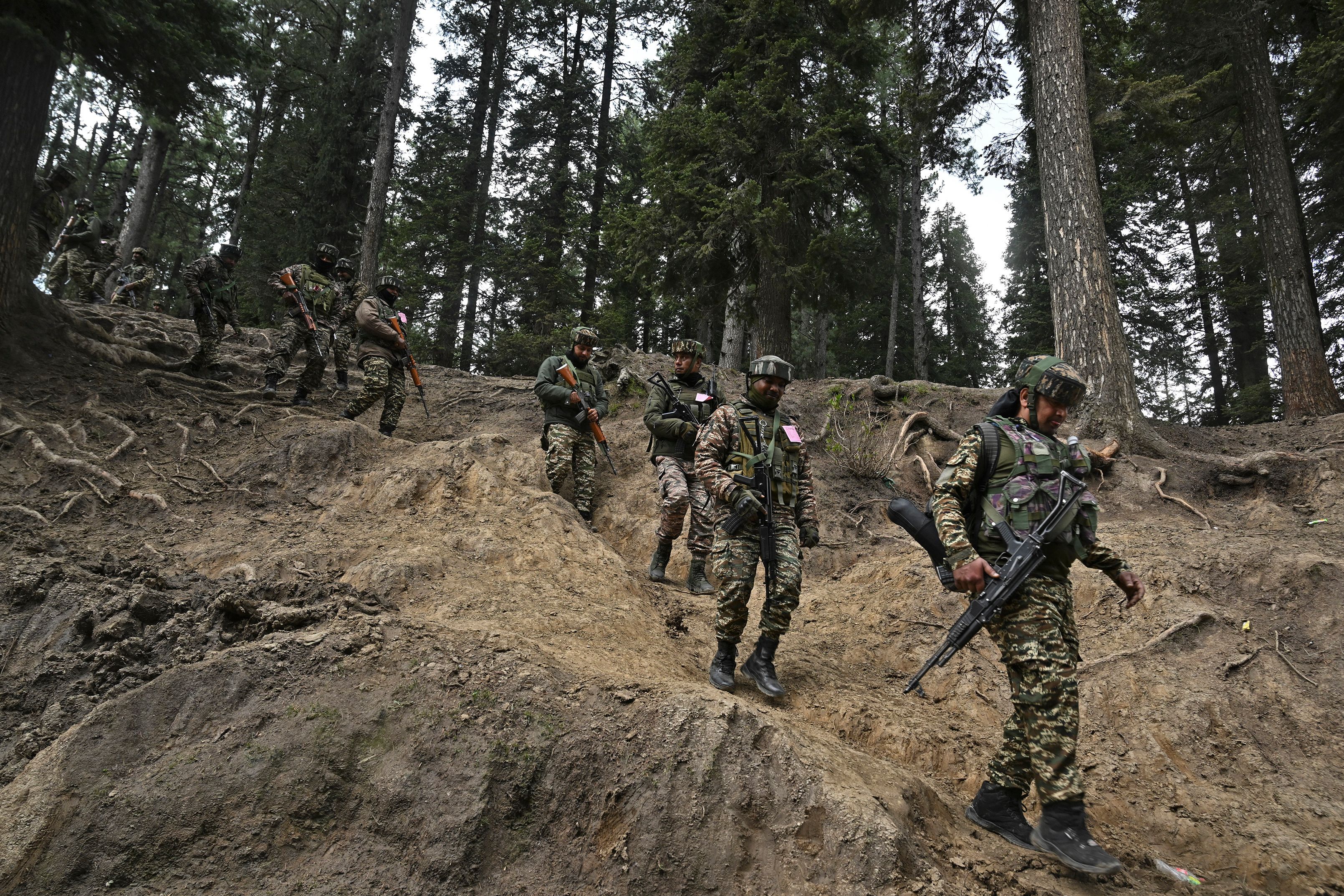
On May 7, 2025, between 1:05 and 1:30 a.m. (IST), airstrikes carried out by the Indian Air Force hit nine locations inside Pakistan and Pakistan occupied Kashmir (PoK). It was codenamed Operation Sindoor.

Rudra Chaudhuri