• Research
  • About
  • Experts
Carnegie India logoCarnegie lettermark logo
AI
{
  "authors": [],
  "type": "pressRelease",
  "centerAffiliationAll": "dc",
  "centers": [
    "Carnegie Endowment for International Peace"
  ],
  "collections": [],
  "englishNewsletterAll": "menaTransitions",
  "nonEnglishNewsletterAll": "",
  "primaryCenter": "Carnegie Endowment for International Peace",
  "programAffiliation": "MEP",
  "programs": [
    "Middle East"
  ],
  "projects": [],
  "regions": [
    "Middle East"
  ],
  "topics": [
    "Political Reform"
  ]
}
REQUIRED IMAGE

REQUIRED IMAGE

Press Release

Kuwaiti Election Unlikely to Produce Change


Despite recent electoral reform, Kuwait’s parliamentary election on May 17 will produce little change. This question and answer guide explains the significance of the election, and the implications of the electoral reform on campaigning, opportunities for women in Kuwaiti politics, and most significantly, for democracy in the Gulf.

Link Copied
Published on May 8, 2008

WASHINGTON, May 7—Despite recent electoral reform, Kuwait’s parliamentary election on May 17 will produce little change and continue to foster a parliament more adept at blocking the ruling family than initiating positive change, argues Middle East expert Nathan Brown. Increasing frustration with parliament led Kuwait’s ruling family to call an early election and has fueled speculation that they may suspend parliament.

Brown provides a question and answer guide to explain the significance of the election, and the implications of the electoral reform on campaigning, opportunities for women in Kuwaiti politics, and most significantly, for democracy in the Gulf—an important development the United States is overlooking.

Key Conclusions:

  • New electoral districts over-represent wealthy elites who view Kuwait’s constitution as a pact between the ruling families and are unlikely to support a stronger parliament.
  • Reformists hoped the reduction in electoral districts—from 25 to five—would encourage campaigning to focus on issues rather than constituent pandering. But early indications from the campaigns signal that candidates are continuing to rely on tribal allegiances and vote buying.  
  • Electoral reform has made it even more difficult for a woman to be elected to the parliament. Parties may only field four candidates and are reluctant to support a female candidate after none were successful in the 2006 elections.

Brown argues that Kuwait’s looming political crisis may have some serious implications for democracy in the Gulf:  “The ruling family tends to blame the parliament for Kuwait’s failure to develop as rapidly as Dubai—a model which allows the government to make decisions unhindered by democratic institutions. Other countries in the region are coming to see Kuwait as a negative model of what democracy can result in. Kuwaitis are increasingly debating how to reform (or whether to scale back) their democratic experiment.”

###
 

bullet
NOTES
  • Direct link to the PDF:  www.carnegieendowment.org/files/brown_kuwait_elections_FAQ_formatted.pdf
  • Direct link to the Arabic PDF: www.carnegieendowment.org/programs/arabic/kuwait_nathan_may2008.pdf
  • Nathan J. Brown is director of the Institute for Middle East Studies at the George Washington University, a nonresident senior associate at the Carnegie Endowment, and a distinguished scholar and author of four well-received books on Arab politics.
  • The Carnegie Middle East Program combines in-depth local knowledge with incisive comparative analysis to examine economic, socio-political, and strategic interests in the Arab world. Through detailed country studies and the exploration of key cross-cutting themes, the Carnegie Middle East Program, in coordination with the Carnegie Middle East Center, provides analysis and recommendations in both English and Arabic that are deeply informed by knowledge and views from the region. The Carnegie Middle East Program has special expertise in political reform and Islamist participation in pluralistic politics throughout the region.
  • The Carnegie Middle East Center is a public policy think tank and research center based in Beirut, Lebanon. Bringing together senior researchers from the region, the Carnegie Middle East Center aims to better inform the process of political change in the Middle East and deepen understanding of the issues the region and its people face.
  • The Arab Reform Bulletin addresses political reform in the Middle East. Sent monthly, it offers analysis from U.S.-based and Middle Eastern political experts in English and Arabic, as well as news synopses and resource guides.
  • Press Contact: Trent Perrotto, 202/939-2372, tperrotto@ceip.org
Political ReformMiddle East

Carnegie India does not take institutional positions on public policy issues; the views represented herein are those of the author(s) and do not necessarily reflect the views of Carnegie, its staff, or its trustees.

More Work from Carnegie India

  • Article
    Risk and Retaliation: Israel, Iran, and the Evolving Situation in West Asia

    An Israeli response to Iran’s October 1 attack is imminent. The key question is of its intensity and potential fallout, both within Iran, in terms of nuclear security policy changes, and across the broader region. The coming days are likely to reshape West Asia irreversibly.

      Gaddam Dharmendra
  • Paper
    India’s Sustained Economic Recovery Will Require Changes to Its Bankruptcy Law

    As India’s economy recovers from the coronavirus pandemic, Indian businesses need efficient financial structures to regain their ground. Key reforms to India’s Insolvency and Bankruptcy Code could fill these gaps.

      Anirudh Burman

  • Paper
    Cross-Border Data Access for Law Enforcement: What Are India’s Strategic Options?

    Access to cross-border data is an integral piece of the law enforcement puzzle. India is well placed to lead the discussions on international data agreements subject to undertaking necessary surveillance reforms.

      Smriti Parsheera, Prateek Jha

  • Article
    The BRI in Post-Coronavirus South Asia

    After the coronavirus pandemic wanes, how will China’s reorientation of the Belt and Road Initiative to address global health concerns influence its relationships with South Asian countries?

      Deep Pal, Rahul Bhatia

  • Commentary
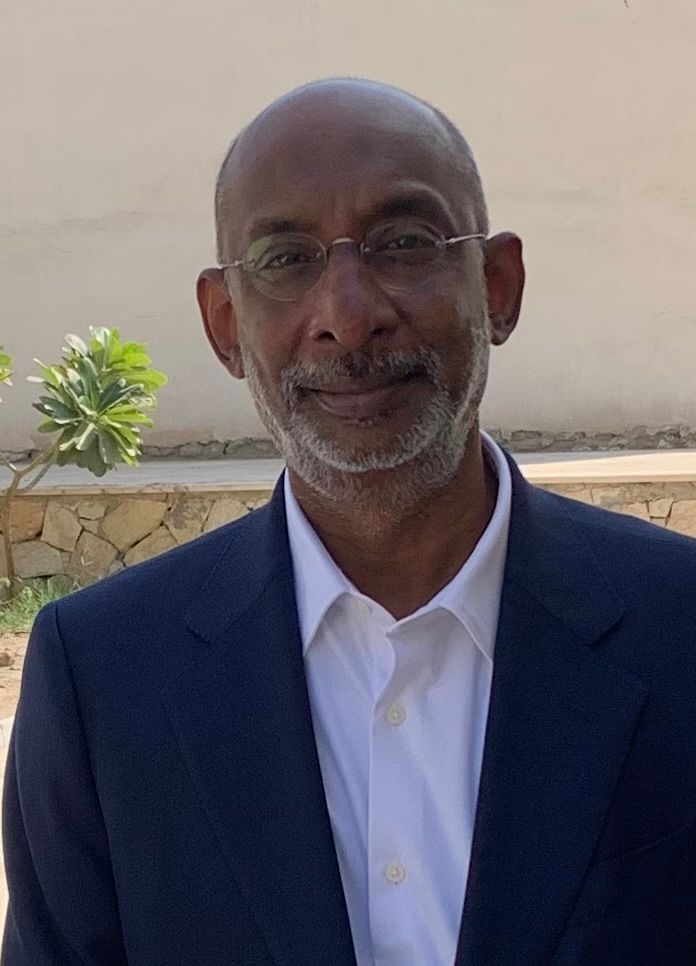
    India’s Unheeded Coronavirus Warning

    Early in the outbreak, government researchers forecast several high-risk scenarios that were downplayed or ignored in public messaging.

      Gautam I. Menon

Get more news and analysis from
Carnegie India
Carnegie India logo, white
Unit C-4, 5, 6, EdenparkShaheed Jeet Singh MargNew Delhi – 110016, IndiaPhone: 011-40078687
  • Research
  • About
  • Experts
  • Projects
  • Events
  • Contact
  • Careers
  • Privacy
  • For Media
Get more news and analysis from
Carnegie India
© 2026 Carnegie Endowment for International Peace. All rights reserved.