

Q&A
- +2
Judy Dempsey, Alexander Gabuev, Rose Gottemoeller, …
{
  "authors": [
    "Rose Gottemoeller"
  ],
  "type": "legacyinthemedia",
  "centerAffiliationAll": "dc",
  "centers": [
    "Carnegie Endowment for International Peace"
  ],
  "collections": [],
  "englishNewsletterAll": "ctw",
  "nonEnglishNewsletterAll": "",
  "primaryCenter": "Carnegie Endowment for International Peace",
  "programAffiliation": "russia",
  "programs": [
    "Russia and Eurasia"
  ],
  "projects": [],
  "regions": [
    "Caucasus",
    "Russia"
  ],
  "topics": [
    "Foreign Policy"
  ]
}
Source: Getty
Medvedev can set a new tone for Russia in order to sustain its newfound position on the world stage. By cultivating cooperation rather than confrontation, Russia will maximize its self-interests.
Source: The Moscow Times

By January, U.S. President George W. Bush will be gone, and a new incumbent will occupy the White House. In Britain, Prime Minister Gordon Brown has just suffered a big defeat in local elections, so the Labour Party will be fighting for its life among the electorate. Likewise, French President Nicolas Sarkozy has heard from voters already disenchanted with his private life. Controversial Silvio Berlusconi resumes power as prime minister in a sharply divided Italy.
Japanese Prime Minister Yasuo Fukuda, who visited Moscow in April, represents a government in office for only a few shaky months. Canadian Prime Minister Stephen Harper leads his Conservative Party in a minority government. Angela Merkel, who has been chancellor of Germany since 2005, at this point is the grand dame of the G8 and seemingly the most successful leader among them, although she has plenty of problems at home.
Thus, Medvedev can establish himself as an important foreign policy player among a field that is in flux. A major question floating around Moscow at the moment is whether he will have the tools to do so. Many analysts argue that President Vladimir Putin is transferring the levers of power to the White House, where he will control almost everything as the prime minister.
Looking in from the outside, maybe Medvedev will be deprived of immediate leverage, but important elements of power will remain his. Both Putin and Medvedev have made much of the fact that no changes are being made to the Constitution, therefore Medvedev as president will be responsible for foreign and security policy.
So, from Wednesday on, invitations to attend major summit meetings will land on Medvedev's desk. The current and next U.S. presidents will be calling Medvedev. One of the most interesting aspects of the presidency is that the nuclear button -- the command and control of Russia's enormous nuclear arsenal -- will rest with Medvedev.
As president, Medvedev should be able to make the most of such trappings so that, over time, real power and authority will accrue to him. And given the flux in other capitals, there are opportunities for real progress on Russian foreign policy goals. It would be a shame to waste this chance on internecine strife in Moscow.
Two big goals of foreign policy stand out as urgent for Russia. The first is policy that puts the country on the world stage and keeps it there. The Sochi Olympics provide a good example of this phenomenon. The Kremlin has relished its hard-won victory to host the Winter Olympics in 2014. For the ruling elites, it is probably the key indicator that the country is back on the world stage in a big way -- and now they must stay there.
The message of the Beijing Olympic torch will not be lost on them. They will have a strong urge to resolve the frozen conflicts in Abkhazia and South Ossetia, as well as Moldova and Nagorno-Karabakh, to host the Olympics as the hero and not the villain. Of course, six years is a long time for policy to unfold. But a key point remains: Russia will not want to be in the position that China is in today, the target of worldwide criticism prior to the Sochi Games.
The second class of policy contains opportunities for Russia to exercise its prowess in industry, science and technology. Herein lies the rationale for the country to finally to come to terms with U.S. missile-defense programs. Ultimately, the Russian defense industries would like to be a full partner, providing radar and other components to the system -- first in Europe, but ultimately beyond. This was part of the logic behind Putin's offer to incorporate the Gabala early warning radar facility, located in Azerbaijan, into the U.S. system in Europe. It would give the United States a chance to see, up close and in person, just how effective Russian radar technology can be.
It is easy to notice that this is a peacetime agenda that is not focused on threats but on Russia maximizing its self-interests. We have heard many threats from Moscow in the past two years, peaking after Putin's menacing speech in Munich in February 2007. As unpleasant as the experience has been, outside observers can understand why the language of threats became so important to the Kremlin. It was meant to propel Moscow back onto center stage in global affairs. But Russia is at the center now, and continued threat-mongering complicates its efforts to remain there. Without friends, the job will be hopeless.
So Putin fulfilled an important goal, but Medvedev does not have to get mired in it. All he has to do is preserve the gain. Thus, we should not expect him to be "softer" than Putin, but he will be less invested in projecting the threat image. His toughness can be balanced by pragmatism in achieving Russia's foreign policy goals.
Nonresident Senior Fellow, Nuclear Policy Program
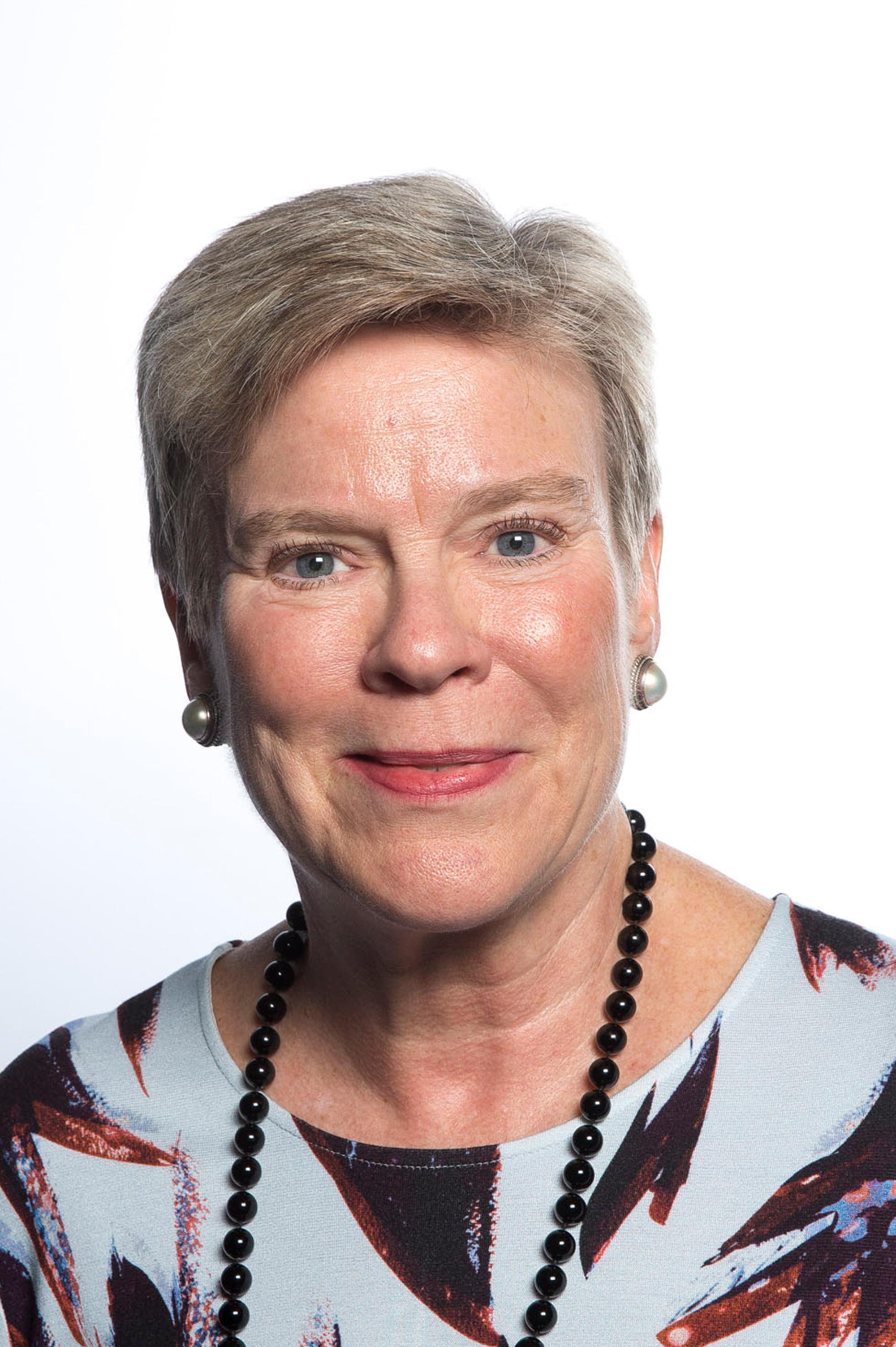
Rose Gottemoeller is a nonresident senior fellow in Carnegie’s Nuclear Policy Program. She also serves as lecturer at Stanford University’s Freeman Spogli Institute for International Studies and is a research fellow at the Hoover Institution. Ambassador Gottemoeller served as the deputy secretary general of NATO from 2016 to 2019.
Recent Work


Judy Dempsey, Alexander Gabuev, Rose Gottemoeller, …
Carnegie India does not take institutional positions on public policy issues; the views represented herein are those of the author(s) and do not necessarily reflect the views of Carnegie, its staff, or its trustees.

After the chill in ties between 2020 and 2024 that brought India–China relations to their lowest point in several decades, the two countries have engaged each other afresh. This paper argues that there are predominantly four imperatives guiding India’s approach to China, and they exist in an order of priority.

Saheb Singh Chadha

This piece argues that India’s central challenge is not managing a single flashpoint but resolving the underlying tension between expansion and institutional coherency of the BRICS grouping.

Vrinda Sahai

A partnership between India, a country of subcontinental size, and Africa, a continent of fifty-four countries, may seem asymmetric until one notes that both are home to nearly the same number of people—1.4 billion. This essay spells out the existing challenges to the partnership, its optimal potential, and the possible pathways to realize it over the next quarter-century.

Rajiv Bhatia

The India–EU Free Trade Agreement (FTA) is shaping up to be one of the most consequential trade negotiations, both economically and strategically. But, what’s in the agreement, what’s missing, and what will determine its success in the years ahead
Vrinda Sahai, Nicolas Köhler-Suzuki

Trump 2.0 has unsettled India’s external environment—but has not overturned its foreign policy strategy, which continues to rely on diversification, hedging, and calibrated partnerships across a fractured order.



Milan Vaishnav, ed., Sameer Lalwani, Tanvi Madan, …