

Commentary
Nikolay Petrov
{
  "authors": [
    "Nikolay Petrov"
  ],
  "type": "legacyinthemedia",
  "centerAffiliationAll": "",
  "centers": [
    "Carnegie Endowment for International Peace",
    "Carnegie Russia Eurasia Center"
  ],
  "collections": [],
  "englishNewsletterAll": "",
  "nonEnglishNewsletterAll": "",
  "primaryCenter": "Carnegie Russia Eurasia Center",
  "programAffiliation": "",
  "programs": [],
  "projects": [],
  "regions": [
    "Caucasus",
    "Russia"
  ],
  "topics": [
    "Foreign Policy"
  ]
}
Source: Getty
This year’s Valdai Discussion Club— a Kremlin sponsored annual discussion among a wide range of global experts on Russia- focused on Chechnya, South Ossetia, and Abkhazia. However, the Kremlin’s increasing use of this conference as a propaganda tool has raised questions about whether Western specialists should attend future meetings.
Source: The Moscow Times

The proceedings usually consist of two days of discussions among a wide range of experts on Russia who do not necessarily have close ties to the Kremlin. This year's theme was "Russia's Role in the Global Geopolitical Revolution at the Start of the 21st Century." Aside from the lure of meeting with Prime Minister Vladimir Putin and President Dmitry Medvedev, the club offers participants the opportunity to become acquainted with a variety of the country's regions, since the venue changes from year to year. The first year it was held in Valdai, near Veliky Novgorod, the following year in Tver, then in St. Petersburg, Khanty-Mansiisk, and last year, in Kazan.
A number of my acquaintances take part in the Valdai club. In all fairness, this year some of them chose not to attend and meet with Abkhaz leader Sergei Bagapsh, South Ossetian President Eduard Kokoity and Chechen President Ramzan Kadyrov, nor were they interested in listening to Putin's latest invective. Indeed, Putin treated the club participants to another conspiracy theory when he claimed that Western nongovernmental organizations operating in the North Caucasus were supporting secessionist movements across the region, using South Osssetia as a pretext.
Among the participants in the final session of this year's Valdai Discussion Club were specialists and journalists from the United States, Britain, Germany, France, Switzerland, Italy, Slovakia, Canada, Japan, China, India, Israel and Iran. The guest list changes each year at the initiative of both the Kremlin and the attendees. This year, there were significantly more journalists and fewer analysts than ever before. Also, there were conspicuously fewer experts from the United States than usual, but more from other influential countries.
Is it morally justifiable for so many Western specialists to participate in Valdai -- a project that is increasingly used as a blunt Kremlin propaganda tool? The original idea was to give those global Russia specialists the rare opportunity to obtain information directly from the country's top leaders, to pose questions to Putin and simply to feel as though they were among a privileged few. Now things have changed. The transcript of the meeting with the president is immediately posted on the conference's web site, and there is not much exclusivity surrounding the event anymore.
Moreover, with the emphasis this year on Chechnya, South Ossetia and Abkhazia, the Kremlin spin doctors used the Valdai participants as PR pawns more than they ever did before. Take, for example, a comment in Kommersant attributed to Alexander Rahr, who took part in this year's Valdai session, that 80 percent of the club's participants "share Russia's position in the conflict in South Ossetia." If this is true, big kudos to the Kremlin PR architects for a job well done.
Last year, one of my colleagues said it was immoral for Western experts to accept such regular invitations from the Kremlin because by doing so, they are supporting Russia's anti-Western policies. Admittedly, at that time, I thought her position was a bit radical, but my feelings have changed after this Valdai meeting.
And I am by far not the only person who feels this way. I expect that many Valdai participants will turn down the Kremlin's invitation to attend the conference next September.
This comment first appeared in The Moscow Times
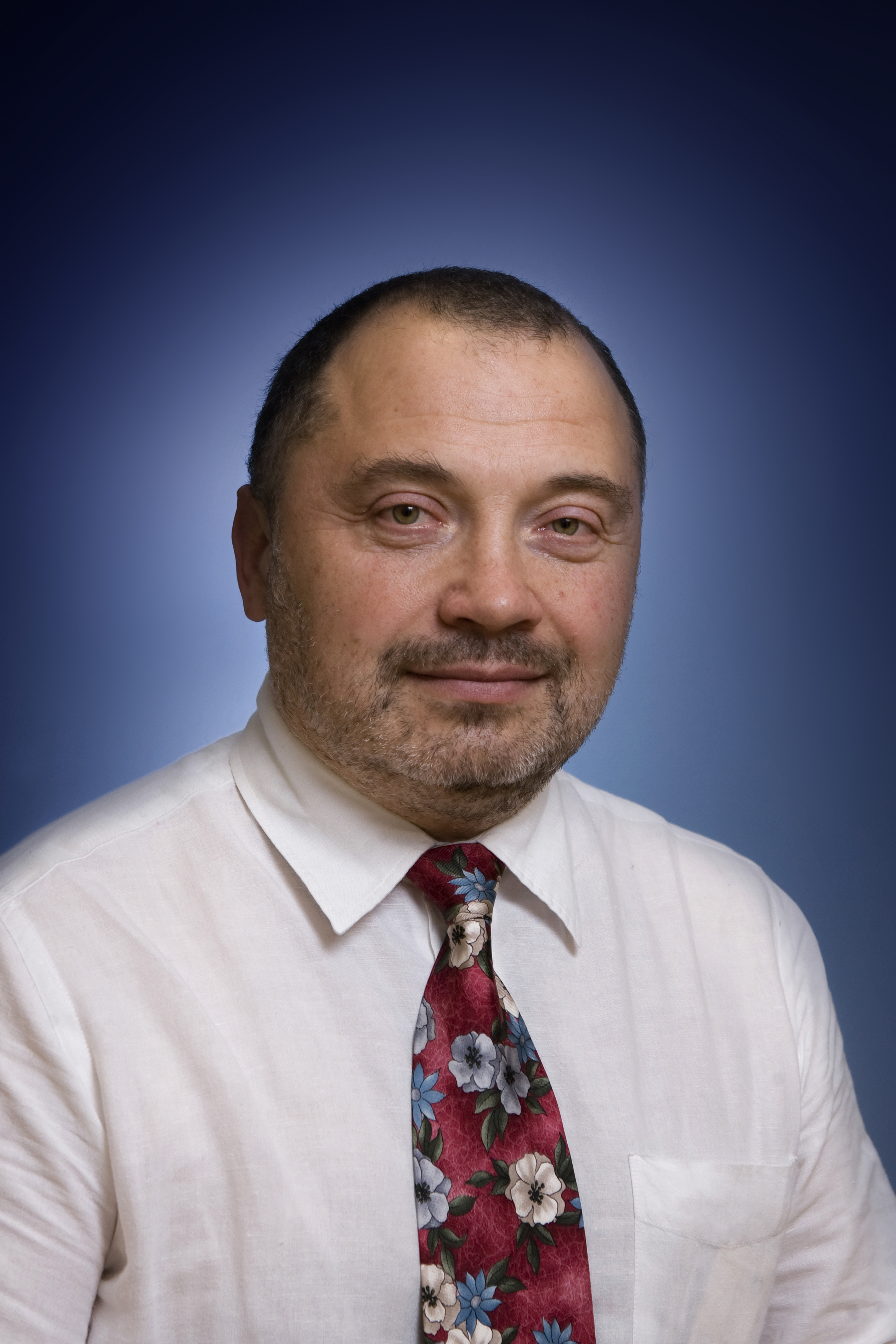
Former Scholar-in-Residence, Society and Regions Program, Moscow Center
Nikolay Petrov was the chair of the Carnegie Moscow Center’s Society and Regions Program. Until 2006, he also worked at the Institute of Geography at the Russian Academy of Sciences, where he started to work in 1982.
Recent Work
Nikolay Petrov
Nikolay Petrov
Carnegie India does not take institutional positions on public policy issues; the views represented herein are those of the author(s) and do not necessarily reflect the views of Carnegie, its staff, or its trustees.

After the chill in ties between 2020 and 2024 that brought India–China relations to their lowest point in several decades, the two countries have engaged each other afresh. This paper argues that there are predominantly four imperatives guiding India’s approach to China, and they exist in an order of priority.

Saheb Singh Chadha

This piece argues that India’s central challenge is not managing a single flashpoint but resolving the underlying tension between expansion and institutional coherency of the BRICS grouping.

Vrinda Sahai

A partnership between India, a country of subcontinental size, and Africa, a continent of fifty-four countries, may seem asymmetric until one notes that both are home to nearly the same number of people—1.4 billion. This essay spells out the existing challenges to the partnership, its optimal potential, and the possible pathways to realize it over the next quarter-century.

Rajiv Bhatia

The India–EU Free Trade Agreement (FTA) is shaping up to be one of the most consequential trade negotiations, both economically and strategically. But, what’s in the agreement, what’s missing, and what will determine its success in the years ahead
Vrinda Sahai, Nicolas Köhler-Suzuki

Trump 2.0 has unsettled India’s external environment—but has not overturned its foreign policy strategy, which continues to rely on diversification, hedging, and calibrated partnerships across a fractured order.



Milan Vaishnav, ed., Sameer Lalwani, Tanvi Madan, …