• Research
  • About
  • Experts
Carnegie India logoCarnegie lettermark logo
{
  "authors": [],
  "type": "pressRelease",
  "centerAffiliationAll": "dc",
  "centers": [
    "Carnegie Endowment for International Peace",
    "Malcolm H. Kerr Carnegie Middle East Center"
  ],
  "collections": [],
  "englishNewsletterAll": "menaTransitions",
  "nonEnglishNewsletterAll": "",
  "primaryCenter": "Malcolm H. Kerr Carnegie Middle East Center",
  "programAffiliation": "MEP",
  "programs": [
    "Middle East"
  ],
  "projects": [],
  "regions": [
    "Egypt",
    "Gulf",
    "Levant",
    "Maghreb",
    "Middle East"
  ],
  "topics": [
    "Economy"
  ]
}
REQUIRED IMAGE

REQUIRED IMAGE

Press Release
Malcolm H. Kerr Carnegie Middle East Center

International Framework Needed to Govern Sovereign Wealth Funds

The financial interdependence that sovereign wealth funds (SWFs) created between the West and the Arab world could help stabilize multilateral relations and promote economic development and political stability in the Middle East, concludes a new paper from the Carnegie Middle East Center.

Link Copied
Published on Oct 15, 2008

BEIRUT, Oct 15—The financial interdependence that sovereign wealth funds (SWFs) created between the West and the Arab world could help stabilize multilateral relations and promote economic development and political stability in the Middle East, concludes a new paper from the Carnegie Middle East Center.

Sven Behrendt studies the rise of Arab SWFs, assesses their investment strategy, and evaluates the policies of Arab investors and Western nations. He also analyzes the political implications of policy initiatives, such as the International Working Group of Sovereign Wealth Funds convened by the IMF, which agreed to new voluntary principles and investment practices in Washington last Saturday.

Key conclusions

  • An international framework between investing and recipients nations is needed and should reflect the changing nature of the global market. A fragmented system of national policies is inefficient and in no one’s interest.
  • Arab investment managers need to adjust their strategies and take broader responsibility for the stability of the global financial markets. They can no longer play the role of quiet investors.
  • Arab public opinion, media, and civil society should take an interest in their countries’ SWFs and demand a more transparent accounting of how the funds are being invested.
  • Western governments should acknowledge the increased bargaining power of the Gulf countries and reach out in a constructive manner. They must also avoid policy decisions based on misplaced fear of foreign domination and populist sentiments.

Behrendt cautions:

“It is vital that the International Working Group’s work acquires a high degree of political legitimacy, anticipating the tremendous growth of SWFs in the mid-term future, further straining any new financial markets regime. Otherwise states will revert to national legislation in regard to regulating SWFs. The outcomes of these policy processes risk becoming a function of the domestic discourse between pragmatists and populists in the Western countries.”

###


bullet
NOTES

  • Direct link to the PDF: www.carnegieendowment.org/files/arab_sovereign_wealth_funds.pdf
  • Sven Behrendt is a visiting scholar at the Carnegie Middle East Center. He is an expert in global policy issues, international negotiations, corporate strategy, and diplomacy. Prior to his appointment at Carnegie, he served in various management positions at the World Economic Forum and the Bertelsmann Group on Policy Research. He is a regular commentator on television and in the press on corporate strategy and globalization.
  • The Carnegie Middle East Center is a public policy think tank and research center based in Beirut, Lebanon. Bringing together senior researchers from the region, the Carnegie Middle East Center aims to better inform the process of political change in the Middle East and deepen understanding of the issues the region and its people face.
  • The Carnegie Middle East Program combines in-depth local knowledge with incisive comparative analysis to examine economic, socio-political, and strategic interests in the Arab world. Through detailed country studies and the exploration of key cross-cutting themes, the Carnegie Middle East Program, in coordination with the Carnegie Middle East Center, provides analysis and recommendations in both English and Arabic that are deeply informed by knowledge and views from the region. The Carnegie Middle East Program has special expertise in political reform and Islamist participation in pluralistic politics throughout the region.
  • The Arab Reform Bulletin addresses political reform in the Middle East. Sent monthly, it offers analysis from U.S.-based and Middle Eastern political experts in English and Arabic, as well as news synopses and resource guides.
  • Press Contact: Trent Perrotto, 202/939-2372, tperrotto@ceip.org
EconomyEgyptGulfLevantMaghrebMiddle East

Carnegie India does not take institutional positions on public policy issues; the views represented herein are those of the author(s) and do not necessarily reflect the views of Carnegie, its staff, or its trustees.

More Work from Carnegie India

  • Commentary
    The Impact of U.S. Sanctions and Tariffs on India’s Russian Oil Imports

    This piece examines India’s response to U.S. sanctions and tariffs, specifically assessing the immediate market consequences, such as alterations in import costs, and the broader strategic implications for India’s energy security and foreign policy orientation.

      Vrinda Sahai

  • Paper
    India-China Economic Ties: Determinants and Possibilities

    This paper examines the evolution of India-China economic ties from 2005 to 2025. It explores the impact of global events, bilateral political ties, and domestic policies on distinct spheres of the economic relationship.

      Santosh Pai

  • Commentary
    TRUST and Tariffs

    The India-U.S. relationship currently appears buffeted between three “Ts”—TRUST, Tariffs, and Trump.

      Arun K. Singh

  • Article
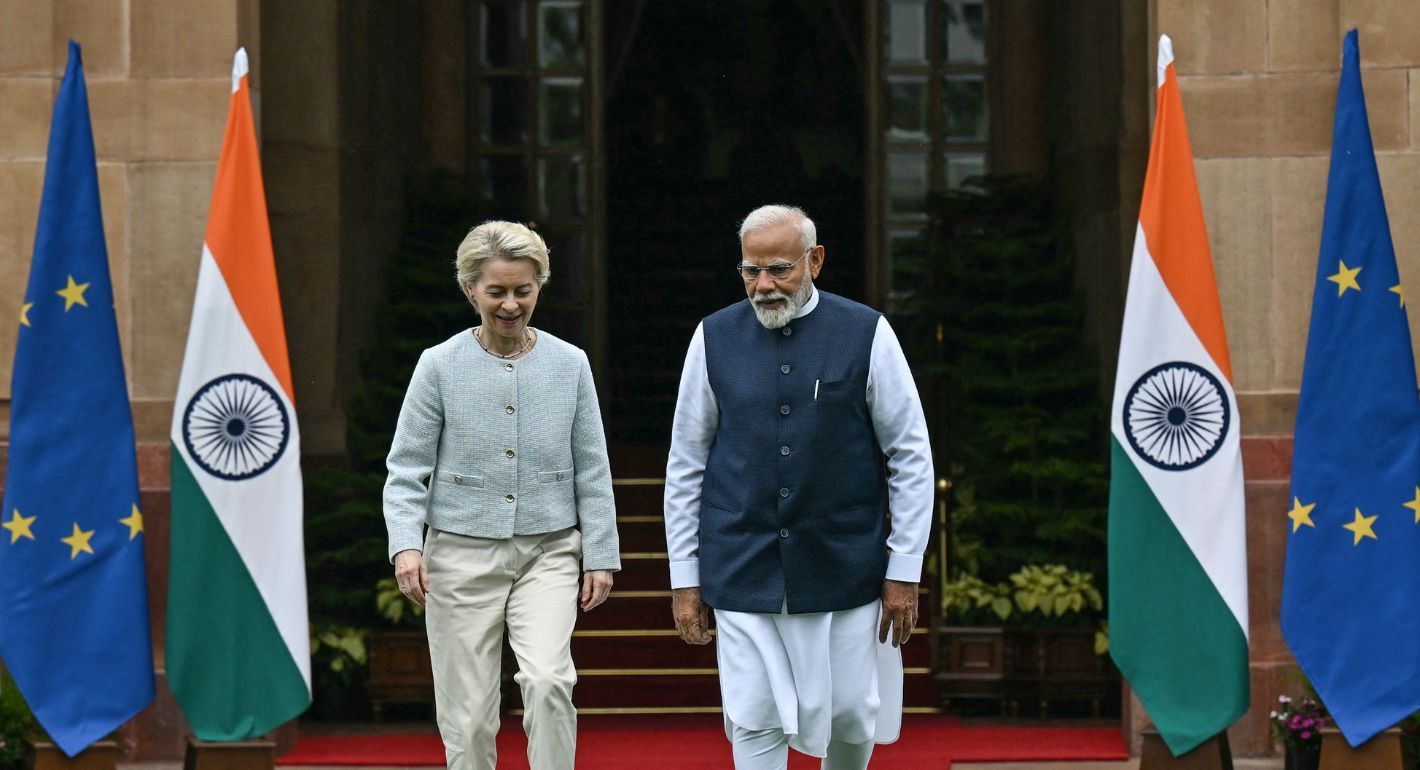
    Can Geopolitical Alignment Seal the India-EU FTA?

    This article argues that the geopolitical circumstances have never been more conducive, not merely for the early conclusion of the free trade agreement (FTA) between India and the EU, but also for crafting a substantive and comprehensive strategic partnership.

      Mohan Kumar

  • Article
    Risk and Retaliation: Israel, Iran, and the Evolving Situation in West Asia

    An Israeli response to Iran’s October 1 attack is imminent. The key question is of its intensity and potential fallout, both within Iran, in terms of nuclear security policy changes, and across the broader region. The coming days are likely to reshape West Asia irreversibly.

      Gaddam Dharmendra

Get more news and analysis from
Carnegie India
Carnegie India logo, white
Unit C-4, 5, 6, EdenparkShaheed Jeet Singh MargNew Delhi – 110016, IndiaPhone: 011-40078687
  • Research
  • About
  • Experts
  • Projects
  • Events
  • Contact
  • Careers
  • Privacy
  • For Media
Get more news and analysis from
Carnegie India
© 2026 Carnegie Endowment for International Peace. All rights reserved.