
• Research
  • About
  • Experts
Carnegie India logoCarnegie lettermark logo
Technology
{
  "authors": [
    "William Maley"
  ],
  "type": "other",
  "centerAffiliationAll": "dc",
  "centers": [
    "Carnegie Endowment for International Peace"
  ],
  "collections": [],
  "englishNewsletterAll": "",
  "nonEnglishNewsletterAll": "",
  "primaryCenter": "Carnegie Endowment for International Peace",
  "programAffiliation": "SAP",
  "programs": [
    "South Asia"
  ],
  "projects": [],
  "regions": [
    "North America",
    "United States",
    "South Asia",
    "Afghanistan"
  ],
  "topics": [
    "Political Reform",
    "Economy",
    "Security",
    "Military",
    "Foreign Policy"
  ]
}

Source: Getty

Other

Stabilizing Afghanistan: Threats and Challenges

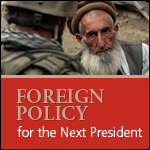
Stability in Afghanistan and the future of its government depend on the United States and its Afghan and other allies providing security for the Afghan people. Calls for an Iraq-style “troop surge” ignore the immediate need for a comprehensive political strategy to fix Afghanistan’s fragile security structure, dysfunctional system of government, and unstable borders.

Link Copied
By William Maley
Published on Oct 30, 2008

Stability in Afghanistan and the future of its government depend on the United States and its Afghan and other allies providing security for the Afghan people. Calls for an Iraq-style “troop surge” ignore the immediate need for a comprehensive political strategy to fix Afghanistan’s fragile security structure, dysfunctional system of government, and unstable borders, warns a new policy brief by Afghanistan expert William Maley.

Since the ousting of the Taliban in 2001, serious flaws in the international community’s approach point to the need for a long-term vision. Poor governance, failure to secure adequate counterterrorism cooperation from Pakistan, and the limited presence of international troops beyond Kabul greatly undermined the Afghan public’s confidence in their country’s transition and Western promises.

Recommendations for the next U.S. president:

  • Develop with NATO and allies a sustained, long-term commitment for stability.
  • Ensure greater focus on bringing security to Afghans’ daily lives, particularly those in small villages which are home to more than half the population, to build legitimacy for Afghanistan’s government.
  • Support systematic reform of Afghanistan’s 2004 constitution, which created a dysfunctional government too reliant on its president, without an effective executive office to support him.
  • Base counter-narcotics policies for Afghanistan on long-term projects that increase the returns from cultivating legal crops.
  • Encourage more Muslim states to contribute personnel to support the promotion of human security and development in Afghanistan.
  • Pressure Pakistan discreetly but strongly to arrest the Afghan Taliban leadership within its borders.

Maley concludes:

“Complex problems need carefully conceived responses, and when disrupted states are allowed to fester, their problems can easily become toxic for the international system. Afghanistan can find solutions to its problems, but those seeking to help it need great wisdom, courage, and farsightedness. This is the ultimate challenge that Afghanistan poses for the next U.S. president.”

About the Author
William Maley is professor and director of the Asia-Pacific College of Diplomacy at the Australian National University. He has taught at the University of New South Wales, the Australian Defence Force Academy, and the Russian Diplomatic Academy.
 

William Maley
Political ReformEconomySecurityMilitaryForeign PolicyNorth AmericaUnited StatesSouth AsiaAfghanistan

Carnegie India does not take institutional positions on public policy issues; the views represented herein are those of the author(s) and do not necessarily reflect the views of Carnegie, its staff, or its trustees.

More Work from Carnegie India

  • Commentary
    The Impact of U.S. Sanctions and Tariffs on India’s Russian Oil Imports

    This piece examines India’s response to U.S. sanctions and tariffs, specifically assessing the immediate market consequences, such as alterations in import costs, and the broader strategic implications for India’s energy security and foreign policy orientation.

      Vrinda Sahai

  • Article
    Military Lessons from Operation Sindoor

    The India-Pakistan conflict that played out between May 6 and May 10, 2025, offers several military lessons. This article presents key takeaways from Operation Sindoor and breaks down how India’s preparations shaped the outcome and what more is needed to strengthen future readiness.

      Dinakar Peri

  • Book
    India and the Sovereignty Principle: The Disaggregation Imperative

    This book offers a comprehensive analysis of India's evolving relationship with sovereignty in a complex global order. Moving beyond conventional narratives, it examines how the sovereignty principle shapes India's behavior across four critical domains—from traditional military power to contemporary data governance.

      Rudra Chaudhuri, Nabarun Roy

  • Paper
    India-China Economic Ties: Determinants and Possibilities

    This paper examines the evolution of India-China economic ties from 2005 to 2025. It explores the impact of global events, bilateral political ties, and domestic policies on distinct spheres of the economic relationship.

      Santosh Pai

  • Commentary
    NISAR Soars While India-U.S. Tariff Tensions Simmer

    On July 30, 2025, the United States announced 25 percent tariffs on Indian goods. While diplomatic tensions simmered on the trade front, a cosmic calm prevailed at the Sriharikota launch range. Officials from NASA and ISRO were preparing to launch an engineering marvel into space—the NASA-ISRO Synthetic Aperture Radar (NISAR), marking a significant milestone in the India-U.S. bilateral partnership.

      Tejas Bharadwaj

Get more news and analysis from
Carnegie India
Carnegie India logo, white
Unit C-4, 5, 6, EdenparkShaheed Jeet Singh MargNew Delhi – 110016, IndiaPhone: 011-40078687
  • Research
  • About
  • Experts
  • Projects
  • Events
  • Contact
  • Careers
  • Privacy
  • For Media
Get more news and analysis from
Carnegie India
© 2026 Carnegie Endowment for International Peace. All rights reserved.






