

Paper
Douglas H. Paal
{
  "authors": [
    "Douglas H. Paal"
  ],
  "type": "legacyinthemedia",
  "centerAffiliationAll": "dc",
  "centers": [
    "Carnegie Endowment for International Peace",
    "Carnegie China"
  ],
  "collections": [],
  "englishNewsletterAll": "asia",
  "nonEnglishNewsletterAll": "",
  "primaryCenter": "Carnegie China",
  "programAffiliation": "AP",
  "programs": [
    "Asia"
  ],
  "projects": [],
  "regions": [
    "North America",
    "United States",
    "East Asia",
    "South Korea",
    "China",
    "Japan"
  ],
  "topics": [
    "Climate Change",
    "Foreign Policy"
  ]
}
Source: Getty
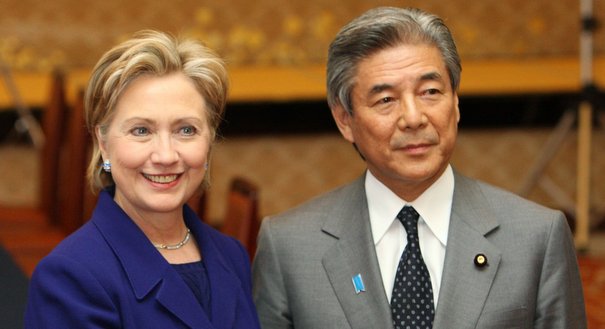
U.S. Secretary of State Hillary Clinton’s choice of Asia for her first overseas trip signals that President Obama is likely to take a more active approach toward the region than his predecessor.
Source: Far Eastern Economic Review

U.S. Secretary of State Hillary Clinton’s choice of Asia for her first overseas trip has surprised and largely pleased her Asian hosts. With little in her background predisposing her to a special interest in the region, Secretary Clinton’s choice of destinations—Tokyo, Jakarta, Seoul and Beijing—signals that President Obama is likely to take a more activist approach toward the region than his predecessor. Moreover, the trip reflects the widespread notion that the global center of gravity has been sliding toward Asia, and even more so after the economic crisis emerged last year.
Mrs. Clinton, only a month into the job, will be taking on a complex region and its issues with only minimal staffing. Most of her substantive lieutenants have not even been announced as candidates for Senate confirmation, let alone confirmed and read into their new briefs. This indicates she will stick to generalities, setting out goals envisioned by the new administration, but not yet the details of how to get there. Nonetheless, we can expect a renewed emphasis on Asia-U.S. cooperation and a return to the basics of American diplomacy in the region. Here’s what she can expect in each capital she visits:
Tokyo: As America’s premier ally in the region, Japan is the natural starting point for Mrs. Clinton’s Asia trip. All the more so, because she got off to an awkward start with the Japanese at the beginning of her primary campaign with an article she signed for Foreign Affairs outlining her foreign policy priorities that omitted any reference to Japan.
Lacking an ambassador in Tokyo and dealing with a severely weakened Liberal Democratic party (LDP) government under Prime Minister Taro Aso, there is not much to be expected from their brief encounter other than to pronounce positive sentiments about future cooperation. Reference can also be made to the need to follow through on the military base realignment commitments agreed under Bush. Sustaining momentum on this important adjustment could become very difficult if, as many believe, elections in the coming year bring the opposition Democratic Party of Japan (DPJ) to power.
Differences may surface between Tokyo and Washington over how to handle North Korea and the related issue of Japanese abductees seized by Pyongyang. It is premature for Clinton to float a specific solution, but both sides would do well to refer to their respect for each other’s priorities.
Jakarta: Indonesia could prove to be the sleeper that surprises observers during Mrs. Clinton’s travels. American expectations of Indonesia have been low for decades. Despite the country’s physical extent and 200 million plus Muslim population, it rarely registers in Washington.
But President Obama’s personal history of having lived as a child there combines with considerable domestic political progress in recent years to create a moment of opportunity, which Mrs. Clinton can signal during her visit. Indonesian President Susilo Bambang Yudiono outlined his ambition to fashion a U.S.-Indonesia “strategic partnership” in a speech made during the G-20 meeting in Washington in November. And President Obama has repeatedly indicated his desire to fashion more productive relationships with the globe’s Muslims. He can look forward to visiting Indonesia next November, before or after the annual APEC summit, in neighboring Singapore.
The idea of creating a “strategic partnership” with a Muslim-dominant population, the most important country in Southeast Asia, one that has successfully emerged from decades of dictatorship, which has an important role in global energy supply, and in which Mr. Obama also has personal roots, is too good to miss. Mrs. Clinton will need to handle this circumspectly, of course, preparing the stage for her boss, and not upstaging him in Jakarta. It’s conceivable she can help lay the foundations in Indonesia for possibly the most visibly successful foreign visit by a U.S. president ever, with millions lining the streets to greet him.
Seoul: There are bilateral issues between the U.S. and South Korea, most prominently the current impasse over implementation of KORUS, the draft Korean-U.S. free trade agreement. Both Mr. Obama and Mrs. Clinton cast doubts on the agreement during the election campaign, and President Lee Myung-bak appears to understand that now is not the time to press it on a reluctant administration and Congress. He has not raised the issue in his phone calls with President Obama.
For this visit, it will be more important to get Seoul and Washington to develop a common agenda of basic objectives for future dealings with North Korea. North-South tensions are currently rising, with the North seeking to turn President Lee’s hard line approach to denuclearization into a liability for him at home and with the Americans.
The Obama administration has yet to settle on a policy course for dealing with North Korea, let alone select a “special envoy” to handle the detailed talks. So it will be premature to expect more than general references to the need to seek an outcome that reduces tensions for all the parties to talks with the North and continues to offer Pyongyang security assurances and economic benefits in exchange for complete denuclearization.
Beijing: The final stop in China will combine personal and policy tests for Secretary Clinton. Personal, because she has long been critical of China for human rights abuses and trade issues, and Beijing has been trying to puzzle her out. Policy, because President Obama has set high goals for additional cooperation with China, beyond what President Bush achieved.
The stakes are very high between the U.S. and China, because friendly cooperation can yield outsized benefits, especially in the current economic environment. This is also because relations, if they turn adversarial, can truly become costly.
In a phone conversation with Chinese President Hu Jintao, President Obama outlined broad areas for international cooperation, including the economy, climate change, Iran and non-proliferation, Darfur, Burma and North Korea. Judging from the official readouts, President Obama said there is no more important relationship than between Washington and Beijing, and did not choose to raise Taiwan, Tibet or human rights.
It will be difficult, however, for Mrs. Clinton to avoid recording standing U.S. positions on these sensitive issues in her capacity as a visiting secretary of state. The key will be in the balance she strikes between these tough issues and the promising areas of increased cooperation.
One area she might encourage the Chinese leadership to consider is to make the U.S.-China economic relationship a model for the economically stressful period we are now in. China will need to reduce its export capacity over the next few years, costing millions of jobs, and the U.S. will reduce its imports and consumption generally, also costing jobs. The potential for trade friction and recrimination is not small.
Beijing and Washington should consider giving each other bilateral mutual assurances that they will work hard to smooth the extended adjustment period and not take unfair advantage of each other’s situations. In other words, the U.S. will undertake to refrain from anti-Chinese protectionism, and China will refrain from dumping and other illegal export promotion. These will underscore the general commitments already made within the G-20, but provide more overt political support to uphold them.
Mrs. Clinton can put this idea on the table, with a view to an agreement at the London G-20 meeting in April between President Obama and President Hu. If it can be done, it would also put her standing with the Chinese in a constructive and productive light for future cooperation.
This original article can be found here.

Distinguished Fellow, Asia Program
Paal previously served as vice chairman of JPMorgan Chase International and as unofficial U.S. representative to Taiwan as director of the American Institute in Taiwan.
Recent Work
Douglas H. Paal


Douglas H. Paal, Tong Zhao, Chen Qi, …
Carnegie India does not take institutional positions on public policy issues; the views represented herein are those of the author(s) and do not necessarily reflect the views of Carnegie, its staff, or its trustees.

How is AI reshaping space security, creating governance challenges, and where does international diplomacy stand today?


Tejas Bharadwaj, Almudena Azcárate Ortega

After the chill in ties between 2020 and 2024 that brought India–China relations to their lowest point in several decades, the two countries have engaged each other afresh. This paper argues that there are predominantly four imperatives guiding India’s approach to China, and they exist in an order of priority.

Saheb Singh Chadha

This piece argues that India’s central challenge is not managing a single flashpoint but resolving the underlying tension between expansion and institutional coherency of the BRICS grouping.

Vrinda Sahai

A partnership between India, a country of subcontinental size, and Africa, a continent of fifty-four countries, may seem asymmetric until one notes that both are home to nearly the same number of people—1.4 billion. This essay spells out the existing challenges to the partnership, its optimal potential, and the possible pathways to realize it over the next quarter-century.

Rajiv Bhatia

The U.S.–India semiconductor cooperation story is well-stocked with top-level strategic intent. What remains unresolved, however, are some underlying challenges that will determine whether the cooperation actually functions. Three such friction points stand out.

Shruti Mittal