• Research
  • About
  • Experts
Carnegie India logoCarnegie lettermark logo
AI
{
  "authors": [],
  "type": "pressRelease",
  "centerAffiliationAll": "dc",
  "centers": [
    "Carnegie Endowment for International Peace"
  ],
  "collections": [],
  "englishNewsletterAll": "menaTransitions",
  "nonEnglishNewsletterAll": "",
  "primaryCenter": "Carnegie Endowment for International Peace",
  "programAffiliation": "MEP",
  "programs": [
    "Middle East"
  ],
  "projects": [],
  "regions": [
    "North America",
    "United States",
    "Middle East",
    "Israel",
    "Iraq",
    "Palestine"
  ],
  "topics": [
    "Political Reform",
    "Foreign Policy"
  ]
}
REQUIRED IMAGE

REQUIRED IMAGE

Press Release

Voices from the Middle East: Tackle Palestinian Issue First

Arabs expect the Obama administration to focus immediately on the Palestinian issue, using its influence with Israel to halt settlement activity and acting as an honest broker in peace negotiations.

Link Copied
Published on Feb 17, 2009

BEIRUT, Feb 12—Arabs expect the Obama administration to focus immediately on the Palestinian issue, using its influence with Israel to halt settlement activity and acting as an honest broker in peace negotiations, according to a series of commentaries by leading Arab analysts and writers commissioned by the Carnegie Middle East Center.

The widespread belief that the United States is an ally of regional dictators and an unquestioning supporter of Israel colors Arab perceptions of every American move in the region. The writers argue that pressuring Israel to fulfill its commitments vis-à-vis the Palestinians is the only way to rebuild U.S.–Arab relations and rehabilitate the United States’ image in the Middle East.

Key points:

  • President Obama’s current popularity in the Arab world is a perishable asset. Delaying action on Palestine, Iraq, and political reform in the Arab world will revive regional anti-American hostility.
  • The administration should hold direct talks with Hamas and support Mahmoud Abbas’s attempts to reconcile Fatah and Hamas. Abbas cannot secure a peace agreement with Israel without Hamas.
  • Arabs also expect a clear and unequivocal declaration that the United States plans to withdraw from Iraq. Details of the exit strategy are less important than a strong signal that the U.S. occupation of Iraq—a critical obstacle to productive U.S.–Arab relations—is over.
  • The United States should continue its support for democratization in the Middle East, but it must re-examine its position on Islamist parties, which are part of the region’s political reality and cannot be shut out of the process of political reform. Treating all Islamist organizations as enemies plays into the hands of increasingly powerful radicals.

Gamal al-Ghitany, Khaled al-Hroub, Salah ad-Din al-Jourchi, and Mustapha al-Khalfi—prominent journalists, academics, and activists—contributed their reactions to Barack Obama’s victory.

Carnegie’s Amr Hamzawy and Marina Ottaway, who compiled the commentaries, conclude:

“Obama’s election was a public diplomacy triumph for the United States, the first real success the United States has won in the Arab world in a long time, and probably the most important one since President Eisenhower backed Egypt’s efforts to regain control of the Suez Canal in 1956. Yet the success could prove short-lived: Arabs were reacting to concrete change, not to words, and are likely to revert to the old hostility unless Obama’s words are backed by concrete changes in U.S. Middle East policies.”

###


NOTES

  • Direct link to the PDF: www.carnegieendowment.org/files/obama_middle_east.pdf
  • President Obama has inherited a tougher foreign policy inbox than any president has faced since Harry Truman; establishing priorities among dozens of conflicts and crises requires new understanding of the most critical regions, the most salient issues within them, and the issues ripest for new direction. In its series, Foreign Policy for the Next President, the Carnegie Endowment’s experts endeavor to do just that. They separate good ideas from dead ends and go beyond widely agreed goals to describe how to achieve them.
  • The Carnegie Middle East Program provides analysis and recommendations in both English and Arabic that are deeply informed by knowledge and views from the region.
  • The Carnegie Middle East Center based in Beirut, Lebanon, aims to better inform the process of political change in the Middle East.
  • Carnegie's Arab Reform Bulletin has been transformed into a full-featured website that offers greatly enhanced search functionality, the option for readers to comment on articles, and frequent news updates.
  • Press Contact: Trent Perrotto, 202/939-2372, tperrotto@ceip.org
Political ReformForeign PolicyNorth AmericaUnited StatesMiddle EastIsraelIraqPalestine

Carnegie India does not take institutional positions on public policy issues; the views represented herein are those of the author(s) and do not necessarily reflect the views of Carnegie, its staff, or its trustees.

More Work from Carnegie India

  • Commentary
    India Signs the Pax Silica—A Counter to Pax Sinica?

    On the last day of the India AI Impact Summit, India signed Pax Silica, a U.S.-led declaration seemingly focused on semiconductors. While India’s accession to the same was not entirely unforeseen, becoming a signatory nation this quickly was not on the cards either.

      Konark Bhandari

  • Commentary
    The Impact of U.S. Sanctions and Tariffs on India’s Russian Oil Imports

    This piece examines India’s response to U.S. sanctions and tariffs, specifically assessing the immediate market consequences, such as alterations in import costs, and the broader strategic implications for India’s energy security and foreign policy orientation.

      Vrinda Sahai

  • Commentary
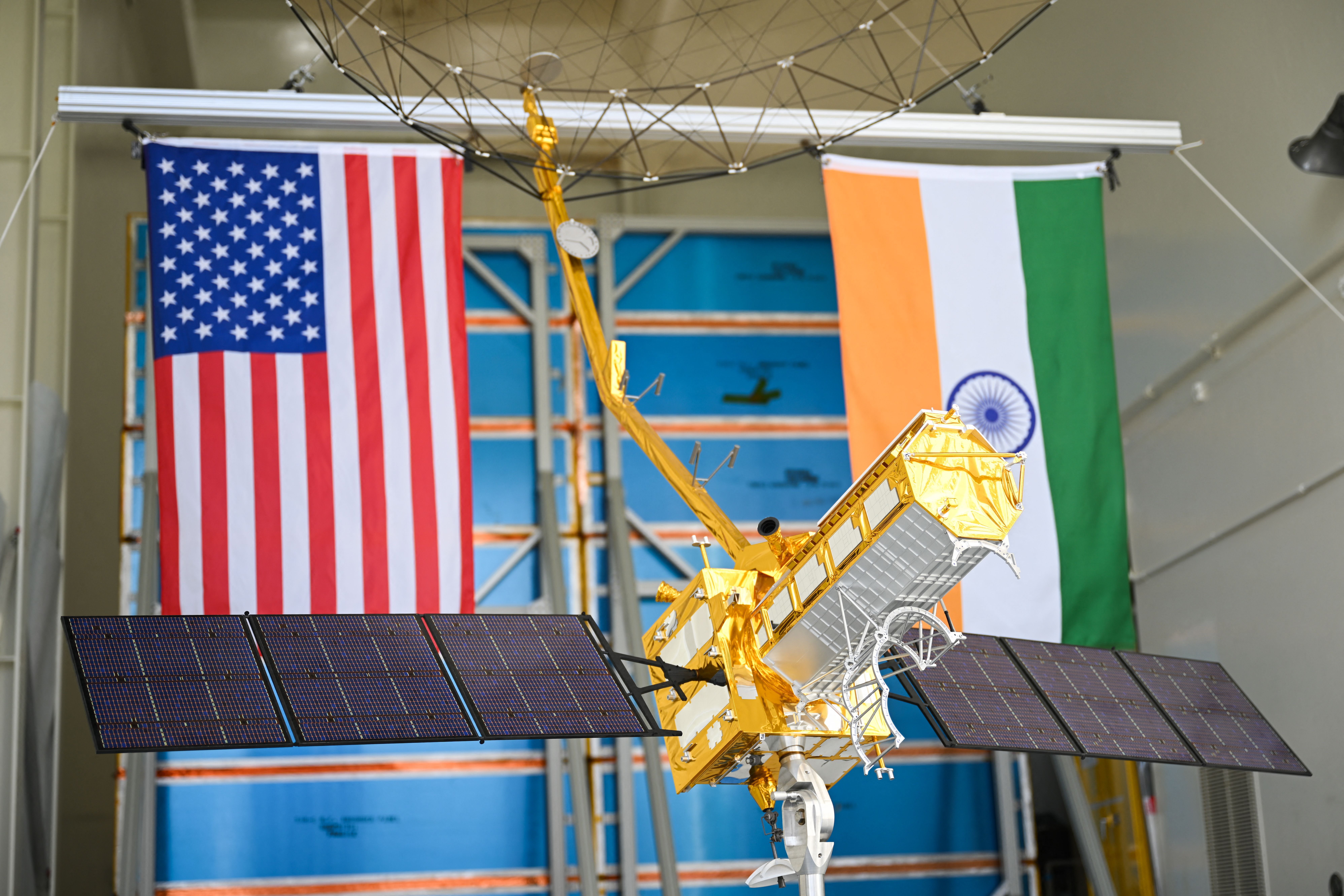
    NISAR Soars While India-U.S. Tariff Tensions Simmer

    On July 30, 2025, the United States announced 25 percent tariffs on Indian goods. While diplomatic tensions simmered on the trade front, a cosmic calm prevailed at the Sriharikota launch range. Officials from NASA and ISRO were preparing to launch an engineering marvel into space—the NASA-ISRO Synthetic Aperture Radar (NISAR), marking a significant milestone in the India-U.S. bilateral partnership.

      Tejas Bharadwaj

  • Commentary
    TRUST and Tariffs

    The India-U.S. relationship currently appears buffeted between three “Ts”—TRUST, Tariffs, and Trump.

      Arun K. Singh

  • Commentary
    Indian Airstrikes in Pakistan: May 7, 2025

    On May 7, 2025, between 1:05 and 1:30 a.m. (IST), airstrikes carried out by the Indian Air Force hit nine locations inside Pakistan and Pakistan occupied Kashmir (PoK). It was codenamed Operation Sindoor.

      Rudra Chaudhuri

Get more news and analysis from
Carnegie India
Carnegie India logo, white
Unit C-4, 5, 6, EdenparkShaheed Jeet Singh MargNew Delhi – 110016, IndiaPhone: 011-40078687
  • Research
  • About
  • Experts
  • Projects
  • Events
  • Contact
  • Careers
  • Privacy
  • For Media
Get more news and analysis from
Carnegie India
© 2026 Carnegie Endowment for International Peace. All rights reserved.