• Research
  • About
  • Experts
Carnegie India logoCarnegie lettermark logo
AI
{
  "authors": [
    "Mark Medish"
  ],
  "type": "legacyinthemedia",
  "centerAffiliationAll": "dc",
  "centers": [
    "Carnegie Endowment for International Peace",
    "Carnegie Russia Eurasia Center"
  ],
  "collections": [],
  "englishNewsletterAll": "ctw",
  "nonEnglishNewsletterAll": "",
  "primaryCenter": "Carnegie Endowment for International Peace",
  "programAffiliation": "russia",
  "programs": [
    "Russia and Eurasia"
  ],
  "projects": [],
  "regions": [
    "North America",
    "United States",
    "Caucasus",
    "Russia"
  ],
  "topics": [
    "Security",
    "Foreign Policy"
  ]
}
Source: Getty

In The Media

A Proper Translation of the 'Reset Button'

The United States and Russia can improve strained relations by focusing on areas of compatible interests and clearly defining a set of near-term priority objectives for bilateral cooperation.

Link Copied
By Mark Medish
Published on Apr 2, 2009

Source: ForeignPolicy.com

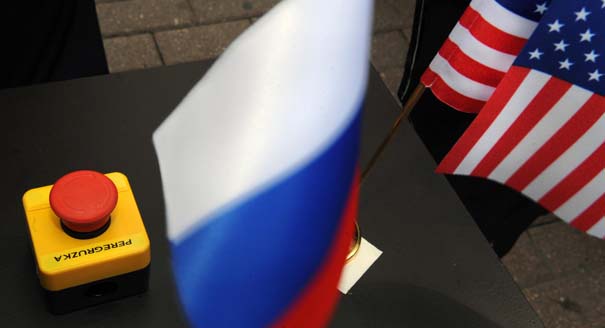
A Proper Translation of the 'Reset Button' When U.S. Secretary of State Hillary Clinton's staff mistranslated her promise to "reset" relations with Russia into "overload" during a meeting with that country's foreign minister in Geneva on March 6, it could easily have been a Freudian slip. After years of cooling relations, there is certainly baggage weighing down the U.S.-Russian relationship on both sides.

But this week, as Presidents Barack Obama and Dmitry Medvedev prepare to meet on the sidelines of the G20 summit, the two leaders will have another shot at the translating the reset button: into action. And though a reset button connotes automation, both men must recognize from the outset that repairing U.S.-Russia relations will be anything but routine.
 
Following in the wake of George W. Bush, Obama might be excused for thinking that an improvement in relations will not be asking much. The previous administration made Kosovo independence, European missile defense, and expedited NATO enlargement its priorities. And while none of these goals was inherently outrageous, neither were they particularly wise. Taken together, they amounted to a provocative stance toward Russia. Obama's early signals of new priorities -- for example, deferring the missile defense initiative in the context of closer Russian cooperation on Iran -- are encouraging.
 
Lest the congratulations begin too soon, Obama must be aware that it will require some serious work to restore a sense of trust to the troubled relationship.
 
As its guiding logic, the Obama presidency should rely on the kind of visionary pragmatism that has characterized the best of the American foreign policy tradition. Initially, this will entail a kind of strategic rebalancing based on a careful picking of priorities in relation to countries such as Russia and China. This philosophy was clear in Secretary Clinton's message in China -- that America will not forget about human rights or support for democracy building but neither will it subordinate other important national security interests to those concerns. In the case of Russia, it will mean balancing the drawbacks of Kremlin engagement with the possible gains: nuclear arms reduction, non-proliferation of weapons of mass destruction, stabilizing Afghanistan, and dealing with Iran.
 
For their part, the Russians have mostly welcomed the reset metaphor. Yet a stumbling block remains. Some advisers in the Kremlin believe that -- in the aftermath of the Iraq war -- the high point of U.S. influence in Eurasia is past, and Russia should try to reassert itself in its traditional sphere of influence. Indeed, Russia purposely exacerbated matters over the past year, particularly with its reckless incursions into Abkhazia and South Ossetia last August and its continued pressure on Ukraine's energy sector - actions that sparked understandable concern in Europe. Now, as the United States stands by Ukrainian and Georgian sovereignty and continues to fight in Afghanistan, both sides will have to take steps to demonstrate that their Eurasian dealings are benign to the other if U.S.-Russia talks are ever to amount to more than words.
 
Although the task is great, the two presidents should begin with areas of compatible interests, clearly defining a set of near-term priority objectives for bilateral cooperation. In addition to a compromise on missile defense and cooperation on Iran and Afghanistan, the list should include other mutually beneficial goals such as finalizing a nuclear stockpile reduction treaty to replace the START I agreement, which expires in December. A sensible economic priority would be a final push from both sides to expedite Russia's WTO accession. Finally, the United States could show good faith by lifting the Cold War-era Jackson-Vanik amendment that denies its "most favored nation" status to non-market economies that restrict emigration. Particularly since China and Vietnam have already won U.S. wavers from the rules, lifting the ban on Russia is an obvious must.
 
This to-do list is entirely doable, provided that the leaders of both countries share a sense of urgency and are genuinely committed to delivering results. But long before they hit the reset button together, the U.S. and Russian presidents must ensure they are speaking the same language. A first step would be to ensure that they have accurate translators in London.
 
This comment first appeared in Foreign Policy.

About the Author

Mark Medish

Former Visiting Scholar

Medish served in the Clinton administration as special assistant to the President and senior director for Russian, Ukrainian, and Eurasian Affairs on the National Security Council from 2000 to 2001.

    Recent Work

  • Q&A
    Ukraine’s Presidential Election—The End of the Orange Revolution

      Mark Medish

Mark Medish
Former Visiting Scholar
Mark Medish
SecurityForeign PolicyNorth AmericaUnited StatesCaucasusRussia

Carnegie India does not take institutional positions on public policy issues; the views represented herein are those of the author(s) and do not necessarily reflect the views of Carnegie, its staff, or its trustees.

More Work from Carnegie India

  • Article
    India–Africa Strategic Partnership: Challenges, Potential, and Possible Pathways

    A partnership between India, a country of subcontinental size, and Africa, a continent of fifty-four countries, may seem asymmetric until one notes that both are home to nearly the same number of people—1.4 billion. This essay spells out the existing challenges to the partnership, its optimal potential, and the possible pathways to realize it over the next quarter-century.

      Rajiv Bhatia

  • Commentary
    The Unresolved Challenges in U.S.–India Semiconductor Cooperation

    The U.S.–India semiconductor cooperation story is well-stocked with top-level strategic intent. What remains unresolved, however, are some underlying challenges that will determine whether the cooperation actually functions. Three such friction points stand out.

      Shruti Mittal

  • Commentary
    Emerging From the “Zombie State” of Trade Agreements: The India-EU FTA

    The India–EU Free Trade Agreement (FTA) is shaping up to be one of the most consequential trade negotiations, both economically and strategically. But, what’s in the agreement, what’s missing, and what will determine its success in the years ahead

      Vrinda Sahai, Nicolas Köhler-Suzuki

  • Article
    India’s Oil Security Strategy: Structural Vulnerabilities and Strategic Choices

    This piece argues that the present Indian strategy, based on opportunistic diversification and utilization of limited strategic reserves, remains inadequate when confronting supply disruptions. It evaluates India’s options in the short, medium, and long terms.

      Vrinda Sahai

  • India and a Changing Global Order: Foreign Policy in the Trump 2.0 Era
    Research
    India and a Changing Global Order: Foreign Policy in the Trump 2.0 Era

    Trump 2.0 has unsettled India’s external environment—but has not overturned its foreign policy strategy, which continues to rely on diversification, hedging, and calibrated partnerships across a fractured order.

      • Sameer Lalwani
      • +6

      Milan Vaishnav, ed., Sameer Lalwani, Tanvi Madan, …

Get more news and analysis from
Carnegie India
Carnegie India logo, white
Unit C-4, 5, 6, EdenparkShaheed Jeet Singh MargNew Delhi – 110016, IndiaPhone: 011-40078687
  • Research
  • About
  • Experts
  • Projects
  • Events
  • Contact
  • Careers
  • Privacy
  • For Media
Get more news and analysis from
Carnegie India
© 2026 Carnegie Endowment for International Peace. All rights reserved.