

Paper
George Perkovich
{
  "authors": [
    "George Perkovich"
  ],
  "type": "legacyinthemedia",
  "centerAffiliationAll": "dc",
  "centers": [
    "Carnegie Endowment for International Peace",
    "Carnegie Russia Eurasia Center"
  ],
  "collections": [
    "U.S. Nuclear Policy"
  ],
  "englishNewsletterAll": "ctw",
  "nonEnglishNewsletterAll": "",
  "primaryCenter": "Carnegie Endowment for International Peace",
  "programAffiliation": "NPP",
  "programs": [
    "Nuclear Policy"
  ],
  "projects": [],
  "regions": [
    "North America",
    "United States",
    "Caucasus",
    "Russia"
  ],
  "topics": [
    "Nuclear Policy"
  ]
}
Source: Getty
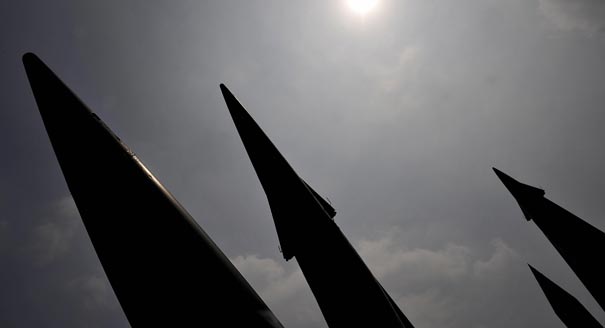
Nuclear-weapon states should commission their defense ministries and think tanks to perform serious analysis on the practical steps of moving towards zero nuclear weapons.
Source: Security Index Journal

Is it really true that Soviet leaders were determined to go to war with the United States but were deterred by the existence of nuclear weapons? At what time and place were Soviet leaders willing to go to war against NATO states but chose not to do so because of nuclear counter threats? What specific evidence shows this? There were cases, such as Vietnam and Afghanistan, where the U.S. and the U.S.S.R intervened militarily in other states. Would these interventions have happened if Washington or Moscow did not believe that nuclear deterrence would keep the other side from escalating? By making escalation to homeland attacks unthinkable, did intra-war nuclear deterrence prolong these wars and the damage they did? Is it possible that nuclear deterrence allowed more killing than it prevented during the Cold War? Even if objective scholars conclude that nuclear deterrence did directly prevent war and did not enable low-intensity conflicts in the Third World, the future effectiveness of nuclear deterrence remains unknowable.
This article was published by the Security Index Journal of the PIR Center, the Russian Center for Policy Studies, http://www.pircenter.org. It is a product of the joint PIR and NTI project "Ways towards Nuclear Disarmament."

Japan Chair for a World Without Nuclear Weapons, Senior Fellow
George Perkovich is the Japan Chair for a World Without Nuclear Weapons and a senior fellow in the Carnegie Endowment for International Peace’s Nuclear Policy Program. He works primarily on nuclear deterrence, nonproliferation, and disarmament issues.
Recent Work
George Perkovich
George Perkovich
Carnegie India does not take institutional positions on public policy issues; the views represented herein are those of the author(s) and do not necessarily reflect the views of Carnegie, its staff, or its trustees.

How is AI reshaping space security, creating governance challenges, and where does international diplomacy stand today?


Tejas Bharadwaj, Almudena Azcárate Ortega

This piece argues that India’s central challenge is not managing a single flashpoint but resolving the underlying tension between expansion and institutional coherency of the BRICS grouping.

Vrinda Sahai

The U.S.–India semiconductor cooperation story is well-stocked with top-level strategic intent. What remains unresolved, however, are some underlying challenges that will determine whether the cooperation actually functions. Three such friction points stand out.

Shruti Mittal
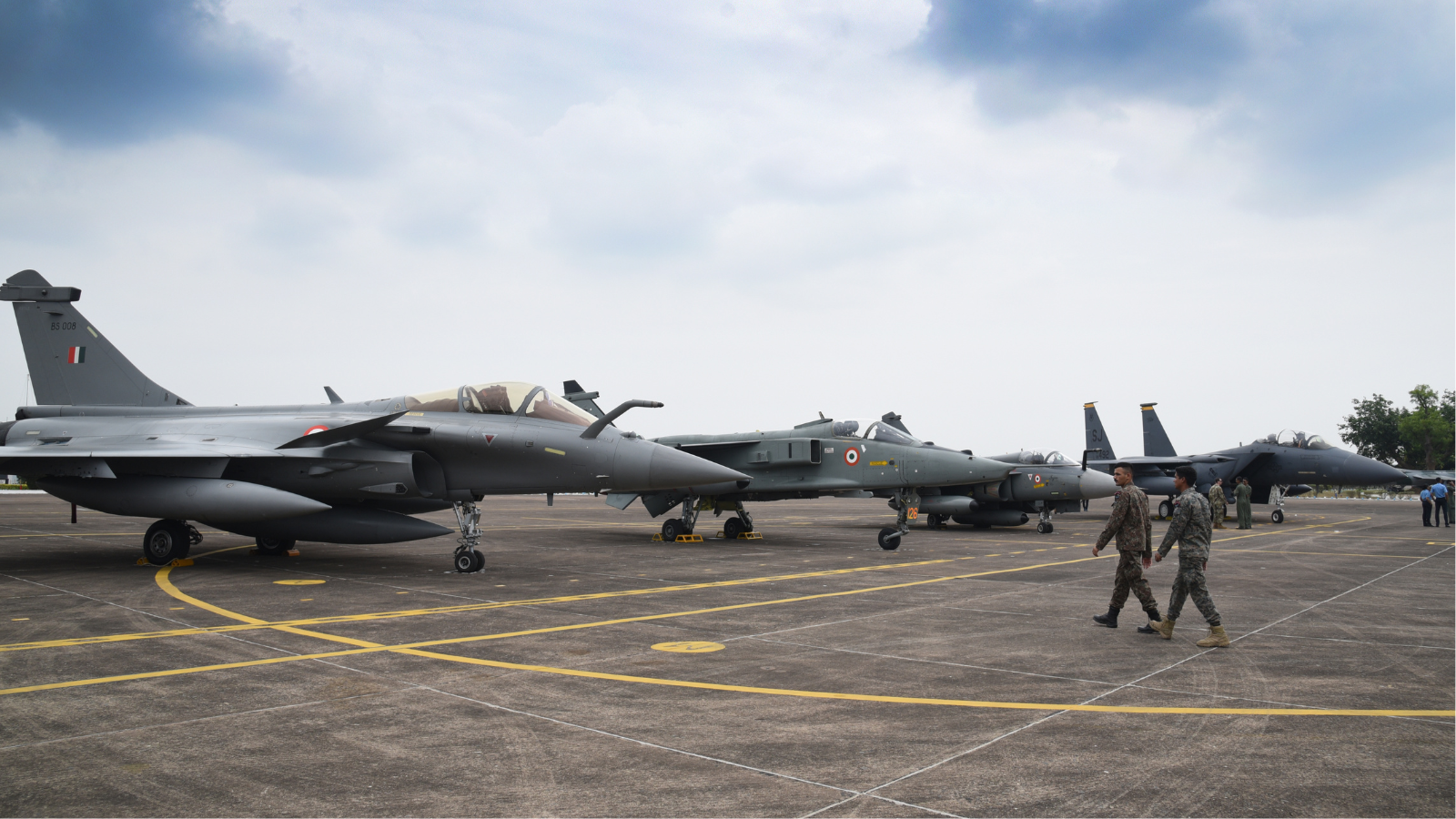
India and the United States are close to concluding a Reciprocal Defense Procurement Agreement (RDPA) that will allow firms from the two countries to sell to each other’s defense establishments more easily. While this may not remedy the specific grievances both sides may have regarding larger bilateral issues, an RDPA could restore some momentum, following the trade deal announcement.

Konark Bhandari

On the last day of the India AI Impact Summit, India signed Pax Silica, a U.S.-led declaration seemingly focused on semiconductors. While India’s accession to the same was not entirely unforeseen, becoming a signatory nation this quickly was not on the cards either.
Konark Bhandari