

Other
Taiya M. Smith
{
  "authors": [
    "Taiya M. Smith"
  ],
  "type": "questionAnswer",
  "centerAffiliationAll": "dc",
  "centers": [
    "Carnegie Endowment for International Peace"
  ],
  "collections": [],
  "englishNewsletterAll": "ctw",
  "nonEnglishNewsletterAll": "",
  "primaryCenter": "Carnegie Endowment for International Peace",
  "programAffiliation": "SCP",
  "programs": [
    "Sustainability, Climate, and Geopolitics"
  ],
  "projects": [],
  "regions": [
    "North America",
    "United States",
    "East Asia",
    "China"
  ],
  "topics": [
    "Climate Change"
  ]
}
Source: Getty
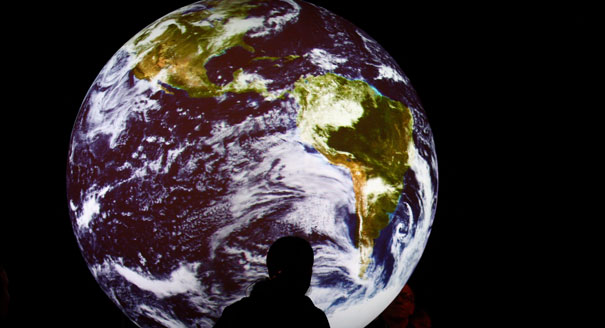
At a special United Nations climate change meeting, world leaders, including U.S. President Barack Obama and Chinese President Hu Jintao, tried to give new momentum to slowing climate change discussions.
At a special United Nations climate change meeting, world leaders tried to give new momentum to slowing climate change discussions. Speeches by U.S. President Barack Obama and Chinese President Hu Jintao, as the leaders of the two largest global emitters, were expected to set the tone for the lead up to December’s Copenhagen summit.
Taiya Smith, senior associate in the Carnegie Energy and Climate Program and China Program, shares her reaction to the climate change meetings. “What we are seeing through the meetings this week in New York and certainly the upcoming discussions between all of the different parties in preparation for Copenhagen is that countries are much more serious now than they were before. That doesn’t mean that all of the differences are going to dissolve though,” says Smith. “We still have not gotten past the impasse where the United States says that we need for China to commit to a certain level of carbon emissions.”
What is the significance of today’s meetings at the UN on climate?
The most important factor of today’s meetings was the mere fact that you had so many high level leaders who were together in the same room talking about these issues. President Obama and President Hu are probably the two most important because they both emphasized that climate change is important, that they are looking to do something about it, and that there is a reason to have a global deal.
Did President Obama make any significant announcements in his address?
President Obama repeated a lot of things that we’ve been hearing and referred multiple times back to actions that have been taken since he took office. The one new thing that I thought was quite interesting is that he said “we have a responsibility to provide the financial and technical assistance needed to help those nations adapt to the impacts of climate change and pursue low carbon development.” This implies that the administration believes that they do need to be providing financial assistance for adaptation, which has not been suggested by the U.S. government in this way before. We look forward to seeing what kind of financial and technical assistance that the U.S. government is going to be willing to put on the table at Copenhagen.
What was the importance of President Hu’s remarks?
The real importance of his remarks, honestly, was the anticipation of them, more than the actual remarks themselves. President Hu laid out very clearly what we’ve been seeing from China, which is that the central government is taking climate change extremely seriously and that the Chinese government is putting the full extent of their resources and motivation into dealing with climate change. He did not, however, make any specific commitments that would help the negotiations move forward, so we still have not gotten past the impasse where the United States says that we need for China to commit to a certain level of carbon emissions. President Hu said that for every dollar of growth they would be taking significant reductions of carbon, but beyond that we did not find anything that was really going to catapult the expectation or the discussion to the next level. As some have said there was no panda standard set in President Hu’s speech, though it was a very important timeframe to be talking about what China cares about.
What are the expectations for the December Copenhagen meeting?
There are a lot of expectations there. People don’t know what to expect. The overall feeling is that the countries will not be able to pull themselves together in a way that will allow this meeting to be successful in terms of concluding a global deal. What we are seeing through the meetings this week in New York and certainly the upcoming discussions between all of the different parties in preparation for Copenhagen is that countries are much more serious now than they were before. That doesn’t mean that all of the differences are going to dissolve though. I would say overall the expectations are that there’ll be a lot of discussion and there will be a lot of frustration, but that we’ll be coming out of Copenhagen with a little bit of a better sense of where we need to go next. I don’t believe that we’re going to get all of the countries coming up with their committed targets as everyone really would hope.

Former Senior Associate, Energy and Climate Program, Asia Program
Smith has spent the last decade working in international negotiations. Most recently, she served as a member of Secretary Hank Paulson’s senior management team from 2006 to 2009 as the deputy chief of staff and executive secretary for the U.S. Department of the Treasury.
Recent Work
Uri Dadush, Vera Eidelman, Taiya M. Smith
Carnegie India does not take institutional positions on public policy issues; the views represented herein are those of the author(s) and do not necessarily reflect the views of Carnegie, its staff, or its trustees.

How is AI reshaping space security, creating governance challenges, and where does international diplomacy stand today?


Tejas Bharadwaj, Almudena Azcárate Ortega

After the chill in ties between 2020 and 2024 that brought India–China relations to their lowest point in several decades, the two countries have engaged each other afresh. This paper argues that there are predominantly four imperatives guiding India’s approach to China, and they exist in an order of priority.

Saheb Singh Chadha

This piece argues that India’s central challenge is not managing a single flashpoint but resolving the underlying tension between expansion and institutional coherency of the BRICS grouping.

Vrinda Sahai

The U.S.–India semiconductor cooperation story is well-stocked with top-level strategic intent. What remains unresolved, however, are some underlying challenges that will determine whether the cooperation actually functions. Three such friction points stand out.

Shruti Mittal

India and the United States are close to concluding a Reciprocal Defense Procurement Agreement (RDPA) that will allow firms from the two countries to sell to each other’s defense establishments more easily. While this may not remedy the specific grievances both sides may have regarding larger bilateral issues, an RDPA could restore some momentum, following the trade deal announcement.

Konark Bhandari