

Paper
Thomas Carothers
{
  "authors": [
    "Thomas Carothers"
  ],
  "type": "legacyinthemedia",
  "centerAffiliationAll": "dc",
  "centers": [
    "Carnegie Endowment for International Peace"
  ],
  "collections": [],
  "englishNewsletterAll": "democracy",
  "nonEnglishNewsletterAll": "",
  "primaryCenter": "Carnegie Endowment for International Peace",
  "programAffiliation": "DCG",
  "programs": [
    "Democracy, Conflict, and Governance"
  ],
  "projects": [],
  "regions": [
    "North America",
    "United States"
  ],
  "topics": [
    "Political Reform",
    "Democracy",
    "Foreign Policy"
  ]
}
Source: Getty
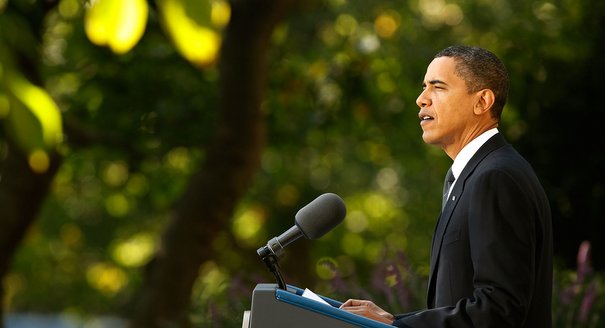
The awarding of the Nobel peace prize to President Obama reflects just how strongly many Europeans felt that a rift opened up between the United States and the rest of the world during the Bush years. In their view, Obama’s global reengagement itself merits reward.
Source: The New York Times

The prize reflects just how strongly many Europeans felt that a conflictive rift opened up between the United States and the rest of the world during the Bush years. In their view, Mr. Obama’s election and his determination to reengage globally already have done much to heal this rift and thus merit reward.
In several past cases the Nobel boost was short-lived.
This isn’t the first peace prize to look forward as much as backward. The prize to South Korean President Kim Dae Jung in 2000 came just after his historic summit with North Korea. It sought to bolster the chances that a promising but as yet only preliminary diplomatic step might pay off in terms of peace down the road.
Kofi Annan’s prize in 2001 came in the first half of his tenure as secretary general of the United Nations, possibly aiming to fortify him for what the Nobel committee expected would be hard times ahead for international peace in the aftermath of September 11.
The award to Iranian human rights lawyer Shirin Ebadi in 2003 was not simply a recognition of her past accomplishments defending human rights in Iran. It aimed to boost her future efforts at a time when Iran’s reform movement was losing steam and troubling political waters clearly lay ahead.
Iran may also been on the Nobel committee’s mind this time as well. Europeans are extremely anxious for Mr. Obama’s diplomatic overture to Iran to succeed. The committee may have calculated that it will be harder domestically and internationally for Iran’s Supreme Leader and president to bite an outstretched hand if it that hand comes not just from an American president but the holder of a Nobel Peace Prize.
Yet optimism must be qualified by the record. In those past cases the Nobel boost was short-lived. Peace with North Korea remained elusive. Kofi Annan locked horns unsuccessfully with the Bush administration over the invasion of Iraq. And despite Shirin Ebadi’s continued valiant work, human rights in Iran deteriorated steadily after 2003.

Harvey V. Fineberg Chair for Democracy Studies; Director, Democracy, Conflict, and Governance Program
Thomas Carothers, director of the Carnegie Endowment for International Peace’s Democracy, Conflict, and Governance Program, is a leading expert on comparative democratization and international support for democracy.
Recent Work
Thomas Carothers

Richard Youngs, Thomas Carothers
Carnegie India does not take institutional positions on public policy issues; the views represented herein are those of the author(s) and do not necessarily reflect the views of Carnegie, its staff, or its trustees.

How is AI reshaping space security, creating governance challenges, and where does international diplomacy stand today?


Tejas Bharadwaj, Almudena Azcárate Ortega

After the chill in ties between 2020 and 2024 that brought India–China relations to their lowest point in several decades, the two countries have engaged each other afresh. This paper argues that there are predominantly four imperatives guiding India’s approach to China, and they exist in an order of priority.

Saheb Singh Chadha

This piece argues that India’s central challenge is not managing a single flashpoint but resolving the underlying tension between expansion and institutional coherency of the BRICS grouping.

Vrinda Sahai

A partnership between India, a country of subcontinental size, and Africa, a continent of fifty-four countries, may seem asymmetric until one notes that both are home to nearly the same number of people—1.4 billion. This essay spells out the existing challenges to the partnership, its optimal potential, and the possible pathways to realize it over the next quarter-century.

Rajiv Bhatia

The U.S.–India semiconductor cooperation story is well-stocked with top-level strategic intent. What remains unresolved, however, are some underlying challenges that will determine whether the cooperation actually functions. Three such friction points stand out.

Shruti Mittal