

Paper
Adam Baczko, Gilles Dorronsoro, Arthur Quesnay
{
  "authors": [
    "Gilles Dorronsoro"
  ],
  "type": "legacyinthemedia",
  "centerAffiliationAll": "dc",
  "centers": [
    "Carnegie Endowment for International Peace",
    "Carnegie Russia Eurasia Center"
  ],
  "collections": [],
  "englishNewsletterAll": "ctw",
  "nonEnglishNewsletterAll": "",
  "primaryCenter": "Carnegie Endowment for International Peace",
  "programAffiliation": "SAP",
  "programs": [
    "South Asia"
  ],
  "projects": [],
  "regions": [
    "South Asia",
    "Afghanistan"
  ],
  "topics": [
    "Security",
    "Military",
    "Foreign Policy"
  ]
}
Source: Getty
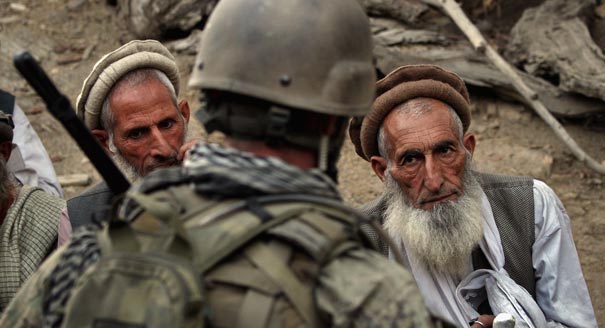
In his long-awaited address, President Obama presented a series of objectives but no clear strategy. His plan will likely leave Afghanistan looking worse than it does now.
Source: The Washington Post

In his long-awaited address, the president presented a series of objectives but no clear strategy. Although al-Qaeda hasn't returned to Afghanistan in great numbers, he conceded that it maintains "safe havens along the border." Yes, on the other side, in Pakistan. Later, he articulated a goal to "disrupt, dismantle and defeat al-Qaeda in Afghanistan and Pakistan."
Even as Obama spoke of focusing U.S. war efforts and preparing for withdrawal, he made it sound as though the United States should be fighting in two countries instead of one, aggregating distinct enemies together and fighting them all.
The signs were evident even in a Freudian slip in a Tuesday White House press briefing, when a senior administration official said, "our goal is to prevent the return of the Taliban -- I'm sorry, of al-Qaeda -- and to prevent the Taliban from overthrowing the Afghan government."
The new troops will not stay in southern Afghanistan long enough for the Afghan army to establish control there and build functioning government institutions. And, indeed, the presence of foreign troops fighting on behalf of a corrupt government in Kabul only makes that government more unpopular, which helps the Taliban grow more entrenched, even as they take losses.
Obama's speech was just a speech. His point about arming Afghan militias and building security from the ground up is where the country is actually headed. But as the Taliban continue to gain on Kabul from several directions -- including the north, where new troops would make more of a difference -- Obama's plan will make it harder for the government to survive and likely that the United States will leave Afghanistan looking worse than it does now.
Former Nonresident Scholar, South Asia Program
Dorronsoro’s research focuses on security and political development in Afghanistan. He was a professor of political science at the Sorbonne in Paris and the Institute of Political Studies of Rennes.
Recent Work
Adam Baczko, Gilles Dorronsoro, Arthur Quesnay
Gilles Dorronsoro
Carnegie India does not take institutional positions on public policy issues; the views represented herein are those of the author(s) and do not necessarily reflect the views of Carnegie, its staff, or its trustees.

After the chill in ties between 2020 and 2024 that brought India–China relations to their lowest point in several decades, the two countries have engaged each other afresh. This paper argues that there are predominantly four imperatives guiding India’s approach to China, and they exist in an order of priority.

Saheb Singh Chadha

This piece argues that India’s central challenge is not managing a single flashpoint but resolving the underlying tension between expansion and institutional coherency of the BRICS grouping.

Vrinda Sahai

A partnership between India, a country of subcontinental size, and Africa, a continent of fifty-four countries, may seem asymmetric until one notes that both are home to nearly the same number of people—1.4 billion. This essay spells out the existing challenges to the partnership, its optimal potential, and the possible pathways to realize it over the next quarter-century.

Rajiv Bhatia

The India–EU Free Trade Agreement (FTA) is shaping up to be one of the most consequential trade negotiations, both economically and strategically. But, what’s in the agreement, what’s missing, and what will determine its success in the years ahead
Vrinda Sahai, Nicolas Köhler-Suzuki
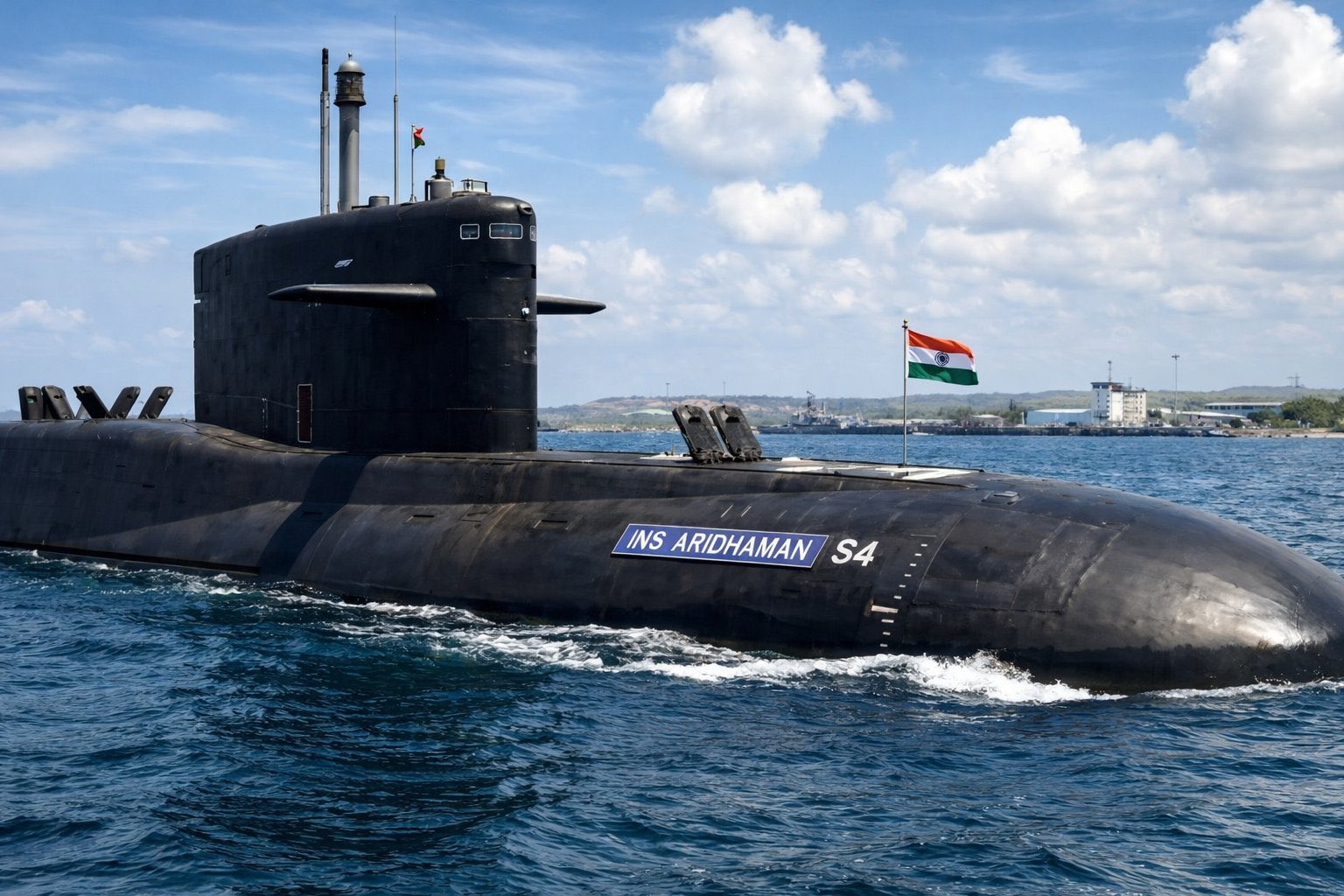
The induction of INS Aridhaman, which features several technological enhancements, now gives India the third nuclear ballistic missile submarine to ensure continuous at-sea deterrent.

Dinakar Peri