

Paper
Douglas H. Paal
{
  "authors": [
    "Douglas H. Paal"
  ],
  "type": "legacyinthemedia",
  "centerAffiliationAll": "dc",
  "centers": [
    "Carnegie Endowment for International Peace",
    "Carnegie China"
  ],
  "collections": [],
  "englishNewsletterAll": "asia",
  "nonEnglishNewsletterAll": "",
  "primaryCenter": "Carnegie China",
  "programAffiliation": "AP",
  "programs": [
    "Asia"
  ],
  "projects": [],
  "regions": [
    "North America",
    "United States"
  ],
  "topics": [
    "Foreign Policy"
  ]
}
Source: Getty
Although Obama has improved America’s image internationally, he has made little tangible progress on long-term foreign policy problems and faces declining domestic support and a weak economy.
Source: Zeenews

In an exclusive interview with Kamna Arora of Zeenews.com, former top US diplomat in Taiwan, Douglas H Paal, discussed Obama’s foreign policy.
Douglas H. Paal is currently vice president for studies at the Carnegie Endowment for International Peace.
Kamna: When President Barack Obama assumed office in 2009, not just the US but also the global community welcomed him with high hopes and expectations. Has Obama managed to turn his slogan of 'Yes, we can’ into actions or is it still too early to adjudge him?
Douglas: Some might rush to judge Obama's short record in foreign affairs, but I think it is too early still. However, I also think it will not be long before the glow surrounding the adjustments Obama has made to Bush’s foreign policy will wear off, and Obama -- like Bush -- will be facing hard problems that are not amenable to diplomatic style points. Iran, Iraq, North Korea, and the Middle East are the prominent cases.
Kamna: How would you sum up Obama’s achievements in terms of US’ foreign policy? And do you agree that the Nobel Peace Prize has actually made the US President’s task of managing foreign affairs tougher?
Douglas: I think Obama's main achievement is hard to see. That is, he made an early decision to conduct a "realist" foreign policy, not one of idealism, as has been common among Democratic party presidents. This has put him in a stronger position to deal with less favourable outcomes, though it may have lost him support from his party's base.
Obama would have been better off declining the Nobel prize. It is an embarrassing distraction and reminder of a skimpy resume for a leader, whose main accomplishments by the age of 44 were two autobiographies.
Kamna: What is the biggest challenge Obama faces in terms of his foreign policy?
Douglas: The next big challenge will be holding domestic support as the problems clearly become more numerous than the solutions. China and the US will drift apart this year, whereas last year was pretty good. The euphoria of the (Indian Prime Minister Manmohan) Singh’s visit to Washington is hard to sustain on the basis of its exaggerated rhetoric and this thin substantive result. Rising oil prices will embolden the Russians to press their own priorities, especially in the near abroad, where Ukraine, for example, is about to change course from its pro-Western policies.
The Democratic coalition supporting Obama may well fracture. Republicans may find their voice to take on Obama's missteps. And the public will want to focus on the economy, not on foreign policy matters.
The biggest problem is probably restarting the Arab-Israeli peace process. The makings of the process do not appear present at this time. Yet some progress is necessary as part of the effort to delegitimize radical Islam and reduce its contribution to global terrorism. Saying this does not mean that there are not other tough problems, as noted above.
Kamna: How has the rise of homegrown terrorism increased the problems of Obama, who is already struggling hard to wipe out al Qaeda?
Douglas: Homegrown terrorism is properly the business of the police and intelligence agencies. Obama needs to remind the leaders of those agencies that they remain accountable, as he has done over the recent Nigerian bombing suspect.
Kamna: How do you rate Obama’s Afghan war strategy?
Douglas: Obama's Afghan strategy can be summed in one word for people with somewhat longer-term memories: Vietnamization. Obama is building up in order to exit sooner, just as (former US president Richard) Nixon did in the early 1970s. Hopefully, Congress will not do to Kabul what it did to Saigon in the aftermath of the US withdrawal of forces, and cut off the regime's assistance entirely. But we did do that in the 1980s, after defeating the Soviets in Afghanistan.
In basketball, which he likes to play, what Obama is doing in Afghanistan is something called the head fake. You shift your eyes and build up forces in one direction, as you move the real play in the opposite direction.
Kamna: How do you summarise Obama’s success and failures, a year after his inauguration?
Douglas: Clearly, Obama has improved America's image among populations that were fed up with George Bush's style and methods. A better image is very nice to have, especially in the world inhabited by media and pundits. The problem comes when the image is not enough to deter or eliminate threats to our physical security. The problems worsen when the means to defeat those threats become so expensive that the people are asked to make choices between the proverbial guns and butter. Therefore, it will be critically important for Obama to chart a path for America to resume its economic strengths, so as to afford both. So far, this has not begun.
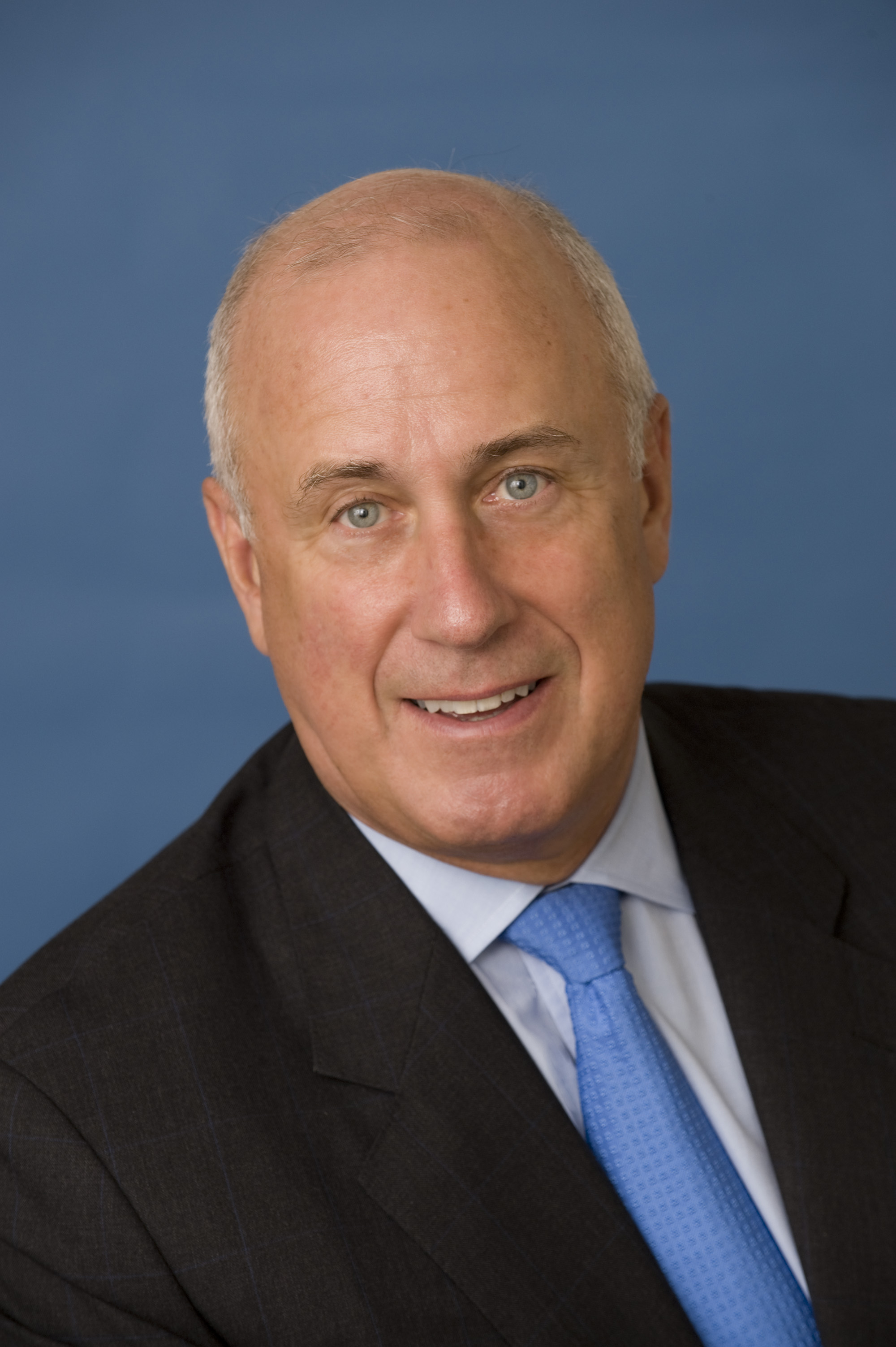
Distinguished Fellow, Asia Program
Paal previously served as vice chairman of JPMorgan Chase International and as unofficial U.S. representative to Taiwan as director of the American Institute in Taiwan.
Recent Work
Douglas H. Paal


Douglas H. Paal, Tong Zhao, Chen Qi, …
Carnegie India does not take institutional positions on public policy issues; the views represented herein are those of the author(s) and do not necessarily reflect the views of Carnegie, its staff, or its trustees.
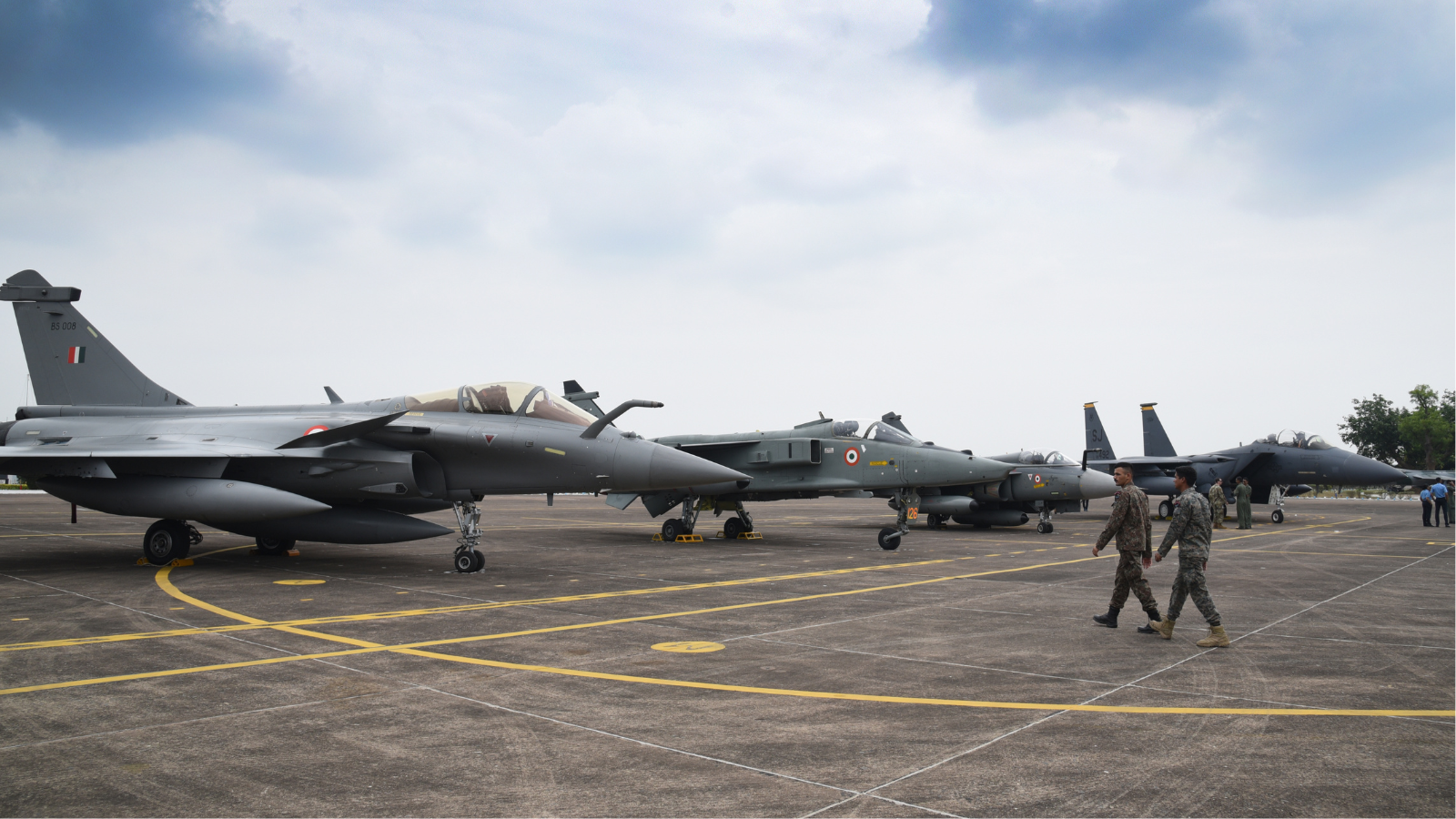
India and the United States are close to concluding a Reciprocal Defense Procurement Agreement (RDPA) that will allow firms from the two countries to sell to each other’s defense establishments more easily. While this may not remedy the specific grievances both sides may have regarding larger bilateral issues, an RDPA could restore some momentum, following the trade deal announcement.

Konark Bhandari

On the last day of the India AI Impact Summit, India signed Pax Silica, a U.S.-led declaration seemingly focused on semiconductors. While India’s accession to the same was not entirely unforeseen, becoming a signatory nation this quickly was not on the cards either.
Konark Bhandari

This piece examines India’s response to U.S. sanctions and tariffs, specifically assessing the immediate market consequences, such as alterations in import costs, and the broader strategic implications for India’s energy security and foreign policy orientation.
Vrinda Sahai
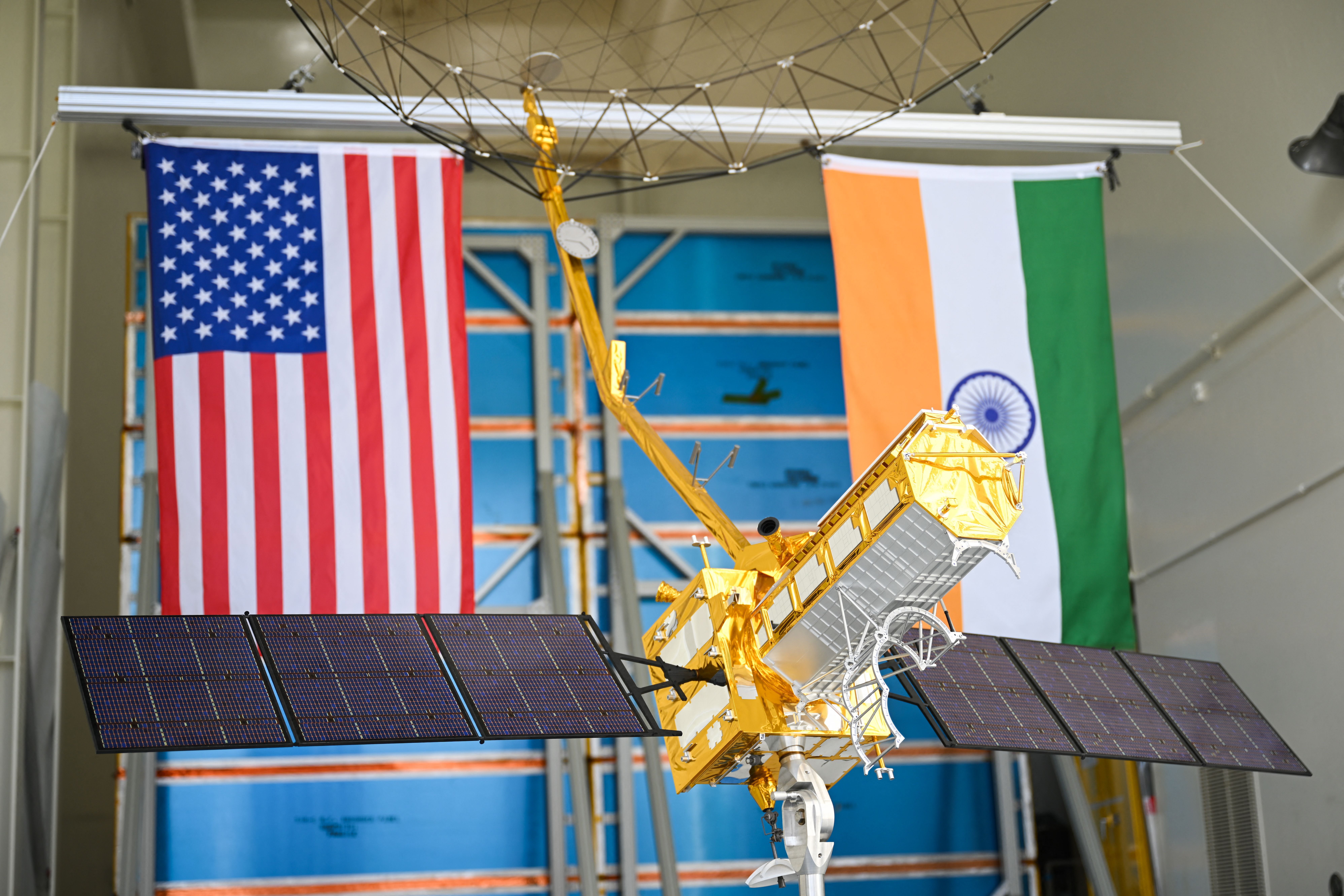
On July 30, 2025, the United States announced 25 percent tariffs on Indian goods. While diplomatic tensions simmered on the trade front, a cosmic calm prevailed at the Sriharikota launch range. Officials from NASA and ISRO were preparing to launch an engineering marvel into space—the NASA-ISRO Synthetic Aperture Radar (NISAR), marking a significant milestone in the India-U.S. bilateral partnership.

Tejas Bharadwaj
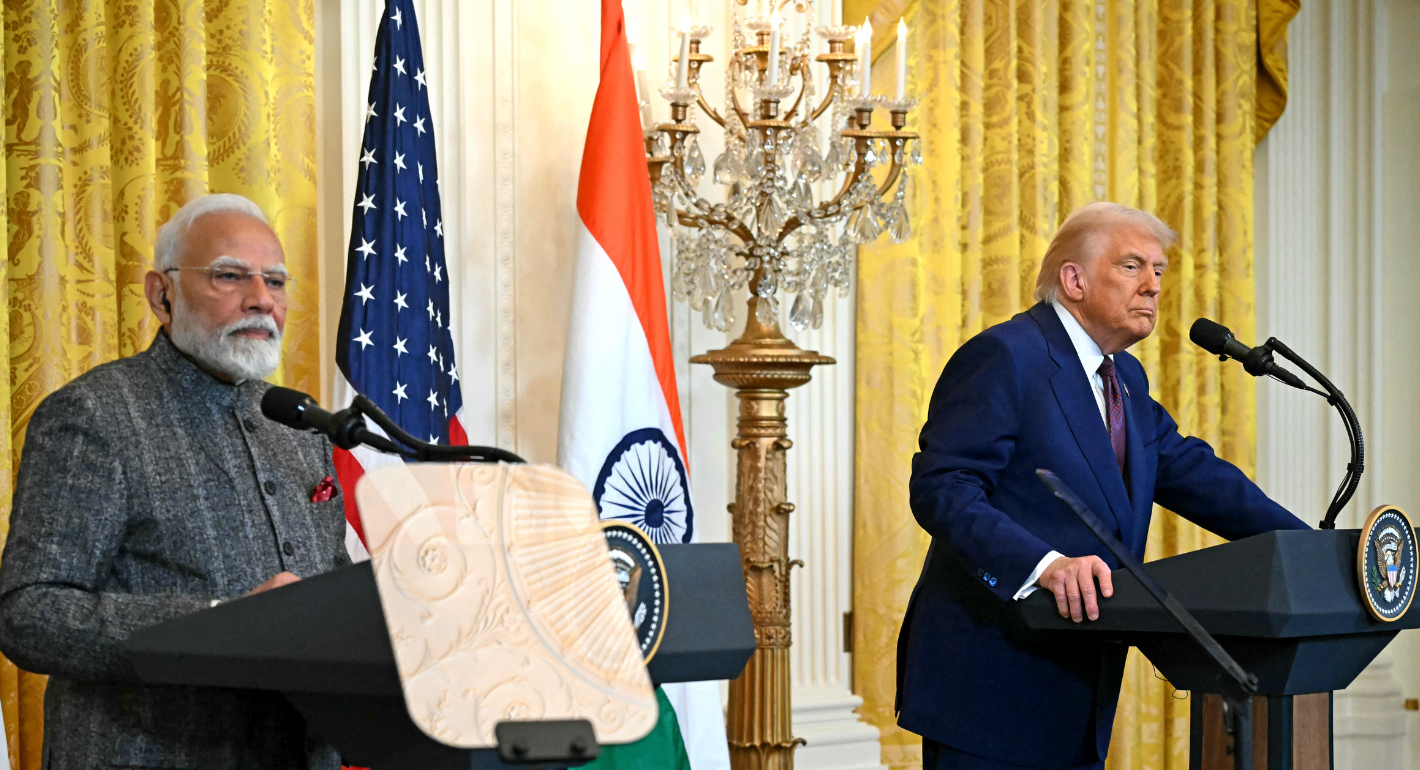
The India-U.S. relationship currently appears buffeted between three “Ts”—TRUST, Tariffs, and Trump.
Arun K. Singh