

Paper
Adam Baczko, Gilles Dorronsoro, Arthur Quesnay
{
  "authors": [
    "Gilles Dorronsoro"
  ],
  "type": "legacyinthemedia",
  "centerAffiliationAll": "dc",
  "centers": [
    "Carnegie Endowment for International Peace",
    "Carnegie Europe"
  ],
  "collections": [],
  "englishNewsletterAll": "ctw",
  "nonEnglishNewsletterAll": "",
  "primaryCenter": "Carnegie Endowment for International Peace",
  "programAffiliation": "SAP",
  "programs": [
    "South Asia"
  ],
  "projects": [],
  "regions": [
    "North America",
    "United States",
    "South Asia",
    "Afghanistan",
    "Asia"
  ],
  "topics": [
    "Security",
    "Military",
    "Foreign Policy"
  ]
}
Source: Getty
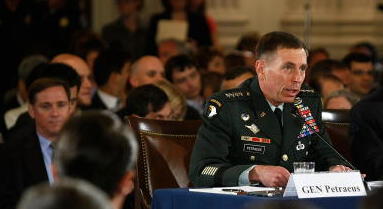
The departure of General McChrystal and arrival of General Petraeus provides a golden opportunity to abandon a failing strategy in Afghanistan.
Source: The New York Times

The coalition’s mounting casualties only increases pressure on the United States and its allies to withdraw quickly.
Progress in Marja is elusive and gains are unlikely to materialize for several years, after the United States is scheduled to begin the draw down of its forces. For Kandahar, the coalition wisely abandoned plans for a major military offensive that were doomed to be a disaster. But with low levels of support for the local government and high levels of corruption, there is virtually no chance for success in the area.
Given the reality on the ground, there is little hope for reversing the situation in Afghanistan over the next 12 to 18 months. The Taliban continue to gain strength and it is unrealistic to try to weaken them before beginning negotiations.
The new U.S. leadership has a chance to design and carry out a more realistic approach. General Petraeus should scale down the current offensive and limit the coalition’s mounting casualties — these casualties only put more pressure on the United States and its allies to withdraw quickly.
Negotiations with the Taliban should begin this winter after the coalition offers a cease fire. As the negotiations move ahead, the United States needs to assume a leadership position as the current Afghan government cannot be trusted to defend the interests of the international community.
The time to rethink U.S. strategy is now and McChrystal’s departure provides an unexpected opportunity to change course.
Former Nonresident Scholar, South Asia Program
Dorronsoro’s research focuses on security and political development in Afghanistan. He was a professor of political science at the Sorbonne in Paris and the Institute of Political Studies of Rennes.
Recent Work
Adam Baczko, Gilles Dorronsoro, Arthur Quesnay
Gilles Dorronsoro
Carnegie India does not take institutional positions on public policy issues; the views represented herein are those of the author(s) and do not necessarily reflect the views of Carnegie, its staff, or its trustees.

In any defense establishment, change is an ongoing process. However, despite the best of intentions, existing bureaucracies, bound by habit and years of socialization, have their limits in implementing transformative change.

Anit Mukherjee

How is AI reshaping space security, creating governance challenges, and where does international diplomacy stand today?


Tejas Bharadwaj, Almudena Azcárate Ortega

After the chill in ties between 2020 and 2024 that brought India–China relations to their lowest point in several decades, the two countries have engaged each other afresh. This paper argues that there are predominantly four imperatives guiding India’s approach to China, and they exist in an order of priority.

Saheb Singh Chadha

This piece argues that India’s central challenge is not managing a single flashpoint but resolving the underlying tension between expansion and institutional coherency of the BRICS grouping.

Vrinda Sahai

A partnership between India, a country of subcontinental size, and Africa, a continent of fifty-four countries, may seem asymmetric until one notes that both are home to nearly the same number of people—1.4 billion. This essay spells out the existing challenges to the partnership, its optimal potential, and the possible pathways to realize it over the next quarter-century.

Rajiv Bhatia