• Research
  • About
  • Experts
Carnegie India logoCarnegie lettermark logo
{
  "authors": [],
  "type": "pressRelease",
  "centerAffiliationAll": "dc",
  "centers": [
    "Carnegie Endowment for International Peace"
  ],
  "collections": [],
  "englishNewsletterAll": "ctw",
  "nonEnglishNewsletterAll": "",
  "primaryCenter": "Carnegie Endowment for International Peace",
  "programAffiliation": "SAP",
  "programs": [
    "South Asia"
  ],
  "projects": [],
  "regions": [
    "South Asia",
    "Pakistan"
  ],
  "topics": [
    "Political Reform"
  ]
}
REQUIRED IMAGE

REQUIRED IMAGE

Press Release

Police reform in Pakistan will increase security and the strength of the civilian government

Pakistan’s police force has historically been constrained by the military and intelligence agencies and often politicized as an instrument of repression against opposition groups. Reforming civilian security forces will diminish Islamabad’s dependence on the military and increase the legitimacy of the regime.

Link Copied
Published on Jul 14, 2010

WASHINGTON, July 14—Pakistan’s police force has historically been constrained by the military and intelligence agencies and often politicized as an instrument of repression against opposition groups. In a new paper, Frédéric Grare writes that reforming civilian security forces will diminish Islamabad’s dependence on the military and increase the legitimacy of the regime.

Recommendations for Pakistani policy makers

  • Remove military oversight of the police. The armed forces’ involvement in selecting police leaders will ultimately lead to the militarization of the police.
  • Guarantee police receiving U.S. assistance serve only as police. The United States and other donors need to be reassured that their money is being spent as intended. When officers are redirected to military operations or counterterrorism it diverts the time and resources needed to develop into a successful institution.
  • Utilize lessons from good models. The National Highways and Motorways Police is a branch that has not been politicized and has avoided the leadership and funding problems experienced by other agencies. This model should be emulated.

Recommendations for U.S. policy makers

  • Implement the Kerry-Lugar-Berman bill. The civilian assistance legislation sponsored by Senators Kerry and Lugar and Congressman Berman provides a promising framework but is limited by competing objectives. Long-term goals of political and democratic reform are at odds with the short-term goal of gaining cooperation from the Pakistani army in the fight against terrorism.
  • Support the strengthening of police capabilities. Many officers resent their dependence on an army that tends to monopolize resources and impedes their room to maneuver. The United States should help provide the training and resources for them to operate independently.

“Police reform should not be allowed to serve as an alibi for the Pakistani intelligence agencies’ selective fight against terrorism,” writes Grare. “Only under these conditions will the Pakistani police become an effective instrument for fighting terrorism and a contributor to security and stability in Pakistan and beyond.”

###


NOTES

  • Click here to read the paper online
  • Frédéric Grare is a nonresident senior associate in Carnegie’s South Asia Program. His research focuses on South Asia security issues and the search for a security architecture. He also works on the tension between stability and democratization in Pakistan, including civil-military relations, the challenge of sectarian conflict, and Islamic political mobilization. Grare has written extensively on security issues, Islamist movements, and sectarian conflict in Pakistan and Afghanistan.
  • The Carnegie South Asia Program informs policy debates relating to the region’s security, economy, and political development. From the war in Afghanistan to Pakistan’s internal dynamics to U.S. engagement with India, the Program’s renowned team of experts offer in-depth analysis derived from their unique access to the people and places defining South Asia’s most critical challenges.
  • Press Contact: Kendra Galante, 202-939-2233, pressoffice@ceip.org
Political ReformSouth AsiaPakistan

Carnegie India does not take institutional positions on public policy issues; the views represented herein are those of the author(s) and do not necessarily reflect the views of Carnegie, its staff, or its trustees.

More Work from Carnegie India

  • Article
    Military Lessons from Operation Sindoor

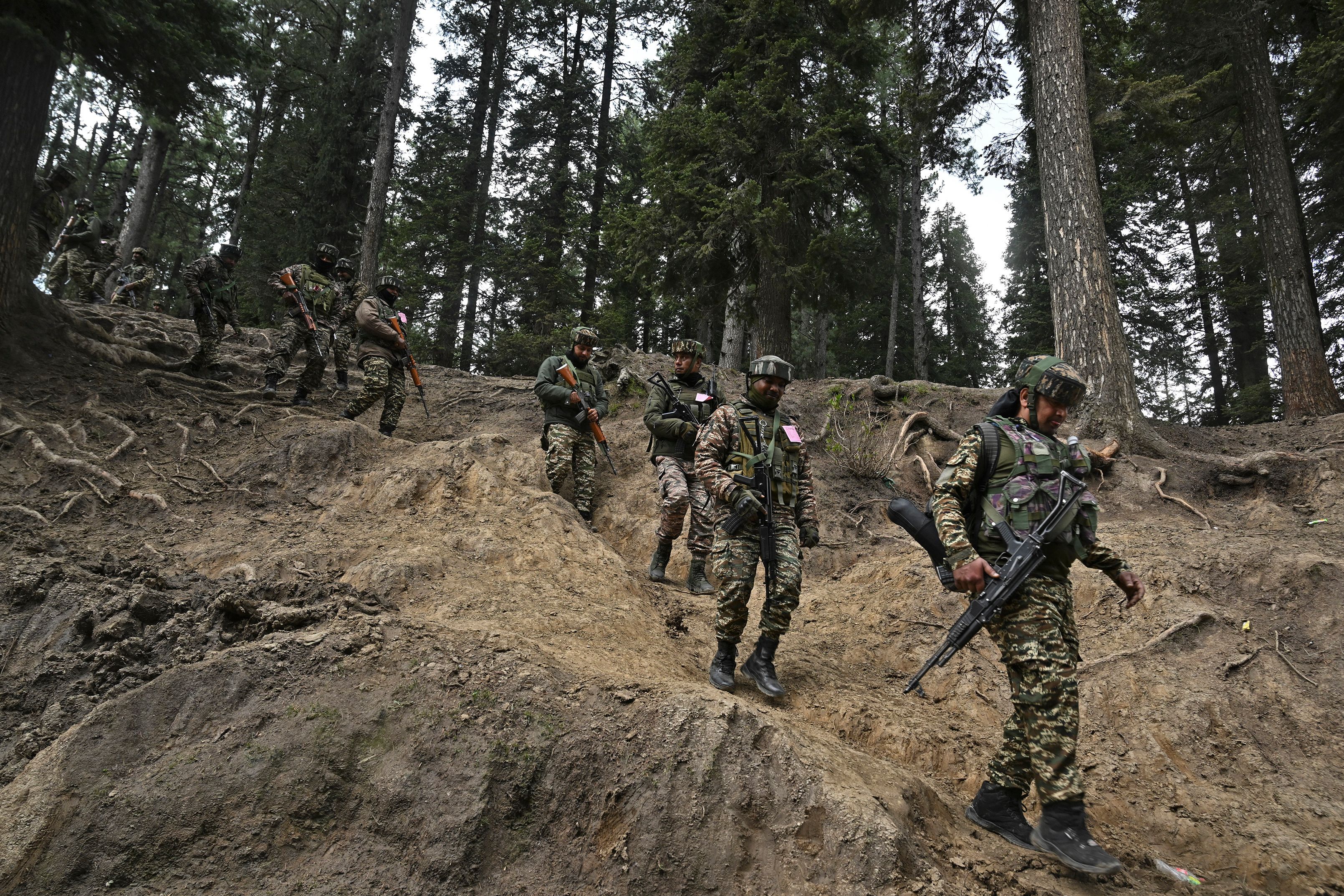
    The India-Pakistan conflict that played out between May 6 and May 10, 2025, offers several military lessons. This article presents key takeaways from Operation Sindoor and breaks down how India’s preparations shaped the outcome and what more is needed to strengthen future readiness.

      Dinakar Peri

  • Book
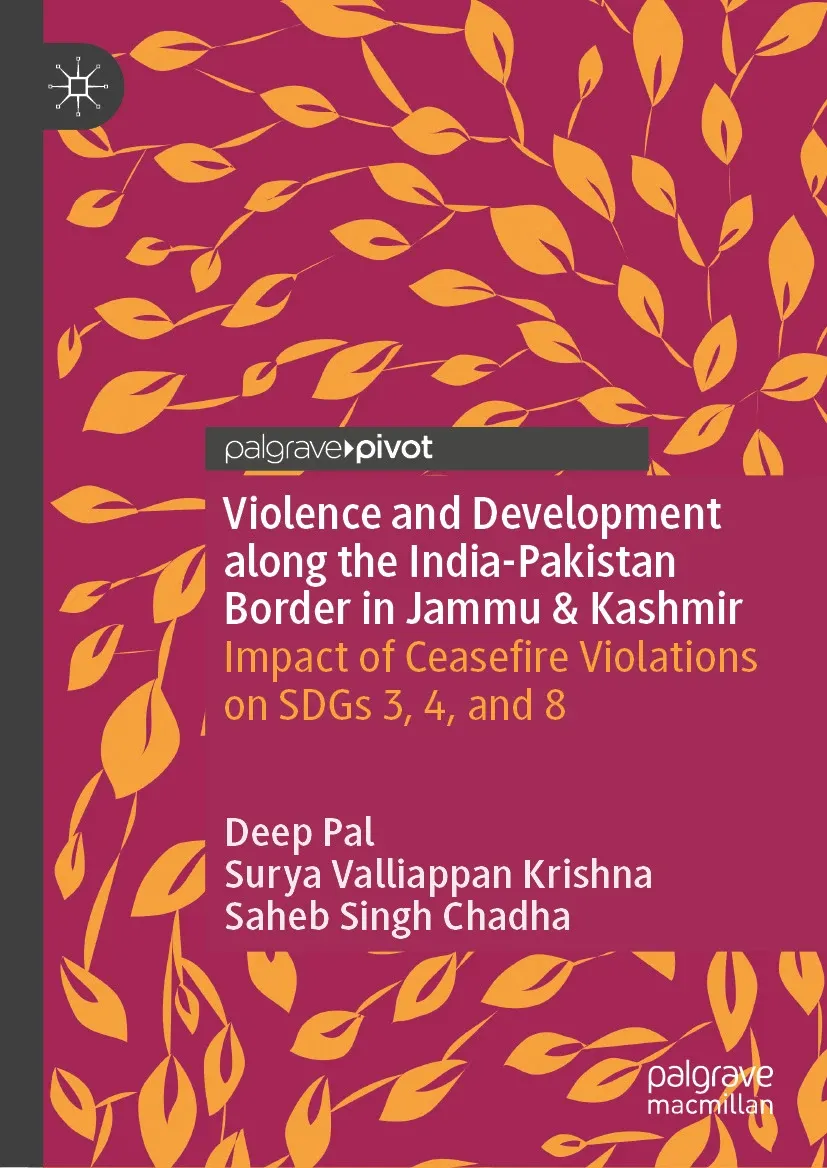
    Violence and Development Along the India-Pakistan Border in Jammu and Kashmir

    This book examines the impact of cross-border violence on communities living along the Line of Control and the International Border in Jammu and Kashmir, India.

      Deep Pal, Surya Valliappan Krishna, Saheb Singh Chadha

  • Commentary
    Indian Airstrikes in Pakistan: May 7, 2025

    On May 7, 2025, between 1:05 and 1:30 a.m. (IST), airstrikes carried out by the Indian Air Force hit nine locations inside Pakistan and Pakistan occupied Kashmir (PoK). It was codenamed Operation Sindoor.

      Rudra Chaudhuri

  • Article
    Understanding the Global Debate on Lethal Autonomous Weapons Systems: An Indian Perspective

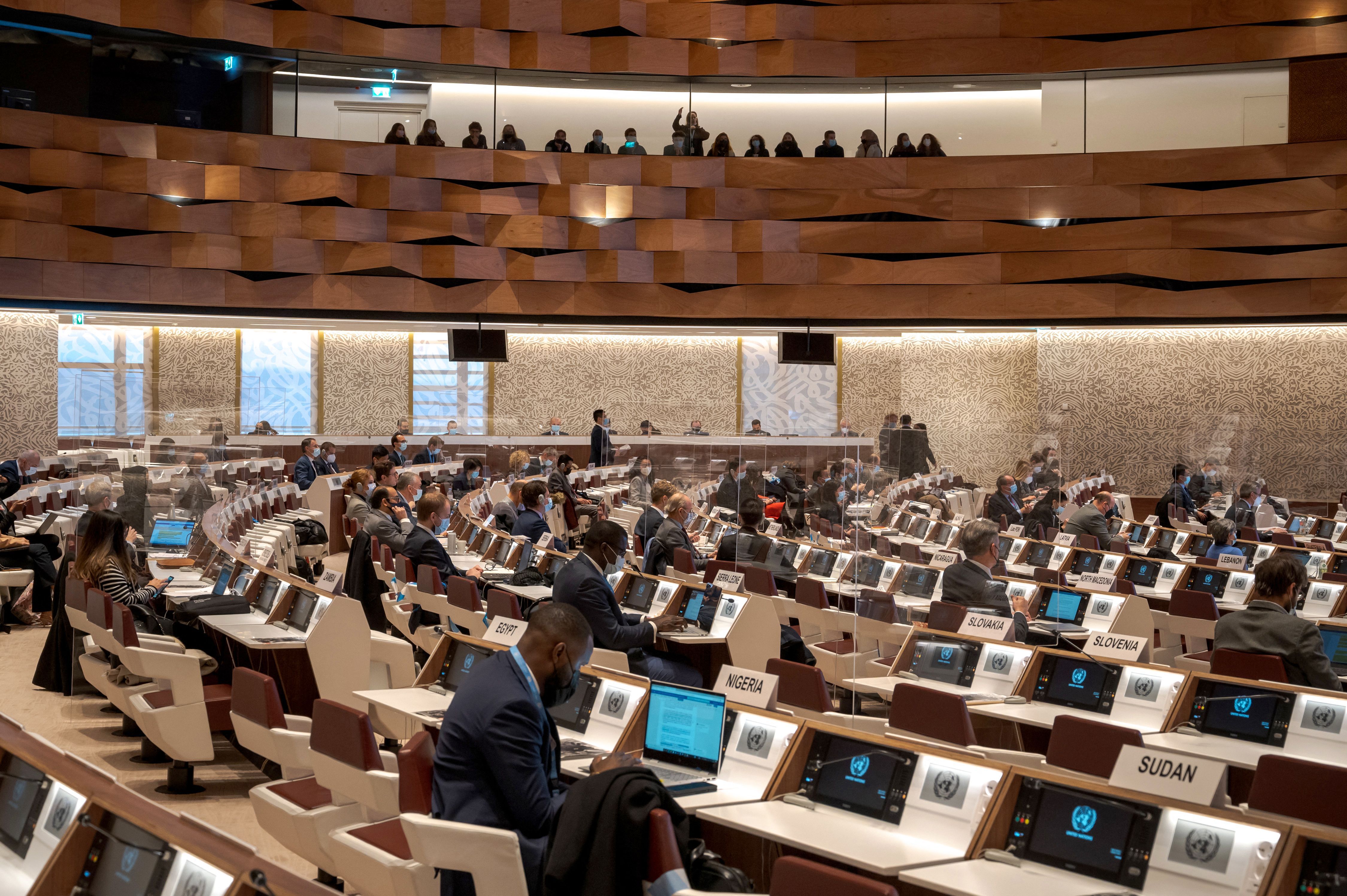
    This article explores the global debate on lethal autonomous weapons systems (LAWS), highlighting the convergences, complexities, and differences within and beyond the UN Group of Governmental Experts (GGE) on LAWS. It further examines India’s key position at the GGE and the probable reasons behind them.

      Charukeshi Bhatt, Tejas Bharadwaj

  • Commentary
    A Primer on Compute

    This essay is the first of a three-part series that will seek to understand the considerations for building compute capacity and the different pathways to accessing compute in India. This essay delves into the meaning of compute and unpacks the various layers of the compute stack.

      Aadya Gupta, Adarsh Ranjan

Get more news and analysis from
Carnegie India
Carnegie India logo, white
Unit C-4, 5, 6, EdenparkShaheed Jeet Singh MargNew Delhi – 110016, IndiaPhone: 011-40078687
  • Research
  • About
  • Experts
  • Projects
  • Events
  • Contact
  • Careers
  • Privacy
  • For Media
Get more news and analysis from
Carnegie India
© 2026 Carnegie Endowment for International Peace. All rights reserved.