

In The Media
David Rothkopf
{
  "authors": [
    "David Rothkopf"
  ],
  "type": "legacyinthemedia",
  "centerAffiliationAll": "",
  "centers": [
    "Carnegie Endowment for International Peace"
  ],
  "collections": [],
  "englishNewsletterAll": "",
  "nonEnglishNewsletterAll": "",
  "primaryCenter": "Carnegie Endowment for International Peace",
  "programAffiliation": "",
  "programs": [],
  "projects": [],
  "regions": [
    "North America",
    "United States"
  ],
  "topics": [
    "Political Reform",
    "Economy"
  ]
}
Source: Getty
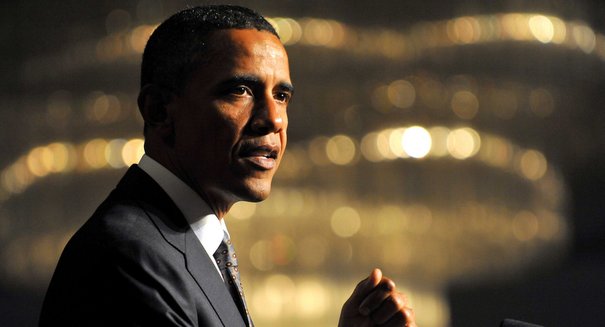
President Obama will need to choose a strong chief economic adviser to replace Larry Summers, but he can also use the selection process as an opportunity for a substantial mid-course correction in his economic policy.
Source: The Financial Times

Mr Summers leaves a major void atop Mr Obama’s economic team at a very precarious moment for the president, the country and the international economy. He may not have been terribly effective as the kind of honest broker of ideas that most agree is what a president needs in top co-ordinating posts such as the one Mr Summers held or the head of the National Security Council. But there is no question that, both for better and for worse, he was the towering presence on the economic team and his leaving will require a major rebalancing in terms of personalities and the processes by which policies are conceived of and implemented.
While most people will focus on who will replace Mr Summers – the papers today are full of rumours that the president is looking for a woman and possibly someone with business experience – the first place Mr Obama needs to look is within himself. It is axiomatic that top White House officials and departments are only as successful as the president allows them to be. He empowers people. He referees. He sets the tone.
The spate of recent economic departures – of Peter Orszag, the head of the White House budget office, and Christina Romer, head of the Council of Economic Advisers, as well as of Mr Summers – essentially guts the “all star” team Mr Obama once touted. The stark reality, however, is that they were all only as successful, collaborative, creative or capable of setting the right priorities as he made them. It is also worth noting that alongside them in the president’s daily economic briefings, the other key players were Rahm Emanuel, David Axelrod, Valerie Jarrett and Tim Geithner, the Treasury secretary. Of these, it seems likely that after the dust settles only Ms Jarrett and perhaps Mr Geithner will remain.
In sports, when a team plays badly the first person to go is the manager or coach. But it seems that in politics, what happens is that the team itself is disbanded.
The replacement players who are hired, however, will not be able to rise to the economic challenges the country faces if Mr Obama himself does not get over his own innate unease with business people, does not recognise he is the one who set the wrong priorities by pushing healthcare reform before its time, does not understand how his inexperience in these issues limits him, and does not demand a real team of rivals on the economic side. The president must summon the political courage to do what must be done when it comes to cutting the deficit and recognise that he and his team will be judged not on their response to the crisis they inherited but by what they did to restore growth, create jobs and help make America competitive in a new global economic environment.
If Mr Orszag left in part because of unease that the president would not grapple with the deficit and in part because of constantly struggling with Mr Summers, if Ms Romer felt her voice was not being heard sufficiently, if Mr Summers himself sometimes felt underappreciated by the president and secondary to the political players, if other members of the economic cabinet felt the White House was too dominant and the cabinet agencies too under-empowered, all this falls to Mr Obama. (And while all these things will be officially denied, all are true nonetheless.)
By the same token, therefore, it will be up to Mr Obama to make replacing Mr Summers and the rest of the team more than a personnel exercise. He needs to make it a real mid-course correction. Because, in the end, his re-election and his legacy will turn on the big economic decisions he and his new team will make in the months ahead.
The first big test will be the Bush tax cuts. Will the president blink and let the Republicans force him to extend them for the upper percentiles of earners as well as for the middle class ... or will he seize the opportunity to let the tax cuts lapse altogether, absorb the pain but also move America more crisply towards solving a deficit burden that threatens the country’s international standing? Will the administration then focus on reinvestment in the economy in ways less oriented towards politics and more oriented toward real, deep infrastructure needs? Will it build a global coalition to force the Chinese to play by the existing rules of the international economy, or will it falter and let Beijing usher in an era of market discord and more unease? And will it pick itself up from past stumbles and produce energy and climate initiatives equal to the challenges the country and the world faces?
For each of these decisions, the president will need a strong chief economic adviser to replace Mr Summers. He will need business people in top positions and a much more energised and capable economic cabinet. He will need political advisers who know when to step back from the conversation and he will need to find communicators other than himself who can make the case for the administration. But unless he himself uses this moment as an opportunity to grow and evolve as a president, the outcome of the next two years is likely to be much like that of the past two. On the other hand, if he seizes the opportunity now available to remake both himself and his team on the basis of what he has learnt, it could be an important turning point for his presidency.
Former Visiting Scholar
David Rothkopf was a visiting scholar at the Carnegie Endowment as well as the former CEO and editor in chief of the FP Group.
Recent Work
David Rothkopf
David Rothkopf
Carnegie India does not take institutional positions on public policy issues; the views represented herein are those of the author(s) and do not necessarily reflect the views of Carnegie, its staff, or its trustees.

How is AI reshaping space security, creating governance challenges, and where does international diplomacy stand today?


Tejas Bharadwaj, Almudena Azcárate Ortega

The U.S.–India semiconductor cooperation story is well-stocked with top-level strategic intent. What remains unresolved, however, are some underlying challenges that will determine whether the cooperation actually functions. Three such friction points stand out.

Shruti Mittal

On March 10, 2026, India’s Union Cabinet approved amendments to Press Note 3, a regulation that mandated government approval on all foreign direct investment (FDI) from countries sharing a land border with India. This amendment raises questions primarily about whether its stated benefits will materialize and if the risks have been adequately weighed. This piece will address the same.

Konark Bhandari

India and the United States are close to concluding a Reciprocal Defense Procurement Agreement (RDPA) that will allow firms from the two countries to sell to each other’s defense establishments more easily. While this may not remedy the specific grievances both sides may have regarding larger bilateral issues, an RDPA could restore some momentum, following the trade deal announcement.
Konark Bhandari

On the last day of the India AI Impact Summit, India signed Pax Silica, a U.S.-led declaration seemingly focused on semiconductors. While India’s accession to the same was not entirely unforeseen, becoming a signatory nation this quickly was not on the cards either.
Konark Bhandari