President Kovind’s visit to Djibouti and Ethiopia suggests India is finally waking up to the geopolitical significance of the Horn of Africa.
C. Raja Mohan
{
"authors": [],
"type": "other",
"centerAffiliationAll": "",
"centers": [
"Carnegie Endowment for International Peace"
],
"collections": [],
"englishNewsletterAll": "",
"nonEnglishNewsletterAll": "",
"primaryCenter": "Carnegie Endowment for International Peace",
"programAffiliation": "",
"programs": [],
"projects": [],
"regions": [
"North Africa",
"Egypt"
],
"topics": []
}Source: Getty
A backgrounder on the Wasat Party.
This resource was published on 09/16/2010 and is not updated to reflect changing circumstances.
Al-Wasat, as its name indicates, is a moderate Islamist party, originally a spin-off from the Muslim Brotherhood that was finally allowed to register in 2011 after fifteen years of unsuccessful efforts. It was first a member of the Democratic Alliance, but left on October 2, 2011. The party was in talks to join the Third Way Alliance and the Islamist Alliance but decided to compete in the 2011-2012 parliamentary elections on an unaffiliated independent list.
Abu al-‘Ila Madi: Founder and president
Essam Sultan: Leading party member
Salah ‘Abd al-Karim: Leading party member and member of the party’s political bureau
Al-Wasat was founded in 1996 when several young but well-respected members of the Muslim Brotherhood broke away from the organization to form a political party. Abu al-‘Ila Madi took charge of the newly formed party and was assisted by fellow Brotherhood defectors Salah ‘Abd al-Karim and Essam Sultan. The party’s religious ideology is drawn from the Wasatiyya (Centrist) school of thought, a liberal interpretive tradition in Islamic thinking that is firmly anchored in Islamic law but seeks to interpret its principles in a manner consistent with the values of a liberal democratic system.
The party immediately ran into trouble with both the government and the Muslim Brotherhood. The founders were accused by the Mubarak regime of setting up a front for the banned Muslim Brotherhood, while the leadership of the Muslim Brotherhood promptly expelled all members who joined the new organization. Al-Wasat applied for legal party status in 1996, 1998, 2004, and 2009, but their applications were denied for a variety of reasons until the 2011 uprising. Despite its lack of legal status during that period, al-Wasat sought to cooperate with other parties and organizations in efforts to bring about political reform.
Carnegie India does not take institutional positions on public policy issues; the views represented herein are those of the author(s) and do not necessarily reflect the views of Carnegie, its staff, or its trustees.
President Kovind’s visit to Djibouti and Ethiopia suggests India is finally waking up to the geopolitical significance of the Horn of Africa.
C. Raja Mohan
Chancelleries across Eurasia are scrambling to come to terms with the entirely unexpected victory of Trump.
C. Raja Mohan
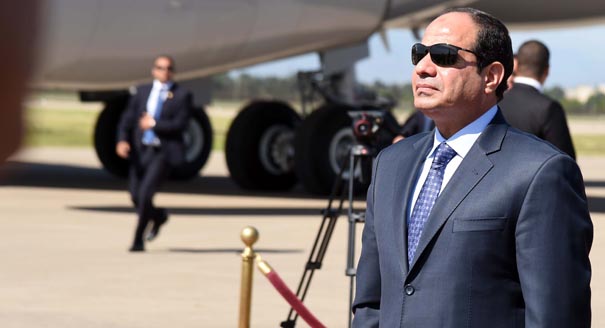
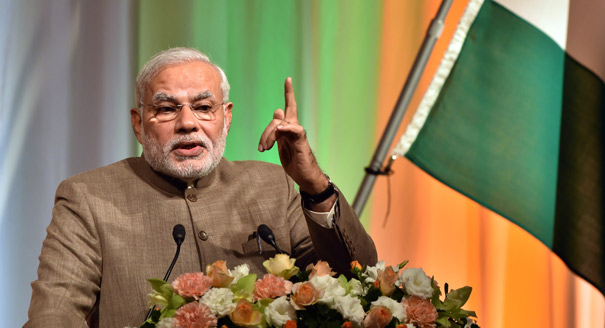
The relationship between India and Egypt has declined over the years. But, Indian Prime Minister Narendra Modi and Egyptian President Abdel Fattah al-Sisi should rebuild the friendship between Nehru and Nasser.
C. Raja Mohan
The India-Africa Summit can galvanize India’s security engagement with Africa.
C. Raja Mohan
While some might find India’s new approach to the Middle East somewhat disconcerting, the government of Narendra Modi is bringing pragmatism and transparency to India’s Middle East policy.
C. Raja Mohan