

In The Media
Minxin Pei
{
  "authors": [
    "Minxin Pei"
  ],
  "type": "questionAnswer",
  "centerAffiliationAll": "dc",
  "centers": [
    "Carnegie Endowment for International Peace",
    "Carnegie Europe"
  ],
  "collections": [],
  "englishNewsletterAll": "asia",
  "nonEnglishNewsletterAll": "",
  "primaryCenter": "Carnegie Endowment for International Peace",
  "programAffiliation": "AP",
  "programs": [
    "Asia"
  ],
  "projects": [],
  "regions": [
    "East Asia",
    "China",
    "Asia"
  ],
  "topics": [
    "Political Reform"
  ]
}
Source: Getty
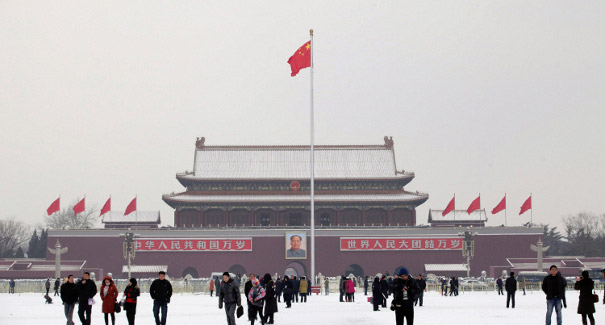
Liu Xiaobo's Nobel Peace Prize provides a significant boost in confidence to China’s pro-democracy advocates, but the government will likely tighten political freedoms in the short term.
Beijing reacted negatively to the news that Liu Xiaobo, an imprisoned Chinese dissident and democracy advocate, won this year’s Nobel Peace Prize for his non-violent struggle for human rights. While China has been credited for lifting millions of people out of poverty with the country’s economic rise, critics often contend that the government still ignores basic civil rights and its political reforms have not kept pace.
In a new Q&A, Minxin Pei analyzes the state of human rights in China and how the peace prize will impact the country’s reform movement, political freedom, and the government’s domestic and foreign policies. Pei explains that the award provides a significant boost in confidence to China’s pro-democracy advocates, who fear that China’s rising economic influence will make it increasingly difficult for the international community to criticize Beijing. But the Chinese government will likely tighten political freedoms in the short term to show it will not be swayed by international criticism and to deter dissidents at home.
The 54-year old Liu Xiaobo is the most prominent political dissident living inside China today. He was awarded the Nobel Peace Prize for his long-standing advocacy for human rights and peaceful pro-democracy activities.
A professor of literary criticism, Liu became well known in China’s academic circles in the late 1980s as a rising star who dared to challenge the orthodox establishment in his field. He gained political fame as one of four influential intellectuals during the 1989 pro-democracy movement in Beijing who joined students in a hunger strike.
Liu was credited with leading negotiations with Chinese troops surrounding Tiananmen Square to allow protestors to exit safely. After the June 4 crackdown on the protestors, Liu was arrested and jailed by the government for his role.
When he was released from prison 21-months later, Liu lost his university teaching job, but continued to campaign for human rights and democratic reforms in his writings. Even though he lived under constant surveillance and his works could not be published in the print media in China, the advent of the internet helped sustain his influence by enabling him to disseminate his ideas (he was a regular contributor to the BBC’s Chinese website).
In December 2008, Liu and fellow human rights and democracy advocates drafted a document called Charter 08. The charter challenged the Chinese government to respect and protect the political rights of its citizens, a pledge Beijing has made in the Chinese constitution and by signing international conventions on political and social rights. More than 10,000 Chinese citizens signed the charter online.
Liu was arrested in 2009 and sentenced to an 11-year term for “subversion of state power.” He is now the third person to win the Nobel Peace Prize while incarcerated by their own government.
In a show of defiance against this powerful symbolic condemnation of its conduct on human rights, Beijing reacted angrily and there was a domestic news blackout on the award. It is also expected that a propaganda campaign will be mobilized to portray the award as a Western conspiracy against China. The initial response indicates that China’s leaders are unlikely to change their policy on human rights or allow democratic reforms.
Based on past experience, the Chinese government tends to adopt a tough posture both to show the outside world that it will not bow to external pressure and to deter dissidents at home from capitalizing on the political spotlight on China. But such a predictable response does not mean that there won’t be long-term substantive political consequences in elite circles and the broader Chinese society.
While it is hard to tell how the award will affect Chinese leaders’ views on the necessity of improving human rights and responding to international opinion, there is no doubt that the award has created an enormous headache for Beijing. As long as Mr. Liu sits in jail, China’s international image will remain tarnished. The comparison with Andrei Sakharov, the Soviet dissident who won the same prize, is unavoidable here.
As a symbol for human rights and democracy, Liu will have enormous moral authority in future Chinese politics. In the short term, however, political tightening—not loosening—is expected.
Human rights have improved substantially in China in the last few decades since Mao Zedong ruled—admittedly from a very low base. The type of horrific human rights abuses, such as mass murder and purges, no longer exist and personal freedoms have expanded significantly.
Ordinary Chinese enjoy nearly unrestricted freedom of travel, residence, and employment. The state no longer interferes in an individual’s personal life. For example, gay citizens are no longer persecuted. And despite government censorship, the internet has expanded people’s access to information beyond imagination.
The uptick in political freedom is why most Chinese don’t feel that the government is overly oppressive in their daily lives. Civil liberties, including freedom of political speech, religion, and association, however, are severely curtailed. For example, religious groups must register with and become affiliated with government-approved churches—a rule that has resulted in proliferation of underground churches.
The media remains censored. Criticisms of the government’s economic and social policies are allowed, but criticisms of government leaders are not. And according to Reporters without Borders, China has the largest number of jailed journalists in the world.
Advocates for democracy and human rights are persecuted—many have been forced into exile or sentenced to long prison terms—and the autonomy and cultural rights of ethnic minorities are poorly protected. The abuse of police and judicial power is also widespread. For example, China’s so-called “reform through education” allows the police to incarcerate an individual for minor offenses for up to three years without a formal judicial process.
Political rights, such as those associated with the ability to elect leaders freely, organize political parties, and challenge the government without retribution, do not exist. So when outsiders highlight poor human rights in China, they are mainly referring to the lack of civil liberties and political rights—not personal freedoms.
The award is hugely important for advocates of human rights and democracy in China. For years, they have feared that China’s rising economic influence will make it increasingly difficult for the international community to criticize Beijing and pressure the government to improve human rights.
In the short term, awarding the country’s best-known dissident clearly provides a significant boost of confidence to the advocates. And in the long term, Liu’s status and moral authority will make him a natural leader in human rights and democracy in China.
Dramatic changes, however, should not be expected overnight. Given the near certainty that the government will tighten political control in response to the award, conditions for these advocates may deteriorate, making it harder for them to organize activities and push for positive changes.
Only marginally. Chinese leaders are aware that the award symbolizes a rebuke of their policies, and, initially, may be tempted to retaliate against Norway and become more defensive and inflexible when dealing with international criticisms over the country’s human rights record.
But Chinese leaders are also pragmatic. They are unlikely to risk China’s vital economic ties with the West and national security interests because of the political sting of the award. So Beijing will probably “compartmentalize” the human rights challenge from other foreign policy issues. At the same time, however, Beijing will likely invest more effort and resources to repair its international image in the wake of the award.
Former Adjunct Senior Associate, Asia Program
Pei is Tom and Margot Pritzker ‘72 Professor of Government and the director of the Keck Center for International and Strategic Studies at Claremont McKenna College.
Recent Work
Minxin Pei
Minxin Pei
Carnegie India does not take institutional positions on public policy issues; the views represented herein are those of the author(s) and do not necessarily reflect the views of Carnegie, its staff, or its trustees.

After the chill in ties between 2020 and 2024 that brought India–China relations to their lowest point in several decades, the two countries have engaged each other afresh. This paper argues that there are predominantly four imperatives guiding India’s approach to China, and they exist in an order of priority.

Saheb Singh Chadha

This piece argues that India’s central challenge is not managing a single flashpoint but resolving the underlying tension between expansion and institutional coherency of the BRICS grouping.

Vrinda Sahai

This paper examines the evolution of India-China economic ties from 2005 to 2025. It explores the impact of global events, bilateral political ties, and domestic policies on distinct spheres of the economic relationship.

Santosh Pai
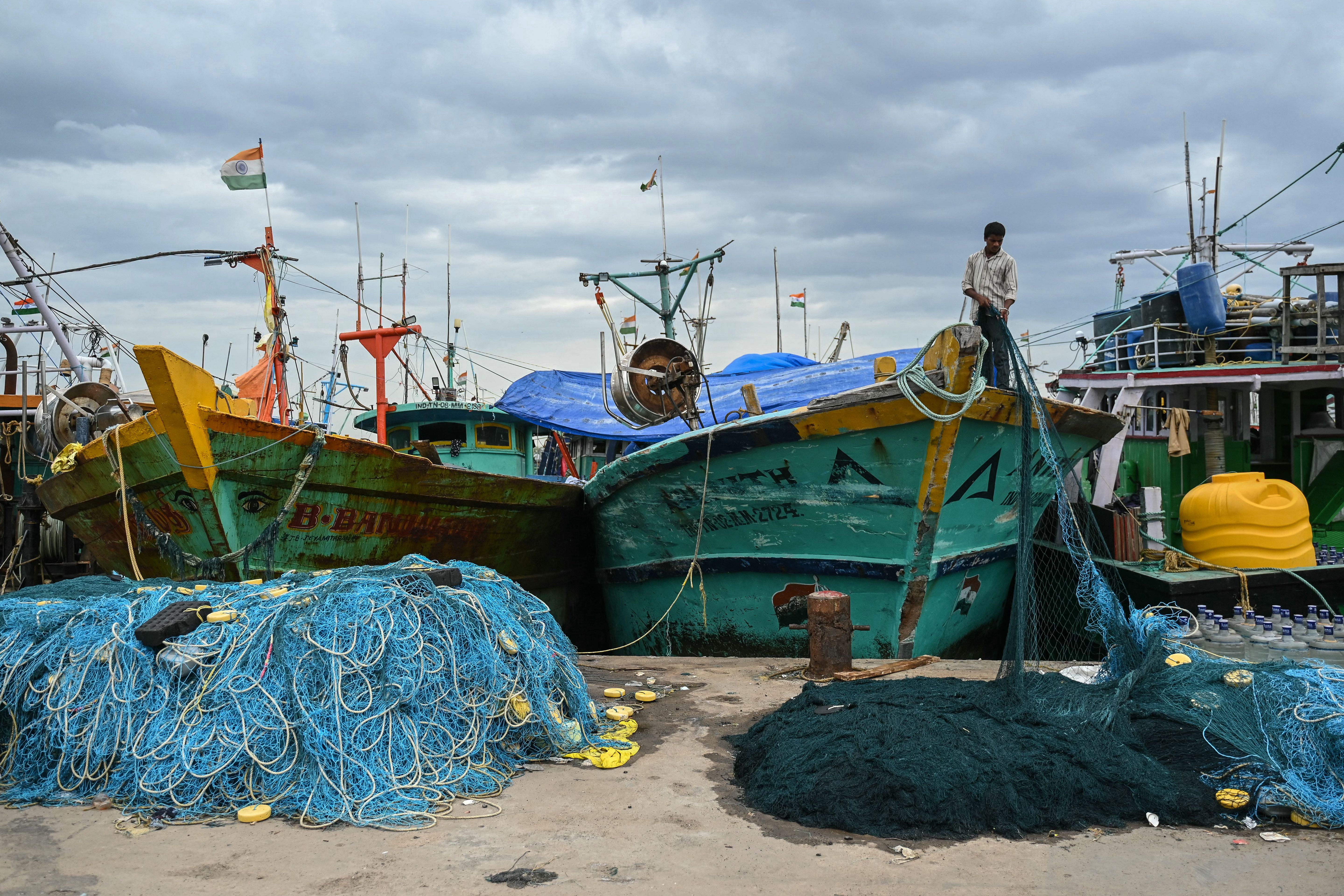
This article examines the scale and impact of Chinese IUU fishing operations globally and identifies the nature of the challenge posed by IUU fishing in the Indian Ocean Region (IOR). It also investigates why existing maritime law and international frameworks have struggled to address this growing threat.

Ajay Kumar, Charukeshi Bhatt
This compendium brings together three essays by scholars who participated in Carnegie India's Security Studies Dialogue in 2024, each examining a different aspect of China’s policies. Drawing on their expertise and research, the authors offer fresh perspectives on key geopolitical challenges.
Vijay Gokhale, Suyash Desai, Amit Kumar, …