

Article
Thomas Carothers
{
  "authors": [
    "Thomas Carothers"
  ],
  "type": "other",
  "centerAffiliationAll": "dc",
  "centers": [
    "Carnegie Endowment for International Peace"
  ],
  "collections": [
    "Democracy and Governance"
  ],
  "englishNewsletterAll": "democracy",
  "nonEnglishNewsletterAll": "",
  "primaryCenter": "Carnegie Endowment for International Peace",
  "programAffiliation": "DCG",
  "programs": [
    "Democracy, Conflict, and Governance"
  ],
  "projects": [],
  "regions": [],
  "topics": [
    "Political Reform",
    "Democracy",
    "Foreign Policy"
  ]
}
Source: Getty
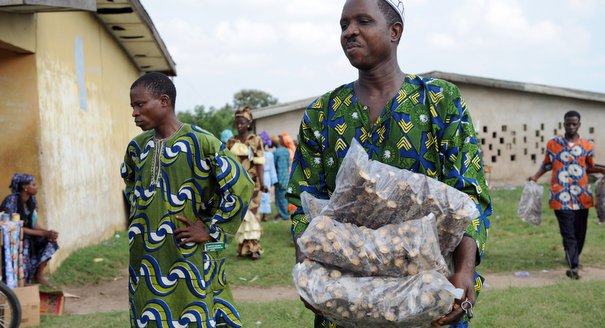
Over the past twenty years, democracy promoters and development practitioners have become increasingly interconnected and the distinctions between the two communities have become blurred.
Source: Journal of Democracy

The separation began to narrow in the 1990s. Post–Cold War optimism about the apparent triumph of market economics and liberal democracy, as well as about the complementarity of these two goals, gave rise in Western policy circles to the view that an integrated approach to both political and economic development aid might be valuable as well as possible. This new context, as well as programmatic evolution within both communities, prompted democracy promoters to begin building bridges to the socioeconomic side and developmentalists to do the same toward the political.
Those bridges widened in the most recent decade as developmentalists embraced a general imperative of “taking politics into account,” while democracy promoters accepted the need to “help democracy deliver.” The distinctions between the two practitioner communities blurred, in terms of both organizational boundaries and the activities on the ground. The growing overlap and interconnections between democracy aid and socio- economic aid present an analytic puzzle of considerable practical import: Do the growing ties between the two domains constitute a process of integration or even synthesis? What are the most important areas of common ground and the most significant differences? And what are the effects on this ill-defined relationship of recent changes in the broader international context, such as democracy’s global woes and the heightened visibility of nondemocratic development success stories?
"The Elusive Synthesis" was published as part of a Democracy Support and Development Aid trio in the Journal of Democracy. Please also read the responses, "The Case for Principled Agnosticism" by Brian Levy and "Getting Convergence Right" by Kenneth Wollack and K. Scott Hubli.
This forum grew out of a workshop organized in April 2010 on democracy and development by the Bernard Schwartz Forum on Constructive Capitalism at the School of Advanced International Studies at Johns Hopkins University.

Harvey V. Fineberg Chair for Democracy Studies; Senior Fellow, Democracy, Conflict, and Governance Program
Thomas Carothers, a senior fellow in the Carnegie Endowment for International Peace’s Democracy, Conflict, and Governance Program, is a leading expert on comparative democratization and international support for democracy.
Recent Work
Thomas Carothers
Thomas Carothers
Carnegie India does not take institutional positions on public policy issues; the views represented herein are those of the author(s) and do not necessarily reflect the views of Carnegie, its staff, or its trustees.

After the chill in ties between 2020 and 2024 that brought India–China relations to their lowest point in several decades, the two countries have engaged each other afresh. This paper argues that there are predominantly four imperatives guiding India’s approach to China, and they exist in an order of priority.

Saheb Singh Chadha

This piece argues that India’s central challenge is not managing a single flashpoint but resolving the underlying tension between expansion and institutional coherency of the BRICS grouping.

Vrinda Sahai

A partnership between India, a country of subcontinental size, and Africa, a continent of fifty-four countries, may seem asymmetric until one notes that both are home to nearly the same number of people—1.4 billion. This essay spells out the existing challenges to the partnership, its optimal potential, and the possible pathways to realize it over the next quarter-century.

Rajiv Bhatia

The India–EU Free Trade Agreement (FTA) is shaping up to be one of the most consequential trade negotiations, both economically and strategically. But, what’s in the agreement, what’s missing, and what will determine its success in the years ahead
Vrinda Sahai, Nicolas Köhler-Suzuki
Trump 2.0 has unsettled India’s external environment—but has not overturned its foreign policy strategy, which continues to rely on diversification, hedging, and calibrated partnerships across a fractured order.



Milan Vaishnav, ed., Sameer Lalwani, Tanvi Madan, …