• Research
  • About
  • Experts
Carnegie India logoCarnegie lettermark logo
{
  "authors": [
    "Paul Salem"
  ],
  "type": "legacyinthemedia",
  "centerAffiliationAll": "",
  "centers": [
    "Carnegie Endowment for International Peace",
    "Malcolm H. Kerr Carnegie Middle East Center"
  ],
  "collections": [],
  "englishNewsletterAll": "",
  "nonEnglishNewsletterAll": "",
  "primaryCenter": "Malcolm H. Kerr Carnegie Middle East Center",
  "programAffiliation": "",
  "programs": [],
  "projects": [],
  "regions": [
    "Levant"
  ],
  "topics": []
}

Source: Getty

In The Media
Malcolm H. Kerr Carnegie Middle East Center

Tehran Rising: Persian Power in an Unstable Region

Hezbollah is a key ally to Iran and a chief player in Tehran's agenda to expand its influence and advance its interests throughout the Middle East.

Link Copied
By Paul Salem
Published on Apr 13, 2011

Source: America Abroad Media

In May 2008, Hezbollah took up arms to impose a new power-sharing agreement on the Lebanese government. Believing that outside parties were trying to restrain its power, pro-Hezbollah militias took over the capital Beirut. For the first time, the Shiite movement used its weapons not against Israel but against fellow Lebanese. This deadly campaign enabled Hezbollah to gain veto power in a new deal, therefore allowing Syria and Iran to also have asay in Lebanese internal politics, explained Carnegie's Paul Salem to America Abroad Media.
 
“It is in Iran and Syria’s interest to keep supporting Hezbollah as a very effective armed force, using it as a deterrent against any possible Israeli or U.S. attack,” Salem said. In this proxy war, Iran and Syria both have an interest in undermining the work and findings of the Special Tribunal for Lebanon, argued Salem. This international jurisdiction, set up after the assassination of former Prime Minister Rafic Hariri in 2005, is expected to indict senior Hezbollah members. Having already warned that anyone who would want to arrest a member of Hezbollah “would have his hand cut off”, the party managed to topple the government in last January in order to allow a new one to publicly reject the tribunal.
 
“Usually all that Hezbollah needs is to be left alone but this time it felt it needed to gain more influence to actually blunt the tribunal,” Salem concluded.

About the Author

Paul Salem

Senior Fellow at the Middle East Institute

Paul Salem is a senior fellow at the Middle East Institute.

    Recent Work

  • Paper
    Iraq’s Tangled Foreign Interests and Relations

      Paul Salem

  • Article
    Bracing for Impact in Syria

      Paul Salem

Paul Salem
Senior Fellow at the Middle East Institute
Paul Salem
Levant

Carnegie India does not take institutional positions on public policy issues; the views represented herein are those of the author(s) and do not necessarily reflect the views of Carnegie, its staff, or its trustees.
More Work from Carnegie India

  • Commentary
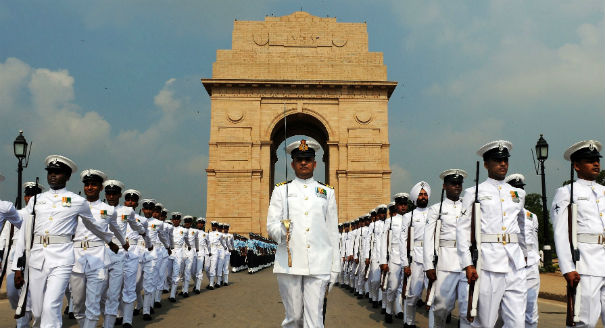
    India and the Middle East: Delhi Begins a Re-think

    A comprehensive approach to the Middle East should also allow Delhi to recast the anti-Western framework that has long guided India’s regional policy.

      C. Raja Mohan
  • Commentary
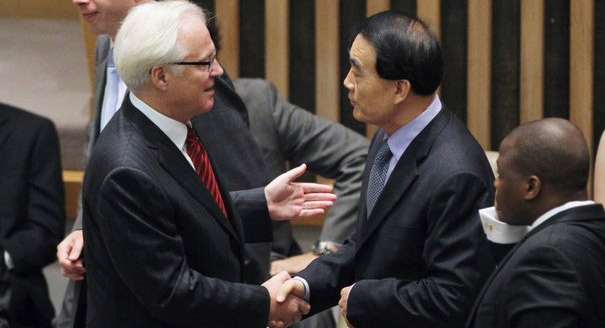
    Passive on Syria

    Beijing is dipping its diplomatic toes in the turbulent waters of the Middle East. But it is not clear if Delhi is ready to do the same.

      C. Raja Mohan
  • Commentary
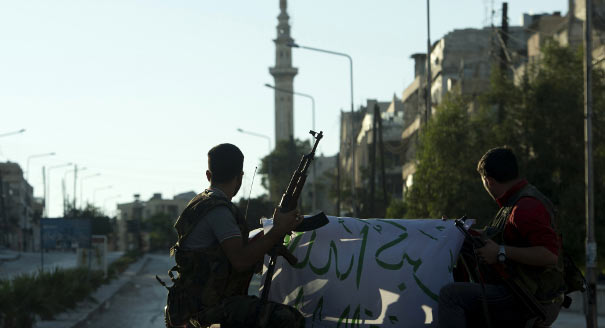
    The Arab Divide on Syria

    As Obama seeks support for a bombing campaign against Syria, the Arab League has held the Assad regime responsible for the use of chemical weapons and called for international action.

      C. Raja Mohan

Get more news and analysis from
Carnegie India
Carnegie India logo, white
Unit C-4, 5, 6, EdenparkShaheed Jeet Singh MargNew Delhi – 110016, IndiaPhone: 011-40078687
  • Research
  • About
  • Experts
  • Projects
  • Events
  • Contact
  • Careers
  • Privacy
  • For Media
Get more news and analysis from
Carnegie India
© 2026 Carnegie Endowment for International Peace. All rights reserved.