


• Research
  • About
  • Experts
Carnegie India logoCarnegie lettermark logo
TechnologyAI
{
  "authors": [
    "Toby Dalton",
    "George Perkovich"
  ],
  "type": "legacyinthemedia",
  "centerAffiliationAll": "dc",
  "centers": [
    "Carnegie Endowment for International Peace"
  ],
  "collections": [],
  "englishNewsletterAll": "",
  "nonEnglishNewsletterAll": "",
  "primaryCenter": "Carnegie Endowment for International Peace",
  "programAffiliation": "NPP",
  "programs": [
    "Nuclear Policy"
  ],
  "projects": [],
  "regions": [
    "South Asia",
    "Pakistan"
  ],
  "topics": [
    "Nuclear Policy"
  ]
}

Source: Getty

In The Media

Alliance is Unstable, Not Pakistan's Nukes

The debate over the security of Pakistan’s nuclear arsenal is evidence of a growing gulf in trust between Pakistan and the United States. Rebuilding trust may require setting aside the nuclear security debate and working together on building Pakistan’s economy.

Link Copied
By Toby Dalton and George Perkovich
Published on May 16, 2011

Source: Politico

Alliance is Unstable, Not Pakistan's NukesThe global handwringing over Pakistan’s nuclear security began minutes after the news about Osama bin Laden’s demise in Abbottabad. This happens every time there is a dramatic event in Pakistan — such as the assassination of Benazir Bhutto, a terrorist attack on the army headquarters or a flood.

No matter what happens, Western officials and commentators ask, “What does this mean about the nukes?” In fact, Pakistan’s nuclear weapons are probably quite secure from terrorists — the nukes are its crown jewels. The army cares about them in ways that it does not about bin Laden’s whereabouts or fighting the Haqqani network.

But Islamabad is at a fever pitch about whether its nuclear facilities are safe from Americans.

The nuclear issue looks different from Pakistan. For most of the world, the question is, can terrorists steal the nuclear weapons? In Islamabad it’s, can the United States or India steal them?

The SEAL raid on bin Laden’s compound shakes Pakistanis. The stealth with which U.S. commandos slipped into and out of Pakistan — seemingly without provoking a Pakistani response — is read in Pakistan as evidence that such a mission could be successfully directed against nuclear facilities.

Pakistan’s security establishment is humiliated that bin Laden was holed up within sight of its top military academy. Whether the Pakistani army and intelligence services were complicit has no bearing on the nuclear security question. But the alternative — that the security forces are incompetent — should be alarming.

Pakistan’s military is regarded as its only national institution that works. It is supposed to be omnipresent — with eyes and ears across the country. In that respect, it does not seem credible that no one in the establishment knew bin Laden’s whereabouts.

Unless, of course, that image is overblown and incorrect. This is the real concern.

Western analysts were quick to pounce on the nuclear security implications of incompetence. According to The New York Times: “It has raised the issue of whether any assurance provided by the Pakistani military can be trusted, including the security of its nuclear arsenal.”

In Pakistan, however, the adequacy of its nuclear security triggers different alarms. There, the fear is that the United States or India will launch a pre-emptive strike to destroy or steal Pakistan’s nuclear weapons. This is a longstanding fear, cultivated since the 1980s, when Pakistan’s bomb program was clandestine.

In recent years, it has been bolstered by conspiracy theories surrounding the growing U.S. presence in Pakistan. Fueled by wild stories in the free-wheeling Pakistani media, many Pakistanis believe that the large-muscled Westerners wearing shalwar kameez and driving big SUVs are in search of the country’s nuclear weapons, not Al Qaeda.

This was evident in the rumors surrounding the Raymond Davis affair, in which Islamabad detained a CIA contractor.

Kamran Khan, on his nightly Geo TV talk show, asked provocatively: “We had the belief that our defense was impenetrable but look what has happened. Such a massive intrusion, and it went undetected. ... What is the guarantee that our strategic assets and security installations are safe?”

He was not wondering whether the nuclear weapons are safe from terrorists but from the U.S.

This concern is not confined to media commentators and armchair analysts. Pakistani Army Corps commanders, a powerful group, met days after the killing to discuss the events. The group signaled its interest in kicking all U.S. military and intelligence personnel out of the country and reaffirmed that the Pakistani nuclear arsenal would be secure against U.S. and Indian threats.

This paranoia is unfounded — killing one person in a stealthy raid is a far different proposition than capturing nuclear weapons and material in multiple, heavily guarded facilities. But even the perception worries Pakistan’s generals, which is detrimental to the U.S.-Pakistan relationship.

Both Pakistani and U.S. experts lament the growing gulf in trust between the two countries. The nuclear security debate is the clearest evidence of this gap.

It is impossible to build a strategic relationship when one partner can’t be trusted to prevent nuclear terrorism and the other can’t be trusted not to exploit its intelligence and military presence to steal or destroy the other’s nuclear deterrent.

Instead of more handwringing and conspiracy theorizing — which are partly to blame for the trust deficit — it is time to set aside the nuclear-security debate and move on to issues on which U.S. and Pakistani interests align. Critical work can be done to build Pakistan’s economy, revamp its energy system and boost regional trade. Progress in these areas would be good for Pakistanis and stabilizing for the region.

About the Authors

Toby Dalton

Senior Fellow and Co-director, Nuclear Policy Program

Toby Dalton is a senior fellow and co-director of the Nuclear Policy Program at the Carnegie Endowment. An expert on nonproliferation and nuclear energy, his work addresses regional security challenges and the evolution of the global nuclear order.

George Perkovich

Japan Chair for a World Without Nuclear Weapons, Senior Fellow

George Perkovich is the Japan Chair for a World Without Nuclear Weapons and a senior fellow in the Carnegie Endowment for International Peace’s Nuclear Policy Program. He works primarily on nuclear deterrence, nonproliferation, and disarmament issues, and is leading a study on nuclear signaling in the 21st century.

Authors

Toby Dalton
Senior Fellow and Co-director, Nuclear Policy Program
Toby Dalton
George Perkovich
Japan Chair for a World Without Nuclear Weapons, Senior Fellow
George Perkovich
Nuclear PolicySouth AsiaPakistan

Carnegie India does not take institutional positions on public policy issues; the views represented herein are those of the author(s) and do not necessarily reflect the views of Carnegie, its staff, or its trustees.

More Work from Carnegie India

  • Article
    Military Lessons from Operation Sindoor

    The India-Pakistan conflict that played out between May 6 and May 10, 2025, offers several military lessons. This article presents key takeaways from Operation Sindoor and breaks down how India’s preparations shaped the outcome and what more is needed to strengthen future readiness.

      Dinakar Peri

  • Book
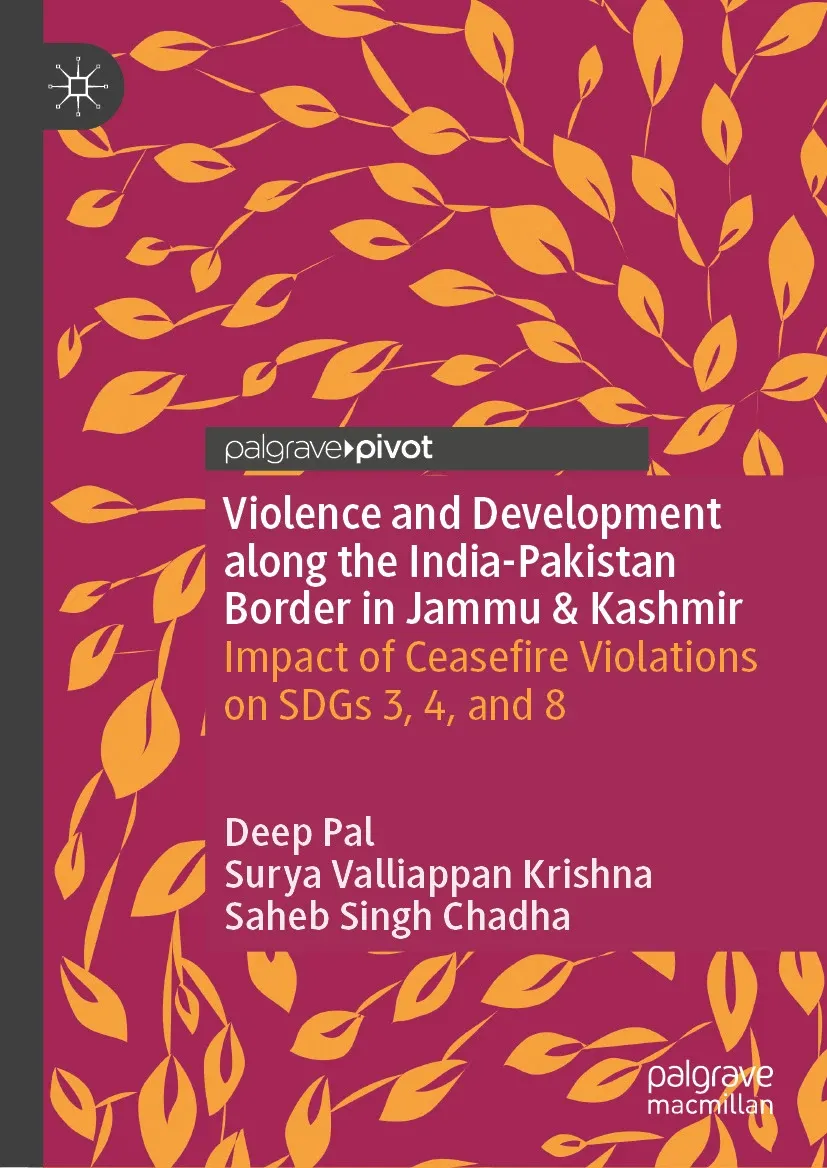
    Violence and Development Along the India-Pakistan Border in Jammu and Kashmir

    This book examines the impact of cross-border violence on communities living along the Line of Control and the International Border in Jammu and Kashmir, India.

      Deep Pal, Surya Valliappan Krishna, Saheb Singh Chadha

  • Commentary
    Indian Airstrikes in Pakistan: May 7, 2025

    On May 7, 2025, between 1:05 and 1:30 a.m. (IST), airstrikes carried out by the Indian Air Force hit nine locations inside Pakistan and Pakistan occupied Kashmir (PoK). It was codenamed Operation Sindoor.

      Rudra Chaudhuri

  • Article
    Understanding the Global Debate on Lethal Autonomous Weapons Systems: An Indian Perspective

    This article explores the global debate on lethal autonomous weapons systems (LAWS), highlighting the convergences, complexities, and differences within and beyond the UN Group of Governmental Experts (GGE) on LAWS. It further examines India’s key position at the GGE and the probable reasons behind them.

      Charukeshi Bhatt, Tejas Bharadwaj

  • Commentary
    A Primer on Compute

    This essay is the first of a three-part series that will seek to understand the considerations for building compute capacity and the different pathways to accessing compute in India. This essay delves into the meaning of compute and unpacks the various layers of the compute stack.

      Aadya Gupta, Adarsh Ranjan

Get more news and analysis from
Carnegie India
Carnegie India logo, white
Unit C-4, 5, 6, EdenparkShaheed Jeet Singh MargNew Delhi – 110016, IndiaPhone: 011-40078687
  • Research
  • About
  • Experts
  • Projects
  • Events
  • Contact
  • Careers
  • Privacy
  • For Media
Get more news and analysis from
Carnegie India
© 2026 Carnegie Endowment for International Peace. All rights reserved.