
• Research
  • About
  • Experts
Carnegie India logoCarnegie lettermark logo
AI
{
  "authors": [],
  "type": "other",
  "centerAffiliationAll": "dc",
  "centers": [
    "Carnegie Endowment for International Peace"
  ],
  "collections": [
    "Arab Awakening"
  ],
  "englishNewsletterAll": "menaTransitions",
  "nonEnglishNewsletterAll": "",
  "primaryCenter": "Carnegie Endowment for International Peace",
  "programAffiliation": "MEP",
  "programs": [
    "Middle East"
  ],
  "projects": [],
  "regions": [
    "North Africa",
    "Egypt"
  ],
  "topics": [
    "Political Reform",
    "Democracy",
    "Foreign Policy"
  ]
}

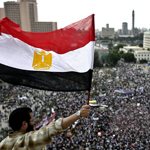
Source: Getty

Other

U.S. Should Give Meaningful and Constructive Support to Egypt’s Democratic Transition: A Statement by the Working Group on Egypt

The United States must renew its support for the democratic principles that guided Egypt's revolution to ensure that Egypt realizes its potential as a free and independent regional leader.

Link Copied
Published on Jun 7, 2011

Source: June 7

Egypt’s popular uprising succeeded in its goal of dismantling Hosni Mubarak’s authoritarian regime, but the country’s democratic transition has only just begun. It is imperative that the United States renew its support for the democratic principles that guided the revolution, to ensure that Egypt realizes its potential as a free and independent regional leader.

President Obama’s call for $1 billion in debt relief, plus loan guarantees and the creation of an enterprise fund to stimulate investment, was a positive gesture signaling the administration’s commitment to the political transition underway in Egypt.

  • Congress must now support this vital assistance package in order to provide greater opportunity for all Egyptians and ensure that an economic downturn does not jeopardize democratic reforms.

  • U.S. assistance will also set an example for other donors and creditors to Egypt.

  • Debt relief and other assistance, as well as steps toward free trade, should be structured to provide incentives for and reward passage of key milestones such as free and fair parliamentary and presidential elections, as well as the writing of a new constitution that enshrines human rights and civil liberties, including the right to assembly, freedom of expression, religious freedom, and equal opportunity for women.

As Egypt’s military leadership prepares to transfer authority to an elected civilian government:

  • The United States should support free, fair, and monitored elections that extend participation to all peaceful political forces committed to the rights and freedoms defined above.

  • While various candidates and political parties in Egypt may espouse positions troubling to Americans in the course of the election campaign, the United States should determine the future of its relationship with Egypt based on how a new government formed on the basis of these elections comports itself on critical issues, from respecting human rights and civil liberties to adhering to international commitments.

The Working Group on Egypt is a nonpartisan initiative bringing substantial expertise on Egyptian politics and political reform, and aimed at ensuring that Egypt’s elections are free and fair and open to opposition candidates.

Political ReformDemocracyForeign PolicyNorth AfricaEgypt

Carnegie India does not take institutional positions on public policy issues; the views represented herein are those of the author(s) and do not necessarily reflect the views of Carnegie, its staff, or its trustees.

More Work from Carnegie India

  • Commentary
    The Impact of U.S. Sanctions and Tariffs on India’s Russian Oil Imports

    This piece examines India’s response to U.S. sanctions and tariffs, specifically assessing the immediate market consequences, such as alterations in import costs, and the broader strategic implications for India’s energy security and foreign policy orientation.

      Vrinda Sahai

  • Commentary
    NISAR Soars While India-U.S. Tariff Tensions Simmer

    On July 30, 2025, the United States announced 25 percent tariffs on Indian goods. While diplomatic tensions simmered on the trade front, a cosmic calm prevailed at the Sriharikota launch range. Officials from NASA and ISRO were preparing to launch an engineering marvel into space—the NASA-ISRO Synthetic Aperture Radar (NISAR), marking a significant milestone in the India-U.S. bilateral partnership.

      Tejas Bharadwaj

  • Commentary
    Indian Airstrikes in Pakistan: May 7, 2025

    On May 7, 2025, between 1:05 and 1:30 a.m. (IST), airstrikes carried out by the Indian Air Force hit nine locations inside Pakistan and Pakistan occupied Kashmir (PoK). It was codenamed Operation Sindoor.

      Rudra Chaudhuri

  • Research
    Views From Taipei: Essays by Young Indian Scholars on China

    This compendium brings together three essays by scholars who participated in Carnegie India's Security Studies Dialogue in 2024, each examining a different aspect of China’s policies. Drawing on their expertise and research, the authors offer fresh perspectives on key geopolitical challenges.

      • +1

      Vijay Gokhale, Suyash Desai, Amit Kumar, …

  • Commentary
    The India-U.S. TRUST Initiative: Advancing Semiconductor Supply Chain Cooperation

    As part of the TRUST initiative, leaders of the two countries committed to building trusted and resilient supply chains, including for semiconductors and critical minerals. India and the United States have made steady progress in this area over the years. This essay explores the takeaways from discussions on semiconductor supply chains that took place at Carnegie India’s 9th Global Technology Summit.

      Konark Bhandari

Get more news and analysis from
Carnegie India
Carnegie India logo, white
Unit C-4, 5, 6, EdenparkShaheed Jeet Singh MargNew Delhi – 110016, IndiaPhone: 011-40078687
  • Research
  • About
  • Experts
  • Projects
  • Events
  • Contact
  • Careers
  • Privacy
  • For Media
Get more news and analysis from
Carnegie India
© 2026 Carnegie Endowment for International Peace. All rights reserved.