

Paper
Maria Fantappie
{
  "authors": [
    "Maria Fantappie"
  ],
  "type": "legacyinthemedia",
  "centerAffiliationAll": "",
  "centers": [
    "Carnegie Endowment for International Peace",
    "Malcolm H. Kerr Carnegie Middle East Center"
  ],
  "collections": [],
  "englishNewsletterAll": "",
  "nonEnglishNewsletterAll": "",
  "primaryCenter": "Malcolm H. Kerr Carnegie Middle East Center",
  "programAffiliation": "",
  "programs": [],
  "projects": [],
  "regions": [
    "Gulf"
  ],
  "topics": [
    "Political Reform"
  ]
}
Source: Getty
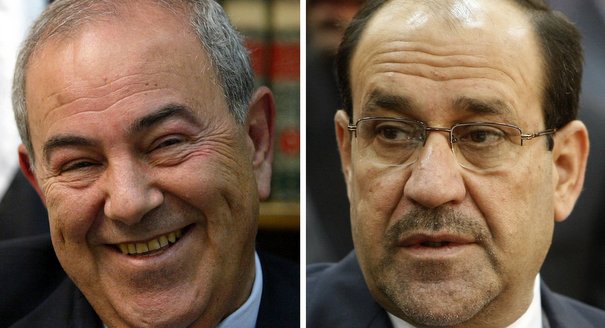
The Sadrists have the tools to mobilize the general population in Iraq, making them both Prime Minister Maliki’s most dangerous political adversary as well as his most critical ally.
Source: Los Angeles Times

The Sadrists -- the Shiite militia-turned-political movement nominally led by cleric Muqtada Sadr -- have the appropriate tools to reach people on the ground and mobilize them in the streets. They are paradoxically becoming Maliki’s most dangerous political adversary as well as his most necessary ally.
In 2007, Maliki’s forces drove the Sadrists’ Mehdi army out of Basra. Although allied in the central government, Maliki and the Sadrists are once again competing, but this time through political rather than military means.
Presiding over the federal administration and in control of the security ministries, Maliki is able to withhold funding, maneuver provincial alliances, and even deploy armed forces. But the Sadrists are positioned to fight back: in control of key ministries -- water, housing and construction, municipalities, and planning -- they are organized locally and best able to mobilize Iraqis in the streets.
Southern Iraq remains the primary battleground. On the verge of establishing a stronghold in the provinces of Maysan, the Sadrists are slowly but surely making strides in the neighboring provinces and threatening Maliki’s State of Law coalition in the provincial councils of Basra and Baghdad.
The Sadrists rely on a fluid chain of decision-making that issues policies at the top levels of government and implements projects through local committees in the provinces they run. In just a few months, their ministries have begun to build housing complexes in Maysan, implement infrastructure projects in Muthanna, improve the provision of electricity in Dhi-Qar, and improve access to water in Najaf. Starting with Maysan, Maliki has spared no time in disrupting this flow by limiting government funding, delaying approval for implementation, and hampering foreign investments.
The rush to outperform each other is most evident in the provinces of Basra and Baghdad. Maliki has hastened the allocation of funds and approved projects, but often the Sadrists have capitalized on Maliki’s efforts by taking credit for implementing projects through local committees and the ministries they run. In Baghdad, when the government began providing free fuel to supply electric generators, Sadrist committees organized distribution to each home in Sadr City and Shula. As the Shatt al-Arab irrigation project began in Basra, Maliki was compelled to create the National Council for Water under his chairmanship, undermining the Ministry of Water in the process.
If Maliki governs Iraq as its patron –– through a pyramidal hierarchy of command emanating from Baghdad –– the Sadrists deploy a strongly connected network between their representatives in parliament, the Al Ahrar Bloc, and their political bureaus in the provinces. While the prime minister receives local officials in his office in Baghdad, Sadrist members of parliament travel to all of the southern provinces to listen to constituent demands and congratulate local bureaus on their achievements. Competition is high over tribal support. While the Maliki-sponsored “Tribal Support Councils” have co-opted several southern sheiks over the past years, the Sadrists are winning them over by proposing irrigation projects and improving services in the areas they control.
But the Sadrists’ real strength lies in their ability to deal with different segments of Iraqi society. They easily mesh with the social fabric of Iraq in a way that the prime minister cannot.
Similar to other movements in the region, they often fill the vacuum left by weak state institutions by implementing policies, and bridging the gap between the government and Iraqis in the process. They target youth with education programs, provide health services for children and women, and set up judicial committees to solve disputes.
They can easily command large demonstrations and channel discontent against their political rivals. In March, for example, the Sadrists backed protests targeting the incumbent governors in Basra and Babel and more recently collected the signatures of 75 members of parliament calling on Baghdad’s mayor to resign. In Basra, Maliki was able to forge a new partnership with the Islamic Supreme Council of Iraq to reelect a loyal candidate but did not fare as well in Babel, where a rival candidate, Muhammad Ali Messoudi, was elected governor on March 18. As the most outspoken group against the U.S. presence in Iraq, the Sadrists portray themselves as a symbol of Iraqi national pride, an argument that resonates with the disadvantaged youth.
But continuous juggling between the Sadrists’ image as a resistance force and a structured political bloc could prove to be their Achilles’ heel. Despite attempts to turn the page on their violent past, militant offshoots of the group have organized themselves into “the League of the Righteous,” committing violent acts in Baghdad under the Sadrist banner. Failure to contain former fighters could impact the Sadrists’ image as a political bloc and force them to lean more on Maliki’s institutional shoulder.
The struggle over the political leadership in the provinces, most notably in Bagdad and Basra, will eventually define the terms of engagement between Maliki and Sadrist forces in the central government.
Before any larger showdown occurs, Maliki and the Sadrists will need to rely on one another. Maliki cannot have the Sadrists as enemies, especially while an eventual extension of the U.S. presence in Iraq is being decided. Keeping them on his side could prevent the explosion of popular discontent, cement support for his government, and allow him to continue tightening his grip over state institutions. Rather than unleash violence if the U.S. troop withdrawal is postponed, the Sadrists could keep themselves in the government, continue evolving into political contenders, and request the troops’ withdrawal from some of the southern provinces they run, claiming the move as a victory. With 2012 on the horizon, both strategies have been laid out.

Former Visiting Scholar, Carnegie Middle East Center
Maria Luisa Fantappie is Head of the Mediterranean, Middle East and Africa Programme at IAI. She served as Special Adviser at the Centre for Humanitarian Dialogue in Geneva (2020-2023) and at the International Crisis Group (2012-2020), engaging at the highest level of policy in Europe, the United States and across MENA (Iraq, Jordan, Saudi Arabia, Iran, Qatar, Oman and United Arab Emirates).
Recent Work
Maria Fantappie
Maria Fantappie
Carnegie India does not take institutional positions on public policy issues; the views represented herein are those of the author(s) and do not necessarily reflect the views of Carnegie, its staff, or its trustees.

As India’s economy recovers from the coronavirus pandemic, Indian businesses need efficient financial structures to regain their ground. Key reforms to India’s Insolvency and Bankruptcy Code could fill these gaps.

Anirudh Burman

Access to cross-border data is an integral piece of the law enforcement puzzle. India is well placed to lead the discussions on international data agreements subject to undertaking necessary surveillance reforms.

Smriti Parsheera, Prateek Jha

After the coronavirus pandemic wanes, how will China’s reorientation of the Belt and Road Initiative to address global health concerns influence its relationships with South Asian countries?


Deep Pal, Rahul Bhatia
Early in the outbreak, government researchers forecast several high-risk scenarios that were downplayed or ignored in public messaging.
Gautam I. Menon

Governments around the world are turning to new forms of digital surveillance to monitor the spread of the coronavirus, though they are mostly using existing laws to do so.
Anirudh Burman