

Commentary
Maria Lipman
{
  "authors": [
    "Maria Lipman"
  ],
  "type": "legacyinthemedia",
  "centerAffiliationAll": "",
  "centers": [
    "Carnegie Endowment for International Peace",
    "Carnegie Europe",
    "Carnegie Russia Eurasia Center"
  ],
  "collections": [],
  "englishNewsletterAll": "",
  "nonEnglishNewsletterAll": "",
  "primaryCenter": "Carnegie Russia Eurasia Center",
  "programAffiliation": "",
  "programs": [],
  "projects": [],
  "regions": [
    "Caucasus",
    "Russia"
  ],
  "topics": [
    "Political Reform"
  ]
}
Source: Getty
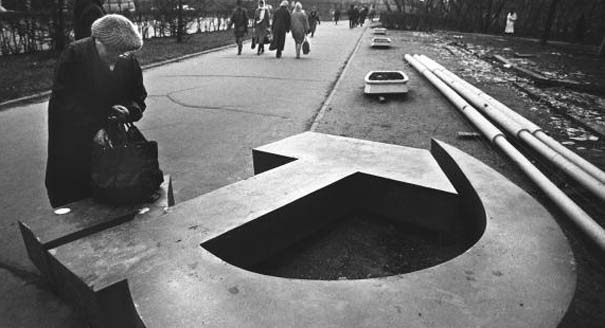
While the end of communism did not bring about an end of state paternalism or uncontested governance in Russia, the country’s post-communist development has led to a number of legitimate individual freedoms and the rise of a consumer society.
Source: Washington Post

At that moment a communist comeback was a loathsome prospect to many in Russia; popular resistance to the coup took shape a couple of hours after the plotters’ address. This was amazing evidence of political faith and idealism: People believed in democracy against oppression, they believed in Boris Yeltsin and — most amazing of all — they believed in themselves. Never in Russian history was “we the people” so meaningful and so peaceful.
Today, the ubiquitous cynicism toward politics and lack of interest in political activity make the sentiments of 20 years ago seem impossible. And yet it would be wrong to say that the end of communism had no implications for Russian life.
Three days after the 1991 plotters attempted a reversal of perestroika, their coup failed: No one was willing to rally around them. The people triumphed, and the air was filled with the inebriating sense of victory.
The putsch was doomed because the communist regime had exhausted its legitimacy. The bureaucratese of the plotters’ address was missing key elements: It did not evoke Lenin, and the word “communist” was not used once. Seen today, the address reads like a losers’ manifesto: The plotters could no longer draw on the ideology that had kept the Soviet system together. Without the ideology, what did a bunch of communist functionaries have to offer a nation that was fed up with their rule and looking for a better future?
But if victory over the moribund system was quick and easy, the bliss of conquering the ideological enemy was short-lived. The anti-communist pledges and allegiance to “Western values” such as freedom and democracy failed to bring about the yearned-for change. To be fair, expectations were somewhat vague; they generally came down to a better, “normal” life, “like in the West.” There was no sense among the people of just how crippling the communist legacy had been or that verbal condemnation would not be enough to get over it — that it would take people’s commitment and cohesion. Sacrifice was certainly not part of anyone’s thinking.
This was how the inebriation of victory quickly gave way to disappointment and frustration. Instead of faith in good ideas over bad ones, cynicism set in; sentiments like “we the people” were overcome by fragmentation, distrust and a sense that “nothing depends on us.” Interest in participation through political parties, elections and institutions of public accountability waned, as did the belief that politics could be a vehicle toward making people’s lives better.
This mind-set came in handy when Vladimir Putin began recentralizing power and reinstating state dominance over the people. By radically curtailing political rights, he brought back the familiar pattern. Before long the majority was relieved to surrender responsibility and leave state affairs to the strong leader. And if the absence of public oversight meant increasing corruption, cronyism and lawlessness, was there an alternative? Not in the experience and perceptions of the Russian people. Here, it is seen as inevitable that civil servants will use the power of their offices for personal enrichment. Trying to change that would be irrational, even stupid; a rational strategy, the thinking goes, would be to get adjusted to this environment and focus on your own pursuits.
The freedom of individual pursuit — as long as one stays away from politics — is one undoubted achievement of Russia’s post-communist development. Putin’s government reinstated the Soviet-style political monopoly and uncontested governance but did not encroach on individual rights. The constraints that existed in the USSR on entrepreneurship, artistic or academic self-fulfillment and lifestyle were not brought back. If one views the events of August 1991 as people rising in defense of freedom against a communist comeback, today’s individual freedoms should be seen as a goal fulfilled.
Another post-communist achievement is the rise of a consumer society. Although a sizable number of Russians still have low incomes, never has the proportion of those who enjoy reasonable wealth and comfort been so high. During Soviet times, frustrated consumers faced chronic shortages and ubiquitous lines; after August 1991 and the adoption of a market economy, this cause of discontent was eliminated.
These days in Russia, individual freedoms and the developed consumer society are taken for granted. But the end of communism is hardly seen as a reason for celebration either by the government or by the people. The government would not praise the public empowerment because today’s system is also based on unchallenged state power and is strongly apprehensive of activism. The people largely accept this system, so it’s no wonder that, according to Levada Center, only about 9 percent believe that the events of August 1991 were important. (Twenty years ago, over half thought so.) Looking back, just about 10 percent (overwhelmingly Muscovites) see August ’91 as a victory of the democratic revolution over communism, almost 40 percent believe it was a tragic event that had pernicious effects for Russia, and 35 percent simply dismiss it as irrelevant — a mere episode of power struggle at the top. If August ’91 had the potential of ridding Russia of its perennial state paternalism, this opportunity was lost.

Former Scholar in Residence, Society and Regions Program, Editor in Chief, Pro et Contra, Moscow Center
Lipman was the editor in chief of the Pro et Contra journal, published by the Carnegie Moscow Center. She was also the expert of the Carnegie Moscow Center’s Society and Regions Program.
Recent Work
Maria Lipman
Maria Lipman
Carnegie India does not take institutional positions on public policy issues; the views represented herein are those of the author(s) and do not necessarily reflect the views of Carnegie, its staff, or its trustees.
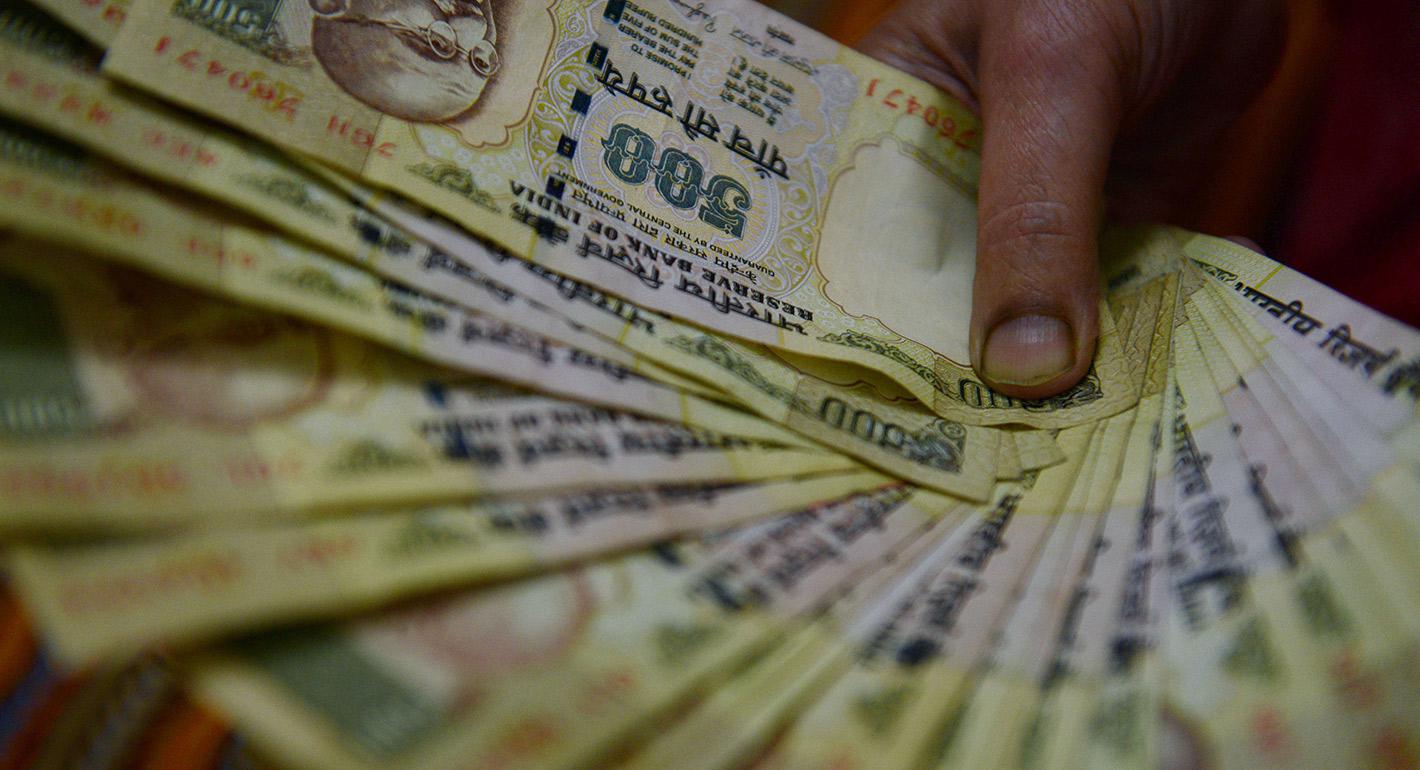
As India’s economy recovers from the coronavirus pandemic, Indian businesses need efficient financial structures to regain their ground. Key reforms to India’s Insolvency and Bankruptcy Code could fill these gaps.

Anirudh Burman

Access to cross-border data is an integral piece of the law enforcement puzzle. India is well placed to lead the discussions on international data agreements subject to undertaking necessary surveillance reforms.

Smriti Parsheera, Prateek Jha
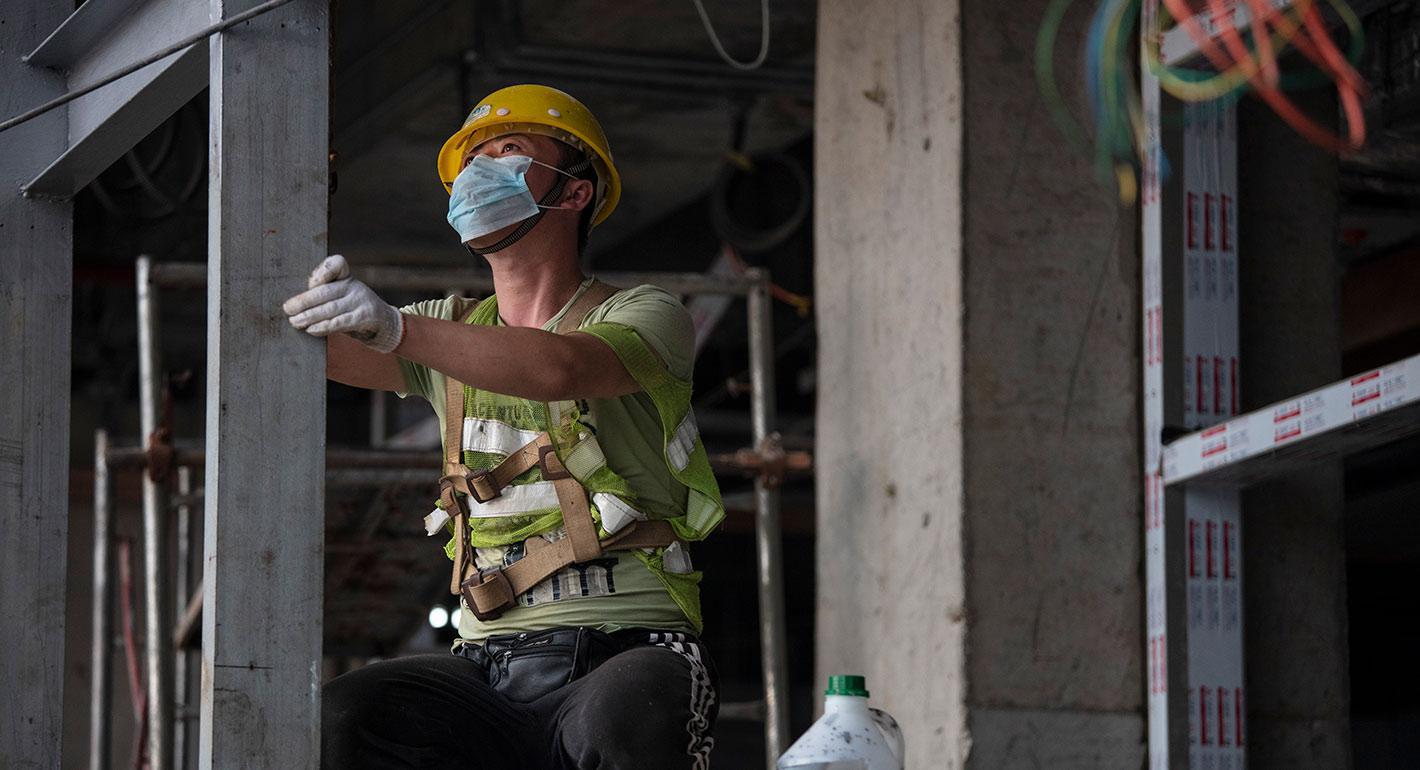
After the coronavirus pandemic wanes, how will China’s reorientation of the Belt and Road Initiative to address global health concerns influence its relationships with South Asian countries?

Deep Pal, Rahul Bhatia
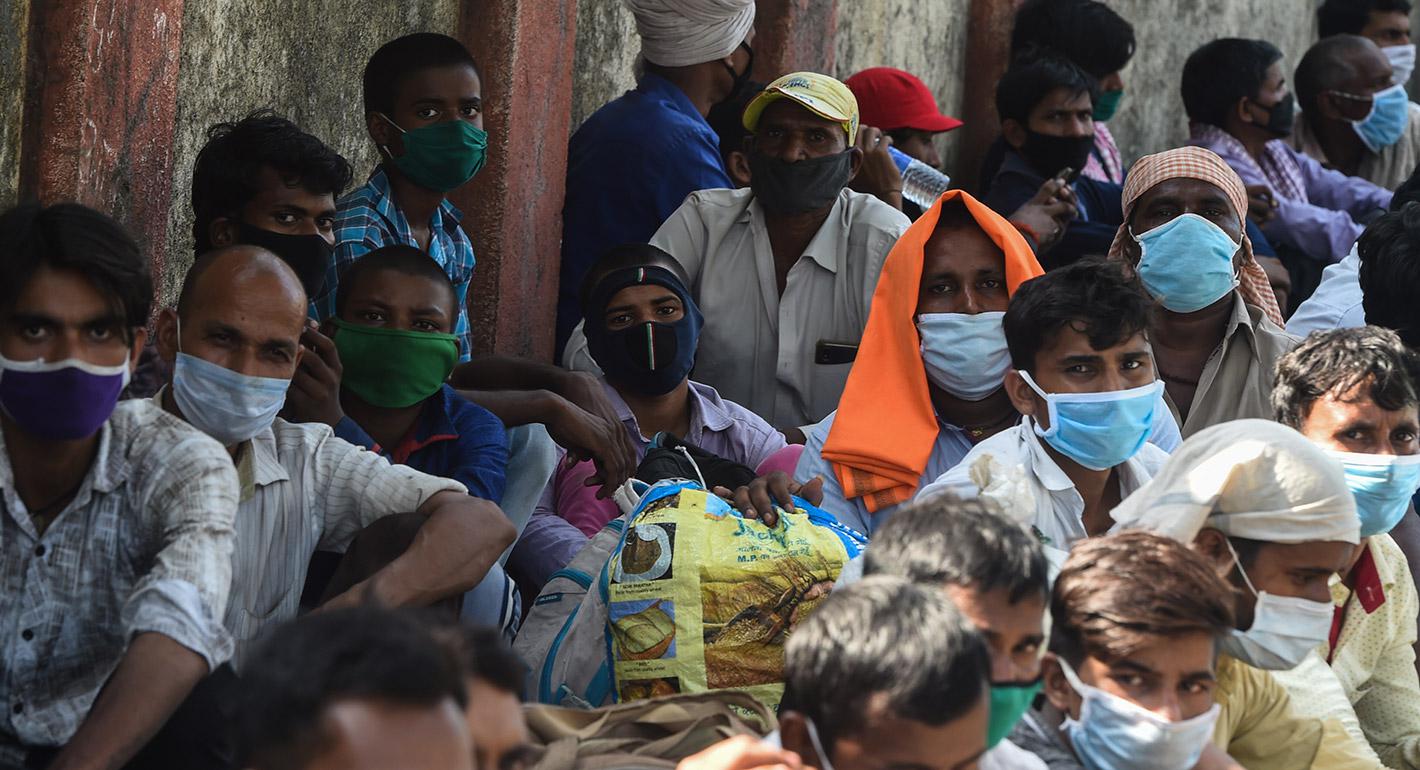
Early in the outbreak, government researchers forecast several high-risk scenarios that were downplayed or ignored in public messaging.
Gautam I. Menon
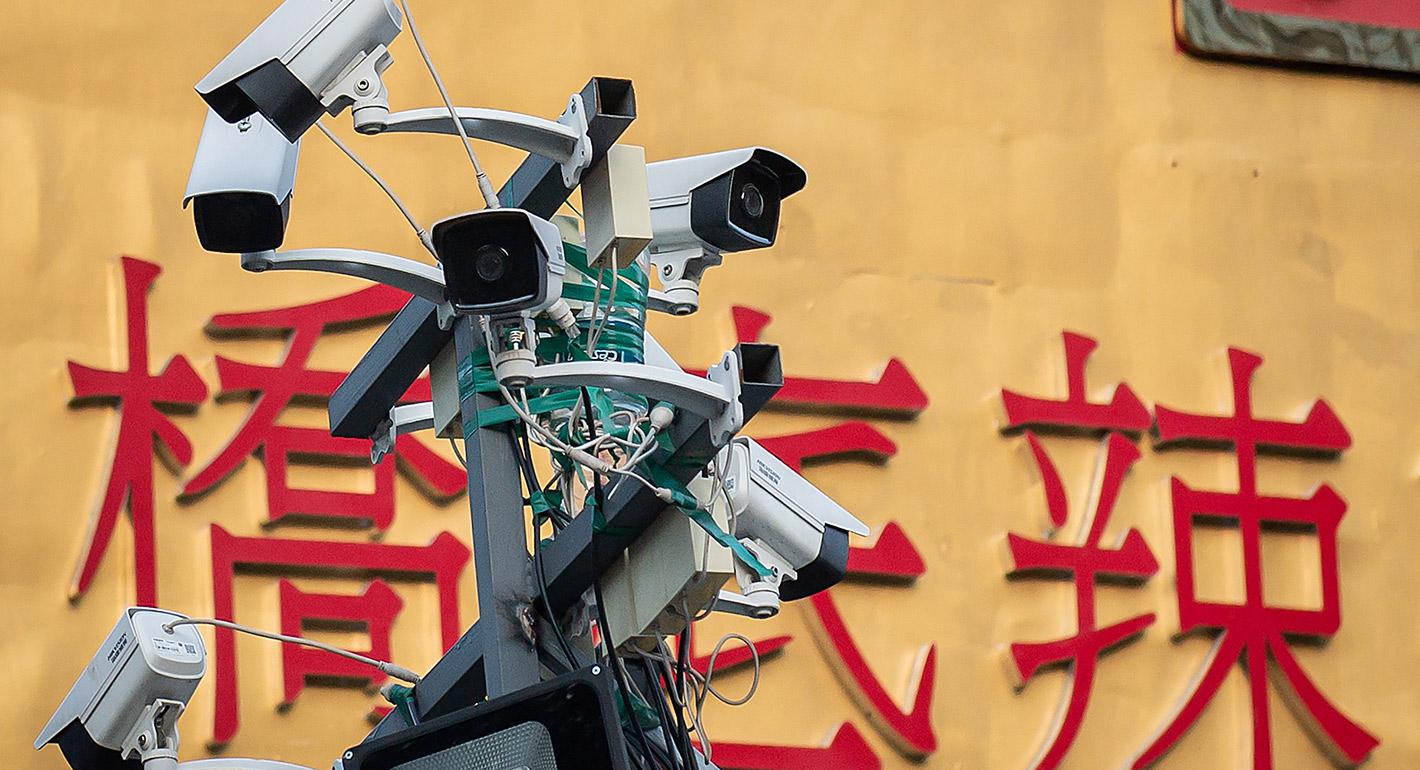
Governments around the world are turning to new forms of digital surveillance to monitor the spread of the coronavirus, though they are mostly using existing laws to do so.
Anirudh Burman