• Research
  • About
  • Experts
Carnegie India logoCarnegie lettermark logo
AI
{
  "authors": [],
  "type": "other",
  "centerAffiliationAll": "",
  "centers": [
    "Carnegie Endowment for International Peace"
  ],
  "collections": [],
  "englishNewsletterAll": "",
  "nonEnglishNewsletterAll": "",
  "primaryCenter": "Carnegie Endowment for International Peace",
  "programAffiliation": "",
  "programs": [],
  "projects": [],
  "regions": [
    "North Africa",
    "Egypt"
  ],
  "topics": []
}

Source: Getty

Other

Tagammu Party

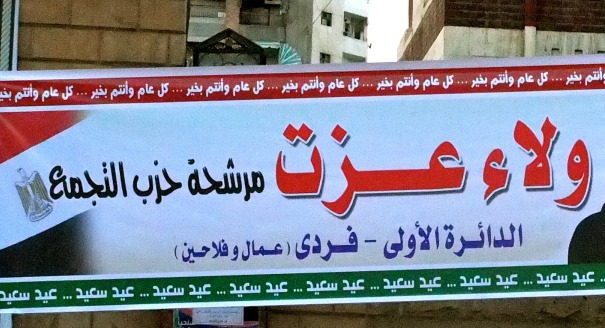
A backgrounder on the Tagammu Party.

Link Copied
Published on Sep 22, 2011

This resource was published on 09/22/2011 and is not updated to reflect changing circumstances.

One of the oldest Egyptian parties still in existence, al-Tagammu is a leftist party in serious decline under an aging leadership, struggling to find its place in a changing environment. Before the 2011 uprising, it had become increasingly reconciled with the Mubarak regime. After the uprising, it first joined the Democratic Alliance but left to become a founding member of the Egypt Bloc.

Major Party Figures

Mohammed Rifat al-Saeed: Chairman
Sayyid ‘Abd al-‘Aal: Secretary General
Hussein Abdel-Razek: Head of the Political Bureau
Farida al-Naqash: Editor in chief of the party’s newspaper, al-Ahali

Background

The al-Tagammu Party was established in 1976 by former Free Officer Khaled Moheiddin. A diverse coalition of former Nasserites, Marxists, and Arab nationalists, al-Tagammu advocated the establishment of a socialist society through the process of popular participation. The party has since moderated its position and lost the support it once had among intellectuals, labor union leaders, and workers.

In an attempt to reverse the party’s declining fortunes, in 1984 al-Tagammu tried to reach out to Islamist constituencies. After the fall of the Soviet Union and the decline of socialism worldwide, it took a more conciliatory attitude toward the old regime and was allowed to win five seats in the 2010 elections. After the uprising, the party is still struggling to find its niche.

Platform

Political Issues

  • Maintaining a strong state to protect its citizens from economic exploitation
  • Advocating democracy as the only guarantor to stability and the peaceful transfer of power

Socioeconomic Issues

  • Calling for the nationalization of major industries and resources so that they belong to the Egyptian citizens
  • Supporting redistribution of wealth to achieve social justice
  • Opposing continuation of Mubarak-era privatization to push for economic reform

Foreign Policy Issues

  • Calling for solidarity amongst all Arab nations
  • Rejecting American and Israeli imperialism in the Middle East
North AfricaEgypt

Carnegie India does not take institutional positions on public policy issues; the views represented herein are those of the author(s) and do not necessarily reflect the views of Carnegie, its staff, or its trustees.

More Work from Carnegie India

  • Commentary
    Raja Mandala: India and Djibouti’s Geopolitical Scrum

    President Kovind’s visit to Djibouti and Ethiopia suggests India is finally waking up to the geopolitical significance of the Horn of Africa.

      C. Raja Mohan

  • Commentary
    Raja Mandala: Neweurasia

    Chancelleries across Eurasia are scrambling to come to terms with the entirely unexpected victory of Trump.

      C. Raja Mohan

  • Commentary
    A Reunion of Friends

    The relationship between India and Egypt has declined over the years. But, Indian Prime Minister Narendra Modi and Egyptian President Abdel Fattah al-Sisi should rebuild the friendship between Nehru and Nasser.

      C. Raja Mohan

  • Commentary
    Raja-Mandala: Between Talk and Action

    The India-Africa Summit can galvanize India’s security engagement with Africa.

      C. Raja Mohan

  • Commentary
    India and the Middle East: Finding a New Balance

    While some might find India’s new approach to the Middle East somewhat disconcerting, the government of Narendra Modi is bringing pragmatism and transparency to India’s Middle East policy.

      C. Raja Mohan

Get more news and analysis from
Carnegie India
Carnegie India logo, white
Unit C-4, 5, 6, EdenparkShaheed Jeet Singh MargNew Delhi – 110016, IndiaPhone: 011-40078687
  • Research
  • About
  • Experts
  • Projects
  • Events
  • Contact
  • Careers
  • Privacy
  • For Media
Get more news and analysis from
Carnegie India
© 2026 Carnegie Endowment for International Peace. All rights reserved.