

Q&A
S. Akbar Zaidi
{
  "authors": [
    "S. Akbar Zaidi"
  ],
  "type": "legacyinthemedia",
  "centerAffiliationAll": "dc",
  "centers": [
    "Carnegie Endowment for International Peace"
  ],
  "collections": [],
  "englishNewsletterAll": "ctw",
  "nonEnglishNewsletterAll": "",
  "primaryCenter": "Carnegie Endowment for International Peace",
  "programAffiliation": "SAP",
  "programs": [
    "South Asia"
  ],
  "projects": [],
  "regions": [
    "North America",
    "United States",
    "South Asia",
    "Pakistan"
  ],
  "topics": [
    "Political Reform",
    "Democracy",
    "Economy",
    "Security",
    "Foreign Policy"
  ]
}
Source: Getty
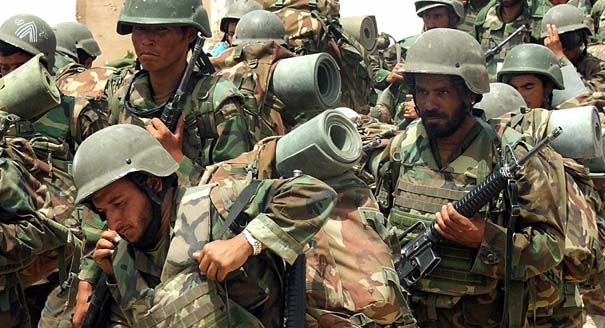
While Pakistan has always been dependent on foreign aid, U.S. aid to the Pakistani military has served to strengthen their power in Pakistan’s political economy, giving them the ability to sidestep the elected civilian government.
Source: Dawn

Almost 30 per cent of this official development assistance came in the form of bilateral aid from the US, the largest single bilateral donor by far. Assistance of this magnitude was made possible by the fact that Pakistan’s leadership, especially its military leadership, clearly aligned itself with the US during the Cold War.
US aid to Pakistan was vital during the 1960s. It helped play a significant part in numerous development projects, food support and humanitarian assistance through the United States Agency for International Development (USAID) and other mechanisms. By 1964, overall aid and assistance to Pakistan was around five per cent of its GDP and was critical in spurring Pakistani industrialisation and development. Not only was aid vital in the 1960s, it was also focused on civilian economic assistance.
The Soviet invasion of Afghanistan in 1979 resulted in increased US development and military assistance as Pakistan became a frontline state in the war against Soviet occupation. Large and undisclosed amounts of money and arms were channelled to the Mujahideen fighting the Red Army in Afghanistan through Pakistan’s military and its clandestine agencies, particularly the ISI. While this ‘aid’ was not meant directly for Pakistan’s military, there is ample evidence that significant funds meant for the Afghan Mujahideen were pocketed by Pakistani officers.
US assistance between 1971-2001 did not put Pakistan on a path to self-sustaining growth, nor did it bring about any real value in terms of America’s own Cold War objectives. The expulsion of the Soviet Union from Afghanistan with strategic help from Pakistan was a major gain for Washington, but the Afghan campaign also ended up strengthening the praetorian state in Pakistan while doing little to aid its people. After September 2001, the nature of the US aid to Pakistan relationship changed primarily to purchasing Pakistan’s cooperation in counterterrorism. In 2002-10 (and not including commitments such as the Enhanced Partnership with Pakistan Act of 2009), the US gave Pakistan almost $19bn, or more than $2bn on average each year, with twice as much allocated in 2010 ($3.6bn) than in 2007. During 2002-08, only 10 per cent of this money was meant for Pakistani development, and as much as 75 per cent of the money was explicitly for military purposes. In more recent years, the share of economic-related aid has risen, but it is still less than half. It is important to state, that the primary purpose of aid to Pakistan has been counterterrorism, not economic support.
Since 2008, there has been a rethinking in the nature of US assistance to Pakistan. The first major step was the promulgation of the Kerry-Lugar-Berman bill, which commits $7.5bn in non-military aid to Pakistan over five years. However, it is still not clear when and how the legislation will actually start delivering aid to Pakistan. The Christian Science Monitor reported that only $285m of this money had been spent by May 2011.
After a decade of engagement and assistance between the US and Pakistan, what emerges from both countries’ perspective is that post-9/11 US aid has been focused mainly on carrying out counterterrorism operations, not helping the Pakistani people or the economy, or building democracy. This assistance has not achieved the counterterrorism objectives of the US or Pakistan, even acknowledging that the objectives have been inadequately defined. It has had the effect, however, of strengthening the praetorian state further — thus reinforcing the very weaknesses of Pakistan’s democracy that the Americans decry.
The question asked in Islamabad, as well as in Washington, as to what benefits US aid brings to Pakistan, is being answered as follows. In Washington, the question being asked post-Bin Laden is: what is or has the US received in return for the $20bn aid given to Pakistan over the last decade? And the answer seems to be ‘not very much’. In Islamabad, the question being asked by politicians and civil society members is similar: what has US aid delivered for the people of Pakistan? The answer again is ‘not very much, except that the military has benefited the most’.
Both Pakistan and the US have reason to be disappointed with the results of American aid. Though the US hoped that this assistance would encourage Pakistan’s army to help in the war on terrorism in the border regions of Pakistan, there has been no real evidence that the Pakistani army has been on the same page as the US administration in this regard, or that the government and military feel as strongly about Al Qaeda and the Afghan Taliban as does the US administration.
The Pakistani military has been the main beneficiary of aid from the US, exploiting the pathology of too big and too important to fail. Since military aid has been two or three times as large as economic aid, the US government has strengthened the hand of the military in Pakistan’s political economy, sidestepping the elected civilian government because there has been more trust, unfounded, no doubt, in the ability of the Pakistani military. There is an urgent need to shift the relationship away from a myopic focus on the military towards a more productive use of aid. Such a shift might just strengthen democracy in Pakistan as well.
Former Visiting Scholar, South Asia Program
Zaidi was a visiting scholar in the Carnegie Endowment’s South Asia Program. A visiting professor at Johns Hopkins University’s School of Advanced International Studies (SAIS), his research focuses on development, governance, and political economy in South Asia.
Recent Work
S. Akbar Zaidi
S. Akbar Zaidi
Carnegie India does not take institutional positions on public policy issues; the views represented herein are those of the author(s) and do not necessarily reflect the views of Carnegie, its staff, or its trustees.

In any defense establishment, change is an ongoing process. However, despite the best of intentions, existing bureaucracies, bound by habit and years of socialization, have their limits in implementing transformative change.

Anit Mukherjee

How is AI reshaping space security, creating governance challenges, and where does international diplomacy stand today?


Tejas Bharadwaj, Almudena Azcárate Ortega

After the chill in ties between 2020 and 2024 that brought India–China relations to their lowest point in several decades, the two countries have engaged each other afresh. This paper argues that there are predominantly four imperatives guiding India’s approach to China, and they exist in an order of priority.

Saheb Singh Chadha

This piece argues that India’s central challenge is not managing a single flashpoint but resolving the underlying tension between expansion and institutional coherency of the BRICS grouping.

Vrinda Sahai

A partnership between India, a country of subcontinental size, and Africa, a continent of fifty-four countries, may seem asymmetric until one notes that both are home to nearly the same number of people—1.4 billion. This essay spells out the existing challenges to the partnership, its optimal potential, and the possible pathways to realize it over the next quarter-century.

Rajiv Bhatia