President Kovind’s visit to Djibouti and Ethiopia suggests India is finally waking up to the geopolitical significance of the Horn of Africa.
C. Raja Mohan
{
"authors": [],
"type": "other",
"centerAffiliationAll": "",
"centers": [
"Carnegie Endowment for International Peace"
],
"collections": [],
"englishNewsletterAll": "",
"nonEnglishNewsletterAll": "",
"primaryCenter": "Carnegie Endowment for International Peace",
"programAffiliation": "",
"programs": [],
"projects": [],
"regions": [
"North Africa",
"Egypt"
],
"topics": []
}Source: Getty
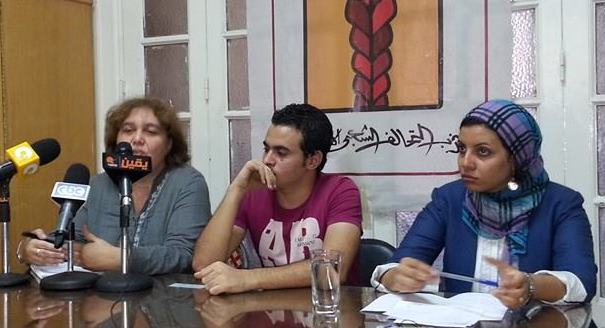
A backgrounder on the Socialist Popular Alliance Party.
This resource was published on 10/19/2011 and is not updated to reflect changing circumstances.
Socialist Popular Alliance Party is a new leftist political party founded after the January 2011 uprising. It is the first of the new leftist parties to be legally recognized, gaining official party recognition in October 2011. It was originally a member of the Coalition of Socialist Forces, then joined the Egypt Bloc, but pulled out of that alliance in October 2011. The party participated in 2011 parliamentary elections as a member of the “Completing the Revolution” Alliance before later joining the Revolutionary Democratic Coalition.
Abu al-Ezz al-Hariri: founding member
Abd al-Ghaffar Shukr: prominent member
Ibrahim al-Esawi: prominent member
Mohamed al-Agaty: prominent member
Mustafa Kamel al-Sayyid: prominent member
The Socialist Popular Alliance Party was founded in March 2011 following the January 2011 uprising. A number of the party’s members were formerly members of the al-Tagammu Party, but split from al-Tagammu because of disagreements over the November 2010 parliamentary elections and the January 2010 uprising. Previous al-Tagammu members include Abd al-Ghaffar Shukr and Ibrahim al-Esawi, both prominent Egyptian leftist thinkers.
On May 10, 2011, the Socialist Popular Alliance Party formed the Coalition of Socialist Forces with the Social Party of Egypt, the Democratic Labor Party, the Egypt Communist Party, and the Revolutionary Socialists. On September 28, it became the first new leftist political organization to submit a request to be recognized as an official political party and it was legally recognized on October 13, 2011.
Carnegie India does not take institutional positions on public policy issues; the views represented herein are those of the author(s) and do not necessarily reflect the views of Carnegie, its staff, or its trustees.
President Kovind’s visit to Djibouti and Ethiopia suggests India is finally waking up to the geopolitical significance of the Horn of Africa.
C. Raja Mohan
Chancelleries across Eurasia are scrambling to come to terms with the entirely unexpected victory of Trump.
C. Raja Mohan
The relationship between India and Egypt has declined over the years. But, Indian Prime Minister Narendra Modi and Egyptian President Abdel Fattah al-Sisi should rebuild the friendship between Nehru and Nasser.
C. Raja Mohan
The India-Africa Summit can galvanize India’s security engagement with Africa.
C. Raja Mohan
While some might find India’s new approach to the Middle East somewhat disconcerting, the government of Narendra Modi is bringing pragmatism and transparency to India’s Middle East policy.
C. Raja Mohan