• Research
  • About
  • Experts
Carnegie India logoCarnegie lettermark logo
{
  "authors": [
    "Yukon Huang"
  ],
  "type": "legacyinthemedia",
  "centerAffiliationAll": "dc",
  "centers": [
    "Carnegie Endowment for International Peace",
    "Carnegie China"
  ],
  "collections": [
    "China’s Foreign Relations",
    "U.S.-China Relations"
  ],
  "englishNewsletterAll": "asia",
  "nonEnglishNewsletterAll": "",
  "primaryCenter": "Carnegie China",
  "programAffiliation": "AP",
  "programs": [
    "Asia"
  ],
  "projects": [],
  "regions": [
    "United States",
    "East Asia",
    "China",
    "North America"
  ],
  "topics": [
    "Economy",
    "Trade",
    "Foreign Policy"
  ]
}
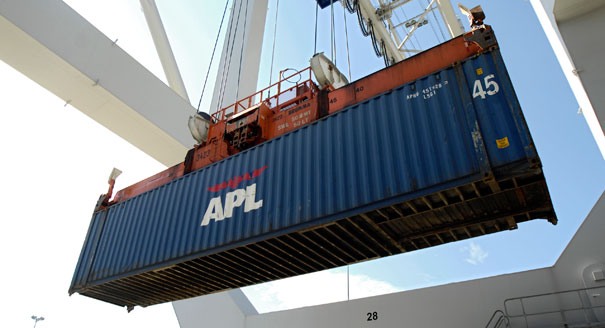
Source: Getty

In The Media
Carnegie China

U.S.-China Trade War: Congress Beware What You Wish For

Far from resolving America's economic woes, targeting China's currency will only result in higher prices for U.S. consumers and reduced global demand.

Link Copied
By Yukon Huang
Published on Oct 5, 2011

Source: Financial Times

Once again the US Congress is finding it more convenient to play the China currency card as the panacea for America’s economic woes, rather than deal with the difficult issues in President Barack Obama’s recent employment bill.

China’s response to the proposed bill pressuring it into allowing the renminbi to appreciate was predictable, with simultaneous protests from all the relevant agencies. Given the threat to the global economy from the problems in the eurozone and the US, China’s leadership regards the currency bill as a distraction from the real issues that need to be resolved. At a time when China is one of the few sources of global growth, ratcheting up protectionist sentiments only makes it harder to secure the necessary multilateral co-operation. The country’s government sees the currency debate as yet another sign of why the American political system is broken.
 
Many within China thought that given recent developments, criticism of its exchange rate policies would become more muted. After all, China has continued its policy of gradual appreciation of 5-6 six per cent annually. With the euro crisis and strengthening US dollar, the renminbi has been the exception in appreciating, while other major currencies have depreciated. China also notes that its trade surplus has declined sharply from 7 per cent to 8 per cent of gross domestic product five years ago to a projected 1-2 per cent for this year. And while reserves continue to pile up, this is seen as having more to do with capital inflows seeking higher returns – encouraged by expansionary US monetary policies – than by misaligned exchange rates.
 
Moreover, Beijing argues that bilateral trade balances are meaningless in a world dominated by production networks using China as the assembly plant for the world. More than half of the country’s exports come from “processing” trade, with China accounting for some 20 per cent of the value produced and the rest from components imported from other Asian countries, Europe and America. China’s trade surplus comes from processing trade. Thus America’s large bilateral trade deficit is not really with China but with east Asia more broadly. Take the iPod: it is recorded as a $150 export from China to the US – yet only $5 of the value added originates in China, the rest comes from half a dozen other countries with the bulk accruing to Apple itself.
 
In this context if Congress gets its way, the net impact will not be more American jobs but reduced global demand and higher prices for US consumers. As the recent ‘Spillover Report’ by the International Monetary Fund concluded – a 10 per cent appreciation of the renminbi would have a negligible effect on the US trade balance or its GDP. Yet China has little appetite to turn this affair into a full-blown trade war since it has benefited greatly from open markets. Thus while the leadership will not let any perceived negative action go unchecked, its motivation will be to work towards constructive solutions.
 
America should worry more about maintaining its position at the upper end of the technology spectrum as China may feel the need to reinvent itself if the pressure to sharply appreciate its exchange rate continues. No wonder most US companies are more concerned about market access and technology transfer than futile currency wars.

About the Author

Yukon Huang

Senior Fellow, Asia Program

Huang is a senior fellow in the Carnegie Asia Program where his research focuses on China’s economy and its regional and global impact.

    Recent Work

  • Commentary
    Three Takeaways From the Biden-Xi Meeting

      Yukon Huang, Isaac B. Kardon, Matt Sheehan

  • Commentary
    Europe Narrowly Navigates De-risking Between Washington and Beijing

      Yukon Huang, Genevieve Slosberg

Yukon Huang
Senior Fellow, Asia Program
Yukon Huang
EconomyTradeForeign PolicyUnited StatesEast AsiaChinaNorth America

Carnegie India does not take institutional positions on public policy issues; the views represented herein are those of the author(s) and do not necessarily reflect the views of Carnegie, its staff, or its trustees.

More Work from Carnegie India

  • Commentary
    India Signs the Pax Silica—A Counter to Pax Sinica?

    On the last day of the India AI Impact Summit, India signed Pax Silica, a U.S.-led declaration seemingly focused on semiconductors. While India’s accession to the same was not entirely unforeseen, becoming a signatory nation this quickly was not on the cards either.

      Konark Bhandari

  • Commentary
    The Impact of U.S. Sanctions and Tariffs on India’s Russian Oil Imports

    This piece examines India’s response to U.S. sanctions and tariffs, specifically assessing the immediate market consequences, such as alterations in import costs, and the broader strategic implications for India’s energy security and foreign policy orientation.

      Vrinda Sahai

  • Paper
    India-China Economic Ties: Determinants and Possibilities

    This paper examines the evolution of India-China economic ties from 2005 to 2025. It explores the impact of global events, bilateral political ties, and domestic policies on distinct spheres of the economic relationship.

      Santosh Pai

  • Commentary
    NISAR Soars While India-U.S. Tariff Tensions Simmer

    On July 30, 2025, the United States announced 25 percent tariffs on Indian goods. While diplomatic tensions simmered on the trade front, a cosmic calm prevailed at the Sriharikota launch range. Officials from NASA and ISRO were preparing to launch an engineering marvel into space—the NASA-ISRO Synthetic Aperture Radar (NISAR), marking a significant milestone in the India-U.S. bilateral partnership.

      Tejas Bharadwaj

  • Article
    Hidden Tides: IUU Fishing and Regional Security Dynamics for India

    This article examines the scale and impact of Chinese IUU fishing operations globally and identifies the nature of the challenge posed by IUU fishing in the Indian Ocean Region (IOR). It also investigates why existing maritime law and international frameworks have struggled to address this growing threat.

      Ajay Kumar, Charukeshi Bhatt

Get more news and analysis from
Carnegie India
Carnegie India logo, white
Unit C-4, 5, 6, EdenparkShaheed Jeet Singh MargNew Delhi – 110016, IndiaPhone: 011-40078687
  • Research
  • About
  • Experts
  • Projects
  • Events
  • Contact
  • Careers
  • Privacy
  • For Media
Get more news and analysis from
Carnegie India
© 2026 Carnegie Endowment for International Peace. All rights reserved.









