

Commentary
Uri Dadush
{
  "authors": [
    "Uri Dadush"
  ],
  "type": "legacyinthemedia",
  "centerAffiliationAll": "",
  "centers": [
    "Carnegie Endowment for International Peace",
    "Carnegie Europe"
  ],
  "collections": [],
  "englishNewsletterAll": "",
  "nonEnglishNewsletterAll": "",
  "primaryCenter": "Carnegie Endowment for International Peace",
  "programAffiliation": "",
  "programs": [],
  "projects": [],
  "regions": [
    "North America",
    "United States",
    "Western Europe",
    "France",
    "Germany",
    "Europe"
  ],
  "topics": [
    "Economy",
    "EU"
  ]
}
Source: Getty
Five misconceptions—all rooted in denial—are preventing policymakers from appreciating the gravity of the crisis in Europe, which represents the greatest threat to the global economy since the Lehman debacle.
Source: National Interest

The situation is reminiscent of the opening scenes of the recent War of the Worlds remake, which show ordinary New Yorkers (Tom Cruise and family) entranced and amused by live television coverage of extreme and unprecedented electrical storms in Ukraine, unsuspecting that they are witnessing the opening salvo of an extra-planetary attack that will soon devastate their city and the whole world.
In fact, five great misconceptions are still clouding the judgment of policy makers and the public at large.
It’s about Greece. Greece is a recurring irritant and a source of contagious pessimism, but in the end it is a small economy whose debt, though hardly inconsequential at 370 billion euros (about 500 billion dollars), is well within the bounds of what the eurozone can manage through its European Financial Stability Facility (EFSF). Italy is so much bigger that it is a qualitatively different problem. Italy’s debt alone—even assuming it does not drag Spain along with it—is 1.92 trillion euros ($2.64 trillion), about twice the size of the whole subprime mortgage sector at its peak. If Italy deteriorates, Spain would likely follow, and even greater pressure would be placed on France, which already has initiated an austerity program to preserve its AAA rating.
It’s a fiscal problem. The fiscal and sovereign debt crisis in the European periphery, grave as it is, represents only the symptom of a deeper malady—a secular loss of competitiveness vis-à-vis the core of Europe and, more importantly, the rest of the world. The deterioration of competitiveness, which stifles investment and growth, is a direct reflection of the inability to devalue and keep up with Germany’s rising productivity and moderate wage increases. The loss of competitiveness can be reversed (Ireland is doing it), but only at the cost of a long-term decline in wages and demand, which will require in turn even more fiscal retrenchment. This is why the crisis will be with us for many years.
Europe is rich enough—it can fix the problem on its own. This is false on two counts. First, a seamless Europe does not exist, although it often suits European leaders to say it does. Europe—and this also goes for the seventeen eurozone countries that form the European monetary union—remains a loose amalgamation of fiercely independent sovereign nations. Even if they formed something akin to the United States, which they do not have today, can you imagine New York voting to bail out California? Second, the problem debts of the European periphery are too big for the healthy core to deal with. Even if you define the healthy core generously to include France, the total debt of the periphery represents about 56 percent of the core’s GDP. By contrast, the subprime mortgage sector represented about 7–10 percent of U.S. GDP. While the Troubled Asset Relief Program program represented 5 percent of U.S. GDP, I estimate that the bailout fund needed for the periphery represents one third of core countries’ GDP.
The European Central Bank (ECB) can solve the crisis overnight. The ECB’s purchases of government bonds (not to mention liquidity injections into the European periphery banks) is currently what stands between the eurozone and disaster. Esteemed observers such as the Financial Times’s Martin Wolf have argued that blanket guarantees of all members’ bonds would end the crisis. But turning the ECB’s emergency purchases into a permanent arrangement is the euro’s road to perdition. Not only does it not deal with the underlying growth and competitiveness problem, it removes the incentives for politicians to deal with it and with their high debts. And it will gradually and inevitably erode all political support for the monetary union in the core nations—whose citizens know full well that their currency is being debased and that their central bank is taking on extraordinary risks that they as taxpayers will eventually have to bear.
The United States is insulated from the crisis. Bankers certainly would like you to think so. The fallacy is to focus on direct links (U.S. exports to the eurozone are a small share of U.S. GDP, and American banks have only a small share of their portfolio invested in periphery bonds). But the essence of large macroeconomic downturns and financial crises lie in systemic, not direct, links—very few of the tens of millions of Americans and Europeans who lost their jobs during the Great Recession owned U.S. mortgage-backed securities. The point is that the United States is heavily exposed because the European Union is the world’s largest economy and home to what is by far the largest banking sector. And banks play a much more important intermediating role in Europe than they do in the United States.
There is actually a common thread in the five misconceptions—denial: a desperate desire to minimize the problem for fear of confronting its implications. There is only one conclusion: The United States must be prepared for the worst, and it must work with China and the rest of the G20 to help Europe build the necessary firewall. The worst that will happen is that the firewall will not be needed. But that, unfortunately, remains the least likely outcome.

Former Senior Associate, International Economics Program
Dadush was a senior associate at the Carnegie Endowment for International Peace. He focuses on trends in the global economy and is currently tracking developments in the eurozone crisis.
Recent Work
Uri Dadush
Uri Dadush
Carnegie India does not take institutional positions on public policy issues; the views represented herein are those of the author(s) and do not necessarily reflect the views of Carnegie, its staff, or its trustees.

How is AI reshaping space security, creating governance challenges, and where does international diplomacy stand today?


Tejas Bharadwaj, Almudena Azcárate Ortega
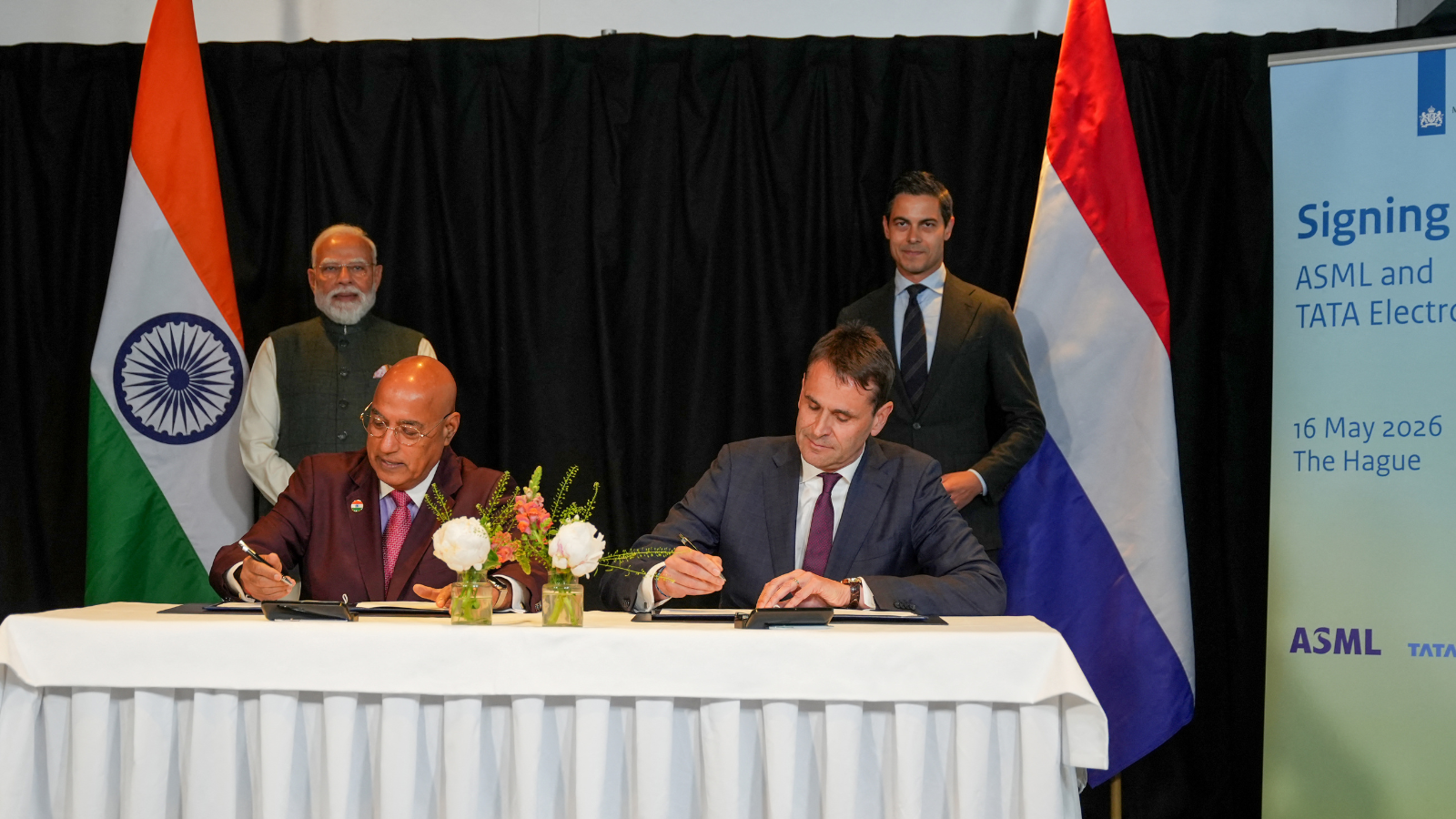
The ASML MoU with Tata Electronics is an indicator of how far the Indian semiconductor ecosystem has come. This ecosystem has been years in the making and represents real commercial logic.

Konark Bhandari

The U.S.–India semiconductor cooperation story is well-stocked with top-level strategic intent. What remains unresolved, however, are some underlying challenges that will determine whether the cooperation actually functions. Three such friction points stand out.

Shruti Mittal

The India–EU Free Trade Agreement (FTA) is shaping up to be one of the most consequential trade negotiations, both economically and strategically. But, what’s in the agreement, what’s missing, and what will determine its success in the years ahead

Vrinda Sahai, Nicolas Köhler-Suzuki

On March 10, 2026, India’s Union Cabinet approved amendments to Press Note 3, a regulation that mandated government approval on all foreign direct investment (FDI) from countries sharing a land border with India. This amendment raises questions primarily about whether its stated benefits will materialize and if the risks have been adequately weighed. This piece will address the same.
Konark Bhandari