

Research
- +10
Rosa Balfour, Frances Z. Brown, Yasmine Farouk, …
{
  "authors": [
    "Moisés Naím"
  ],
  "type": "legacyinthemedia",
  "centerAffiliationAll": "",
  "centers": [
    "Carnegie Endowment for International Peace"
  ],
  "collections": [],
  "englishNewsletterAll": "",
  "nonEnglishNewsletterAll": "",
  "primaryCenter": "Carnegie Endowment for International Peace",
  "programAffiliation": "",
  "programs": [],
  "projects": [],
  "regions": [
    "North America",
    "South America",
    "Western Europe",
    "France",
    "Germany"
  ],
  "topics": [
    "Economy"
  ]
}
Source: Getty
European leaders should be more willing to learn from the successes and failures of Latin America, a region that knows a great deal about economic crises, bank failures, excessive debt, and the empty promises of populism.
Source: El Pais

In another age, in the early 1990s, I was a minister in Venezuela, when the government couldn't pay its debts and the economy lay prostrate. Later I was at the World Bank, and a party to similar negotiations in other countries. Failures often outnumbered successes. And we are supposed to learn from failures.
In my Brussels conversations, I was struck by the surprising similarities between this crisis and those earlier ones. Surprising, too, was the general reluctance to admit that the Latin American experience holds lessons for the handing of the EU crisis. "Europe is different," they said. "We have the euro, our economies and financial systems are different, besides our institutions and culture." All true. But there are other realities, also true.
From 1980 to 2003, Latin America suffered 38 economic crises. The region, from its technocrats to its public opinion, have learned from these painful experiences. Perhaps the most important lesson is "the power of the package." The "package" is a set of economic measures that is complete, coherent, credible and politically sustainable over time. Importantly, it offers not only austerity, but also a fair distribution of adjustment costs between social groups, a reinforcement of the safety net for the most vulnerable, structural reforms to generate employment, and, above all, hope for the future.
The curative effect of such a package is great, but so is the temptation to skimp on it. The most recurrent error in Latin America was that of treating the crisis with partial, fragmented measures, thinking it possible to indefinitely postpone unpopular decisions. This is what is now going on in Europe. You need only look at Italy or Greece to discern the Argentinian experience, for example. But sooner or later, reality prevails and half-measures fail. This paves the way for making simultaneous efforts in the infirm areas of the economy: excessive debts, runaway public spending, under-capitalized and ill-regulated banks, uncoordinated fiscal and monetary policies, low international competitiveness, laws that inhibit investment and job creation. To attack one or several of these ills, leaving the others intact, doesn't work. Nor does offering a country perpetual austerity to pay debts to foreigners.
When some critics say that Europe is looking more like Latin America every day, they are thinking of the Latin America of the past, when it was plagued with economic crises. Looked at in another way, the best thing that can happen to Europe is to look more like today's Latin America, which has been weathering the world crisis well, handles its public finances prudently, and takes care to regulate its banks. The region's best countries, Brazil, Chile, Colombia and others, have been growing, generating jobs and broadening their middle class in recent years. To the surprise of many, "Latin America now has the world's most solid financial system," as one well-placed observer said to me the other day.
This does not mean that Europe should adopt the poverty, inequality, corruption and violence so common in Latin America. But it should learn from the successes and failures of a region that knows a great deal about economic crises, bank failures, external shocks, the effects of squandering, excessive debt and the empty promises of populism. Let's hope Europe can handle its crisis as the new Latin America learned to do. In this sense, a little Latin Americanization of Europe is a desirable thing.

Distinguished Fellow
Moisés Naím is a distinguished fellow at the Carnegie Endowment for International Peace, a best-selling author, and an internationally syndicated columnist.
Recent Work



Rosa Balfour, Frances Z. Brown, Yasmine Farouk, …
Moisés Naím
Carnegie India does not take institutional positions on public policy issues; the views represented herein are those of the author(s) and do not necessarily reflect the views of Carnegie, its staff, or its trustees.

On March 10, 2026, India’s Union Cabinet approved amendments to Press Note 3, a regulation that mandated government approval on all foreign direct investment (FDI) from countries sharing a land border with India. This amendment raises questions primarily about whether its stated benefits will materialize and if the risks have been adequately weighed. This piece will address the same.

Konark Bhandari

This piece examines India’s response to U.S. sanctions and tariffs, specifically assessing the immediate market consequences, such as alterations in import costs, and the broader strategic implications for India’s energy security and foreign policy orientation.

Vrinda Sahai

This paper examines the evolution of India-China economic ties from 2005 to 2025. It explores the impact of global events, bilateral political ties, and domestic policies on distinct spheres of the economic relationship.

Santosh Pai
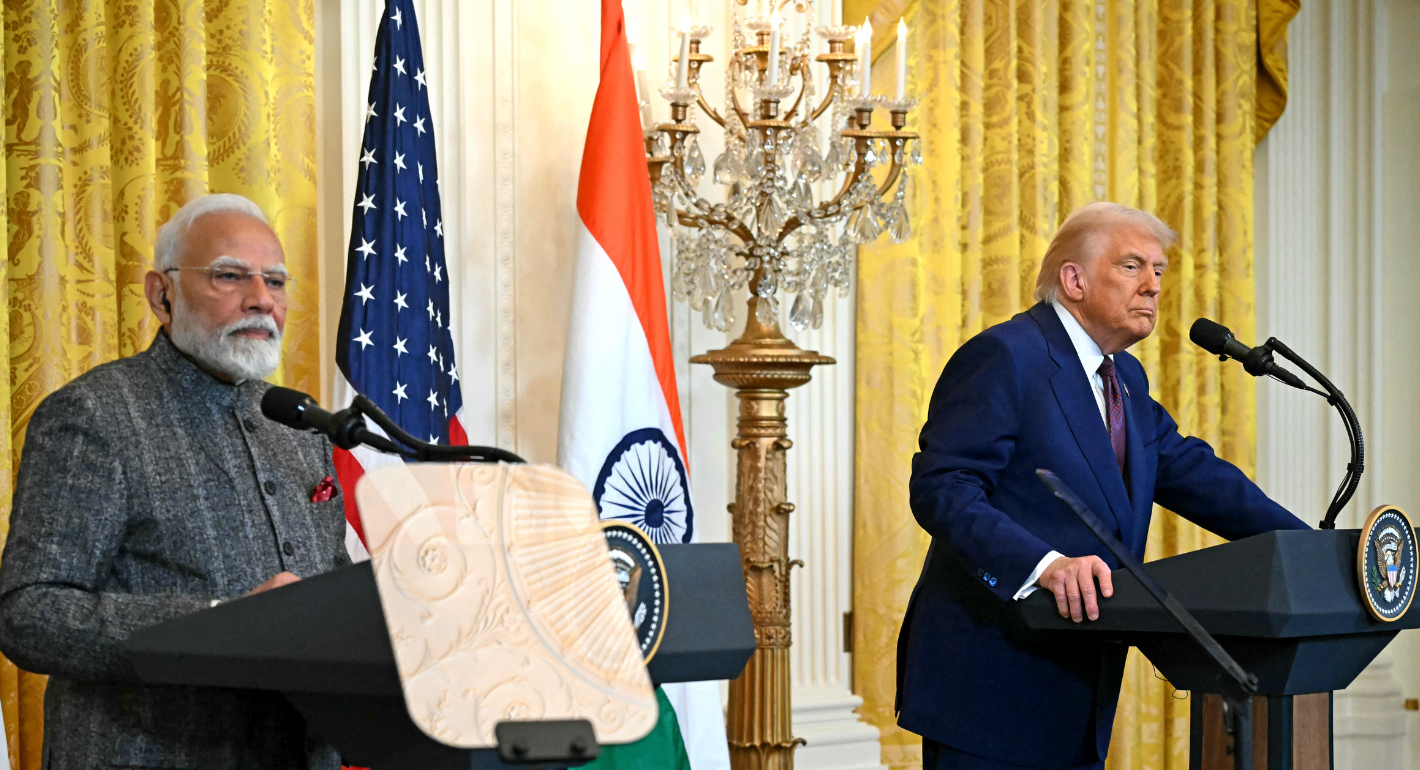
The India-U.S. relationship currently appears buffeted between three “Ts”—TRUST, Tariffs, and Trump.
Arun K. Singh
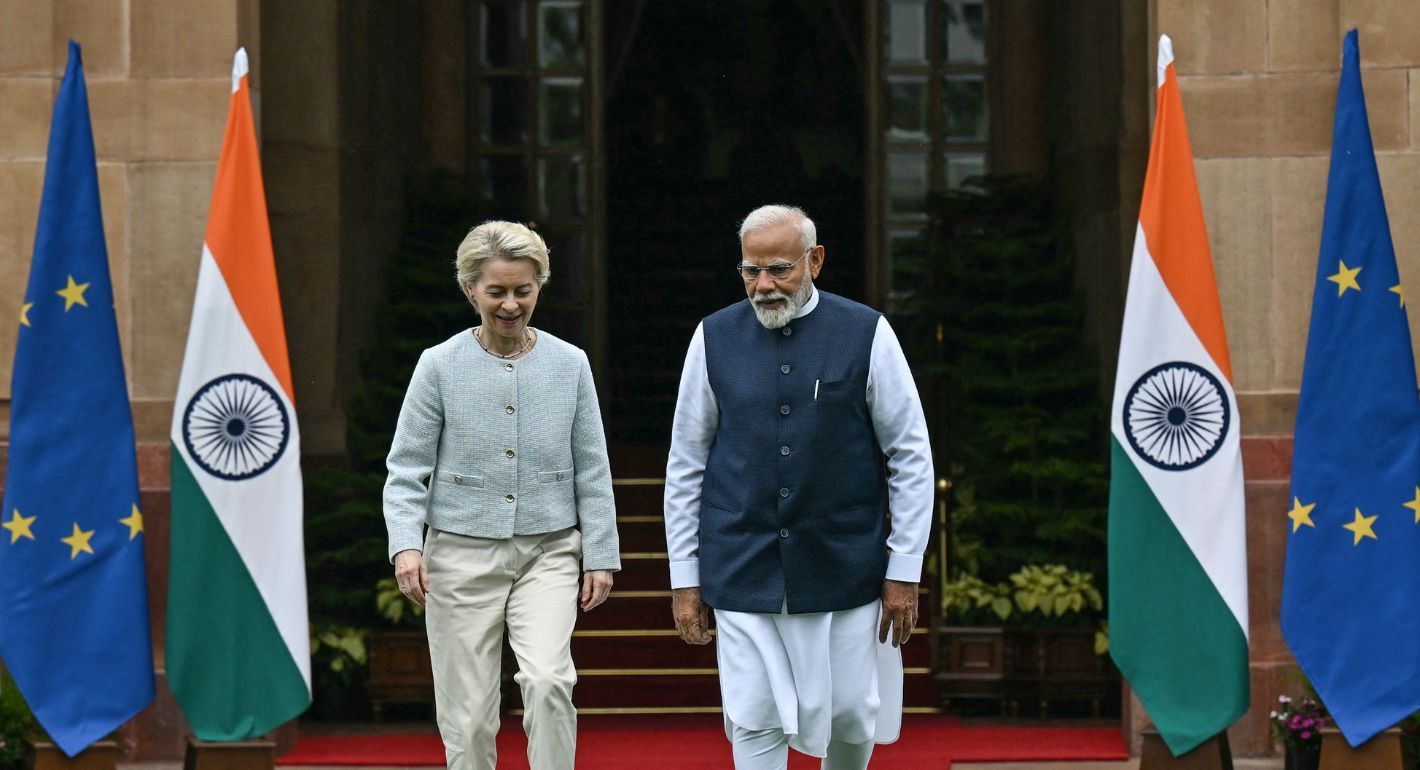
This article argues that the geopolitical circumstances have never been more conducive, not merely for the early conclusion of the free trade agreement (FTA) between India and the EU, but also for crafting a substantive and comprehensive strategic partnership.

Mohan Kumar