• Research
  • About
  • Experts
Carnegie India logoCarnegie lettermark logo
AI
{
  "authors": [
    "Alexey Malashenko"
  ],
  "type": "other",
  "centerAffiliationAll": "",
  "centers": [
    "Carnegie Endowment for International Peace",
    "Carnegie Russia Eurasia Center"
  ],
  "collections": [],
  "englishNewsletterAll": "",
  "nonEnglishNewsletterAll": "",
  "primaryCenter": "Carnegie Russia Eurasia Center",
  "programAffiliation": "",
  "programs": [],
  "projects": [],
  "regions": [],
  "topics": []
}
Source: Getty

Other
Carnegie Russia Eurasia Center

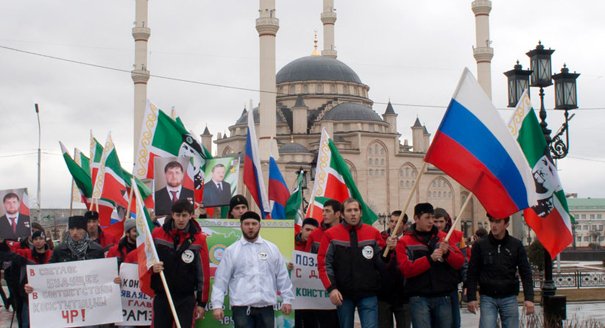
The North Caucasus: Russia’s Internal Abroad?

The North Caucasus remains economically and politically a part of Russia, but the internal situation there is increasingly regulated by the region’s own local traditions.

Link Copied
By Alexey Malashenko
Published on Nov 30, 2011

The North Caucasus occupies a particular place in Russia, creating many problems for the country, solutions to which have not yet been found. However, Russia itself, or more precisely, the federal Center, is responsible for many of the region’s troubles. Mutual grievances, whether fair or not, lead to mutual discontent.

Alexey Malashenko analyzes the current situation in the North Caucasus, which is, in the opinion of many people elsewhere in Russia, has become a kind of an “internal abroad.”
Key Conclusions:

  • What makes the relations between the North Caucasus and Russia so specific is that although the region remains economically and politically a part of Russia, the internal situation there is increasingly regulated by the region’s own local traditions.
     
  • None of the plenipotentiary presidential representatives in the region have ever had full-fledged control over the local elites, and attempts to rely on agencies directly subordinate to the federal authorities have encountered resistance.
     
  • The situation in Chechnya depends essentially on two people: Vladimir Putin and Ramzan Kadyrov, and the departure of either from the political stage would have unpredictable consequences for both Chechnya and Russia.
     
  • The North Caucasus is drifting further apart from Russia in civilizational terms because of the gap between the civil identity vector and an Islamic one that is gathering strength.

About the Author

Alexey Malashenko

Former Scholar in Residence, Religion, Society, and Security Program

Malashenko is a former chair of the Carnegie Moscow Center’s Religion, Society, and Security Program.

    Recent Work

  • Commentary
    What Will Uzbekistan’s New President Do?

      Alexey Malashenko

  • Commentary
    Preserving the Calm in Russia’s Muslim Community

      Alexey Malashenko

Alexey Malashenko
Former Scholar in Residence, Religion, Society, and Security Program
Alexey Malashenko

Carnegie India does not take institutional positions on public policy issues; the views represented herein are those of the author(s) and do not necessarily reflect the views of Carnegie, its staff, or its trustees.

More Work from Carnegie India

Get more news and analysis from
Carnegie India
Carnegie India logo, white
Unit C-4, 5, 6, EdenparkShaheed Jeet Singh MargNew Delhi – 110016, IndiaPhone: 011-40078687
  • Research
  • About
  • Experts
  • Projects
  • Events
  • Contact
  • Careers
  • Privacy
  • For Media
Get more news and analysis from
Carnegie India
© 2026 Carnegie Endowment for International Peace. All rights reserved.