

Research
- +5
Alper Coşkun, Fatih Ceylan, Tacan İldem, …
{
  "authors": [
    "Sinan Ülgen"
  ],
  "type": "legacyinthemedia",
  "centerAffiliationAll": "",
  "centers": [
    "Carnegie Endowment for International Peace",
    "Carnegie Europe",
    "Malcolm H. Kerr Carnegie Middle East Center"
  ],
  "collections": [
    "Turkey’s Transformation"
  ],
  "englishNewsletterAll": "",
  "nonEnglishNewsletterAll": "",
  "primaryCenter": "Carnegie Europe",
  "programAffiliation": "",
  "programs": [],
  "projects": [],
  "regions": [
    "Middle East",
    "Europe",
    "Türkiye",
    "Levant"
  ],
  "topics": []
}
Source: Getty
The Arab Spring exposed the vulnerabilities of Turkey's "zero problems with neighbors" policy, and Ankara must now seek a new guiding principle for regional engagement.
Source: Project Syndicate

Until the onset of the Arab uprisings, “zero problems with neighbors” meant zero problems with the Middle East’s established autocratic regimes. But, when Arab political opposition began to gain traction this year, Prime Minister Recep Tayyip Erdoğan’s government faced an unavoidable choice: whether to maintain its policy of engagement with authoritarian Arab leaders, or acknowledge that their countries’ citizens were not having “zero problems.”
The revolt in Libya provided the first concrete challenge to Turkey’s policy. Though Turkey’s Western partners swiftly broke with Libyan leader Muammar el-Qaddafi in support of the opposition, the “zero problems” principle dictated that the Turkish government maintain relations with the old regime. After initially adopting a neutral stance, Turkey soon recognized that its indecisiveness was damaging its image.
Turkey was thus confronted with a fundamental conflict between its cherished policy of uncritical engagement with regional political rulers and the imperative to support the Libyan people’s democratic aspirations. Eventually, the government decided to support the latter over the former, thus effectively ending its “zero problems with neighbors” policy. Turkey became the last NATO member to give its backing to the Libyan rebels.
In many ways, Syria was the poster child for the “zero problems with neighbors” policy. But the Syrian crisis became another nail in the coffin of Turkey’s regional policy. At the end of the 1990’s, Syria and Turkey were on the brink of war, owing to Syria’s support of Kurdish terrorism. But the two governments mended their relationship, even contemplating the creation of a regional common market.
So, when mass protests erupted in Syria in January, Turkey hoped to leverage the relationship of mutual trust that the two countries had presumably developed, actively nudging Syrian President Bashar al-Assad towards democratic reforms. Faced with Assad’s intransigence, however, Erdoğan’s government demonstrated that it had learned from its Libyan experience: this time, Turkey did not hesitate before harshly criticizing Assad. In a clear departure from established Turkish policy, Erdoğan even imposed unilateral sanctions on Syria – all the more remarkable for a country that has typically condemned sanctions. Indeed, as recently as last year, Turkey voted against new sanctions on Iran at the United Nations Security Council.
At the same time, the Turkish government’s rhetoric also changed. Giving their full-fledged support to the Syrian opposition, Turkey’s leaders started to profess their country’s duty to protect the victimized people of the Middle East.
The consequences of this fundamental shift in Turkey’s regional outlook are likely to be profound. After all, Turkey’s new outlook implies that it is intent, for the first time in its history as a republic, on promoting democratic principles in the region.
A more vocal Turkish policy on issues related to fundamental freedoms and democratic reform in the region will necessarily alter Turkey’s relations with its less progressive neighbors. Indeed, if Turkey’s new agenda is to become credible, Erdoğan’s government cannot continue to turn a blind eye to the gross human-rights violations in neighboring Iran, where Erdoğan’s government was the first to congratulate President Mahmoud Ahmadinejad following Iran’s tainted elections in 2009.
An equally important component of the new policy’s credibility will be Turkey’s ability to resolve its own democratic shortcomings, particularly with regard to freedom of expression, non-interference with the media, and minority rights. Progress in these areas will be critical to the success of Turkey’s foreign-policy agenda.
Turkey’s geopolitical role as a country that is at once European and Middle Eastern is more complex than ever. For such a country, there is no such thing as “no problems.” In an environment that is being reshaped in unpredictable ways by the Arab awakening, Turkey will have to redefine what it means to be a good neighbor.

Senior Fellow, Carnegie Europe
Sinan Ülgen is a senior fellow at Carnegie Europe in Brussels, where his research focuses on Turkish foreign policy, transatlantic relations, international trade, economic security, and digital policy.
Recent Work

Alper Coşkun, Fatih Ceylan, Tacan İldem, …
Carnegie India does not take institutional positions on public policy issues; the views represented herein are those of the author(s) and do not necessarily reflect the views of Carnegie, its staff, or its trustees.

The ASML MoU with Tata Electronics is an indicator of how far the Indian semiconductor ecosystem has come. This ecosystem has been years in the making and represents real commercial logic.

Konark Bhandari

The India–EU Free Trade Agreement (FTA) is shaping up to be one of the most consequential trade negotiations, both economically and strategically. But, what’s in the agreement, what’s missing, and what will determine its success in the years ahead

Vrinda Sahai, Nicolas Köhler-Suzuki
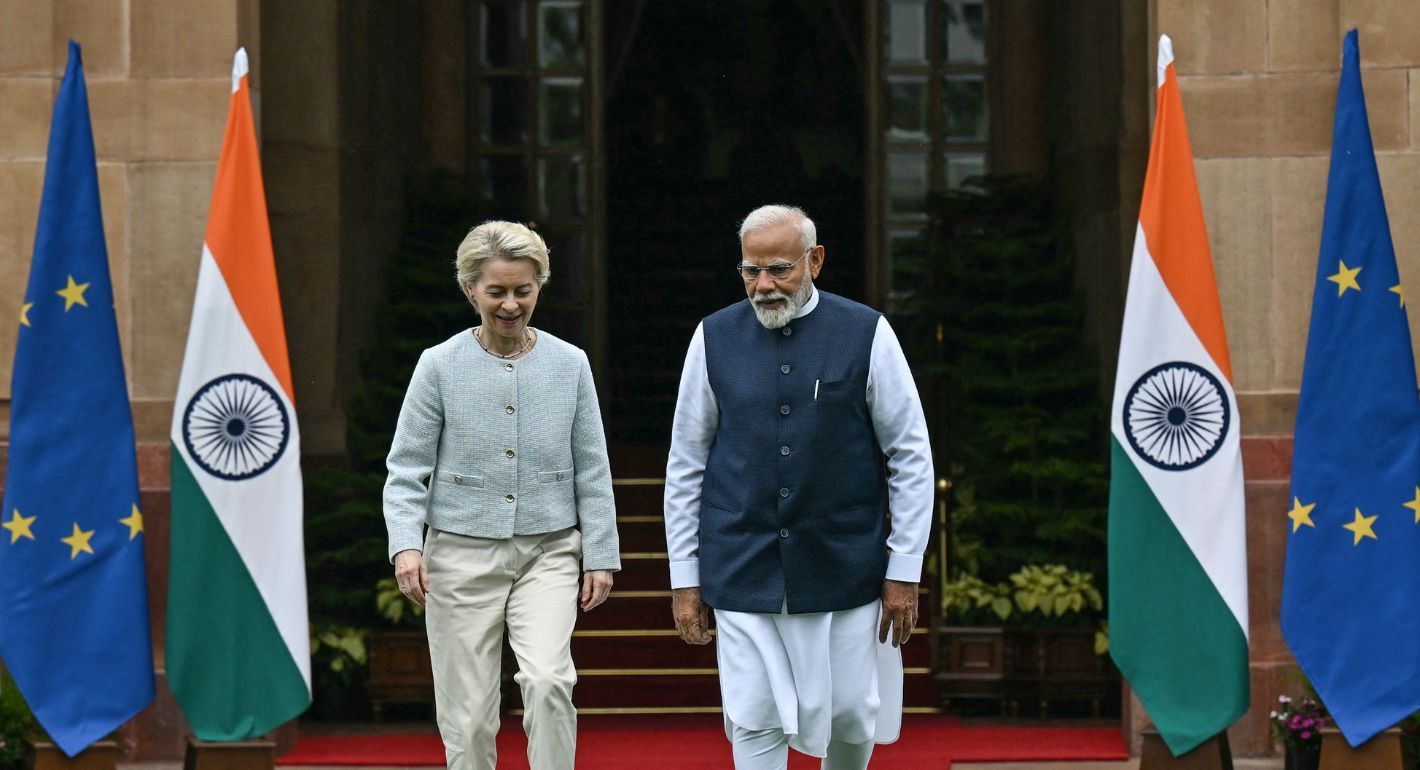
This article argues that the geopolitical circumstances have never been more conducive, not merely for the early conclusion of the free trade agreement (FTA) between India and the EU, but also for crafting a substantive and comprehensive strategic partnership.
Mohan Kumar
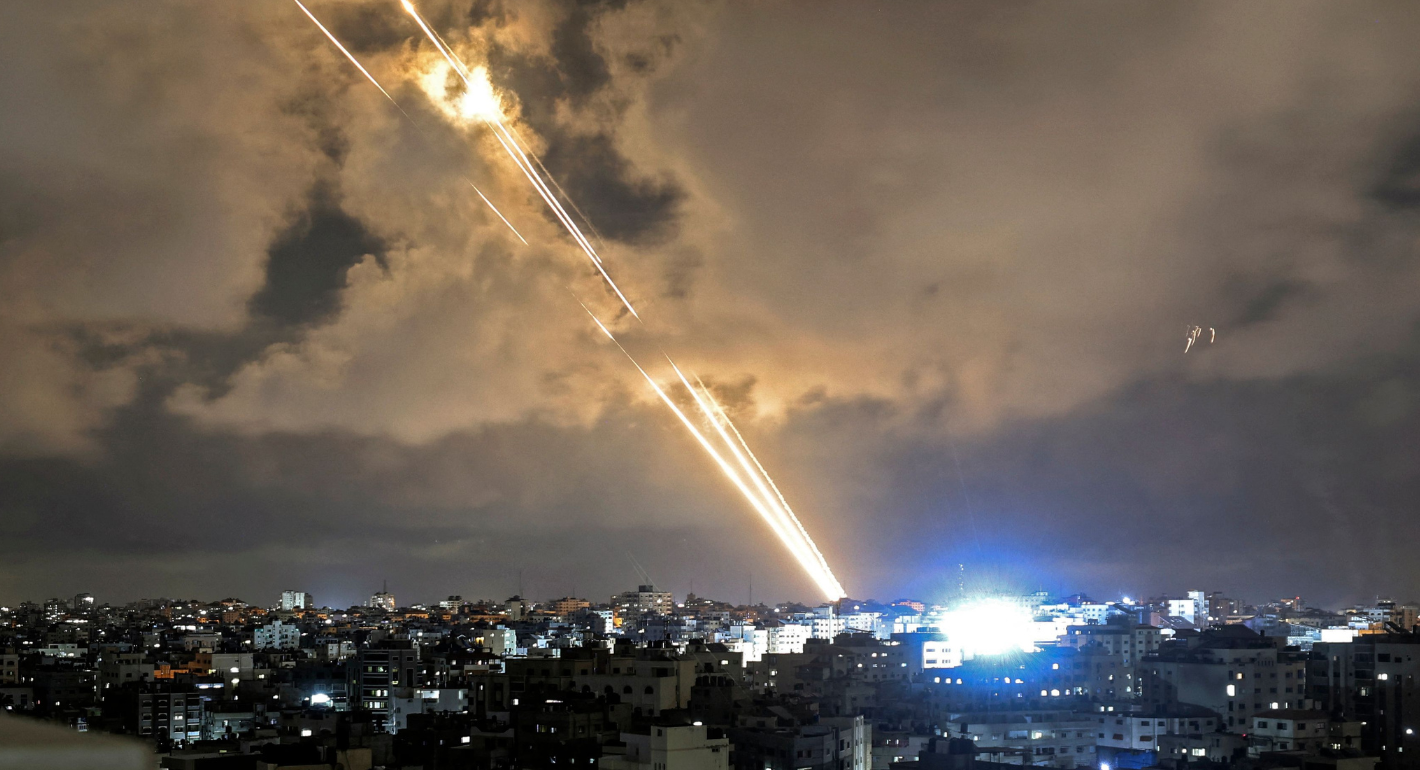
An Israeli response to Iran’s October 1 attack is imminent. The key question is of its intensity and potential fallout, both within Iran, in terms of nuclear security policy changes, and across the broader region. The coming days are likely to reshape West Asia irreversibly.
Gaddam Dharmendra
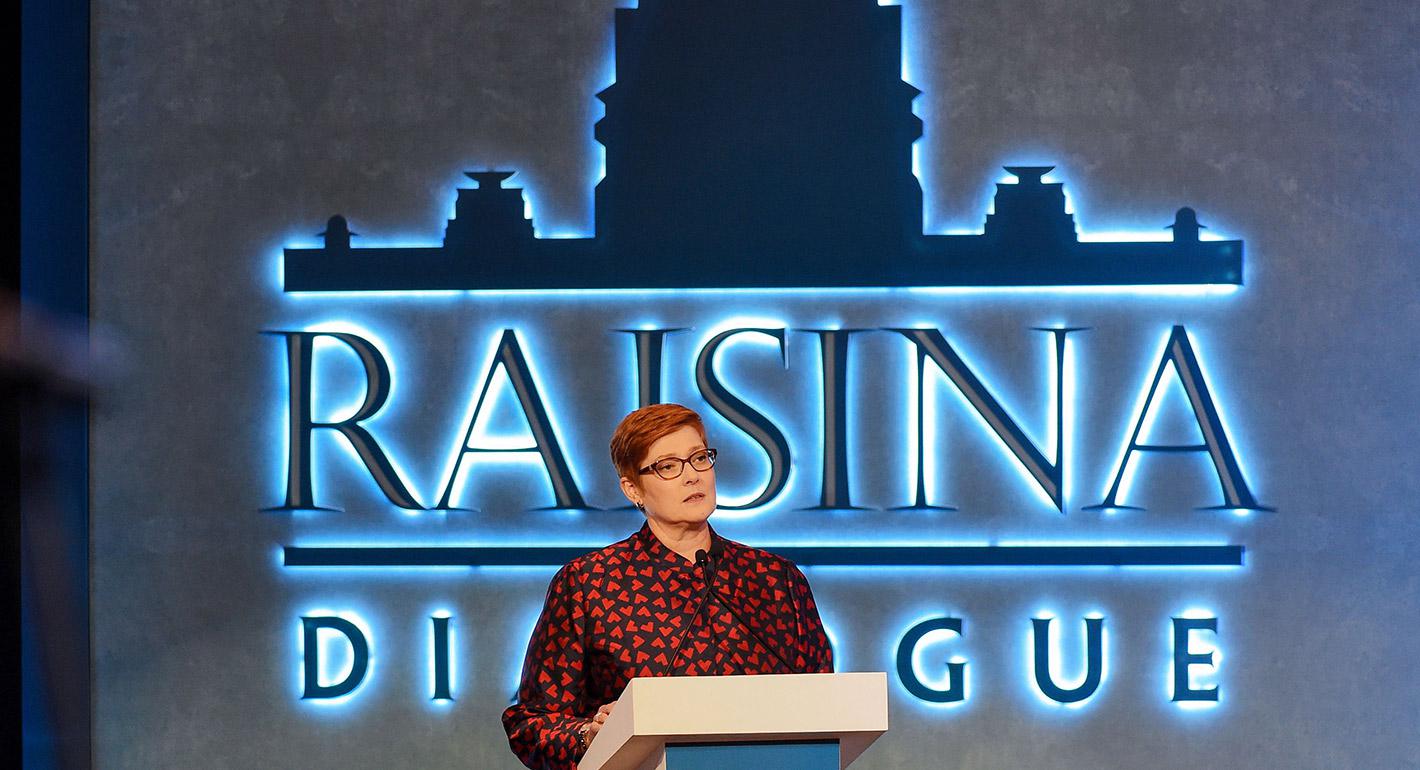
Foreign ministers from India, France, and Australia recently met (virtually) at the Raisina Dialogue, India’s flagship annual conference on geopolitics and geoeconomics. What can they get done if they work together?


Rudra Chaudhuri, Shibani Mehta