

Paper
Ibrahim Saif, Ahmed Ghoneim
{
  "authors": [
    "Ibrahim Saif"
  ],
  "type": "legacyinthemedia",
  "centerAffiliationAll": "",
  "centers": [
    "Carnegie Endowment for International Peace",
    "Malcolm H. Kerr Carnegie Middle East Center"
  ],
  "collections": [],
  "englishNewsletterAll": "",
  "nonEnglishNewsletterAll": "",
  "primaryCenter": "Malcolm H. Kerr Carnegie Middle East Center",
  "programAffiliation": "",
  "programs": [],
  "projects": [],
  "regions": [
    "Egypt",
    "Gulf",
    "Levant",
    "Maghreb"
  ],
  "topics": [
    "Economy"
  ]
}
Source: Getty
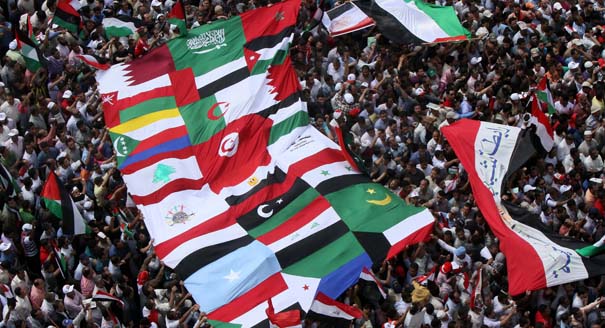
The possibilities for strengthening regional cooperation would seem more realistic than the opportunities to create a Marshall Plan for the Arab world. For such a plan to materialize, Arab states must develop the tools and proper institutions to put it into practice.
Source: Al Hayat

The first option would require Arab states to strengthen connections between those countries with financial surpluses and those that have promising opportunities for investors. The repercussions of the “Arab Spring” and the world economic crisis—the European crisis in particular—have demonstrated that countries previously classified as investment safe havens can no longer be considered such. A quick glance at Europe is enough to see that more than one country is now in jeopardy.
Likewise, the U.S. economy, long known as the world’s most powerful, is also at risk. The United States still faces a large deficit, and how the government there intends to remedy the situation remains unclear. The U.S. dollar has thus far been the only safe haven, and it too is losing its luster.While these major global changes are reshaping the world economy, a number of Arab countries are experiencing deep political transitions that are likely to lay the foundations for long-term stability. Stability in places like Tunisia, Egypt, and Morocco would open up new opportunities for investors. With the implementation of new regulations that are expected to promote competitiveness, curb favoritism, and halt corruption, economic actors are repositioning themselves. And that in turn will encourage domestic and foreign investors to launch new ventures as their savings free up.
Stability may also contribute to economic diversification and to the shift of investors’ interests away from traditional sectors, such as real estate and the low-value-added services sector, to new areas that were avoided under the old authoritarian regimes, like sophisticated manufacturing or high-value-added services such as banking and telecommunications..
In the past, those areas were flawed by varying levels of corruption and did not encourage long-term commitment. Investment in sectors that lead to diversification requires as a precondition investors’ trust in the political system and in that system’s sustainability. Clearly until recently that was not the case. And so investors have preferred to reap profits in quick transactions with a high degree of government complacency and crony capitalism.
There are promising investment opportunities across in the Arab region, as well as countries with financial surpluses. Improved investment environments are likely to foster regional cooperation and facilitate a relaxation of customs rules and regulations, which, through the use of investment guarantees, will help reduce the cost of transactions between countries. The Gulf Cooperation Council already seems to be considering this move as part of its efforts to consolidate ties with Morocco and Jordan.
The framework for regional cooperation also includes projects for the development of infrastructure, such as telecommunications, roads and railways, power projects, and electricity. Such sectors are quite lucrative and could generate profits for investors if the institutional arrangements and the business environment were conducive.
Securing funding for these types of projects would be relatively easy if they were preceded by the appropriate, technically specialized studies and commercial marketing plans. But they cannot just be pursued unilaterally, as only public-funded projects. Instead, they should be joint private-public ventures so that they can benefit from the private sector’s experience in implementation and project management.
The second option involves launching a regional project whereby Gulf countries pledge to support other Arab states that need assistance throughout their transitional phases. This “Marshall Plan” would be a simulation of the U.S. plan to support Europe in the wake of World War II.
Unfortunately, the prerequisites for such a project are not available in the Arab world. There is no common political project or economic orientation uniting Arab states that could provide an intellectual frame of reference to implement the idea.
Moreover, countries in transition are seeing entirely new trends and interactions emerge as a result of elections, including varying priorities and a lack of clear economic direction. Moreover, there are no equipped joint Arab institutions that could work together to implement the plan. Even the potential beneficiary states do not have a clear vision of how to petition countries with financial surpluses for assistance.
The possibilities for strengthening regional cooperation in order to serve the common interests of a range of stakeholders would seem more realistic than the opportunities to create a Marshall Plan for the Arab world. And some region-wide projects in energy and transportation may pave the way for a kind of deep Arab integration. For such a plan to materialize—something it has not succeeded in doing for the past five decades—Arab states must develop the tools and proper institutions to put it into practice, the private sector should play an effective role in implementation, and, most importantly, the region needs a clear political outlook.

Former Senior Associate, Middle East Center
Saif is an economist specializing in the political economy of the Middle East. His research focuses on international trade and structural adjustment programs in developing countries, with emphasis on Jordan and the Middle East.
Recent Work
Ibrahim Saif, Ahmed Ghoneim
Ibrahim Saif, Muhammad Abu Rumman

On March 10, 2026, India’s Union Cabinet approved amendments to Press Note 3, a regulation that mandated government approval on all foreign direct investment (FDI) from countries sharing a land border with India. This amendment raises questions primarily about whether its stated benefits will materialize and if the risks have been adequately weighed. This piece will address the same.

Konark Bhandari

This piece examines India’s response to U.S. sanctions and tariffs, specifically assessing the immediate market consequences, such as alterations in import costs, and the broader strategic implications for India’s energy security and foreign policy orientation.

Vrinda Sahai

This paper examines the evolution of India-China economic ties from 2005 to 2025. It explores the impact of global events, bilateral political ties, and domestic policies on distinct spheres of the economic relationship.

Santosh Pai
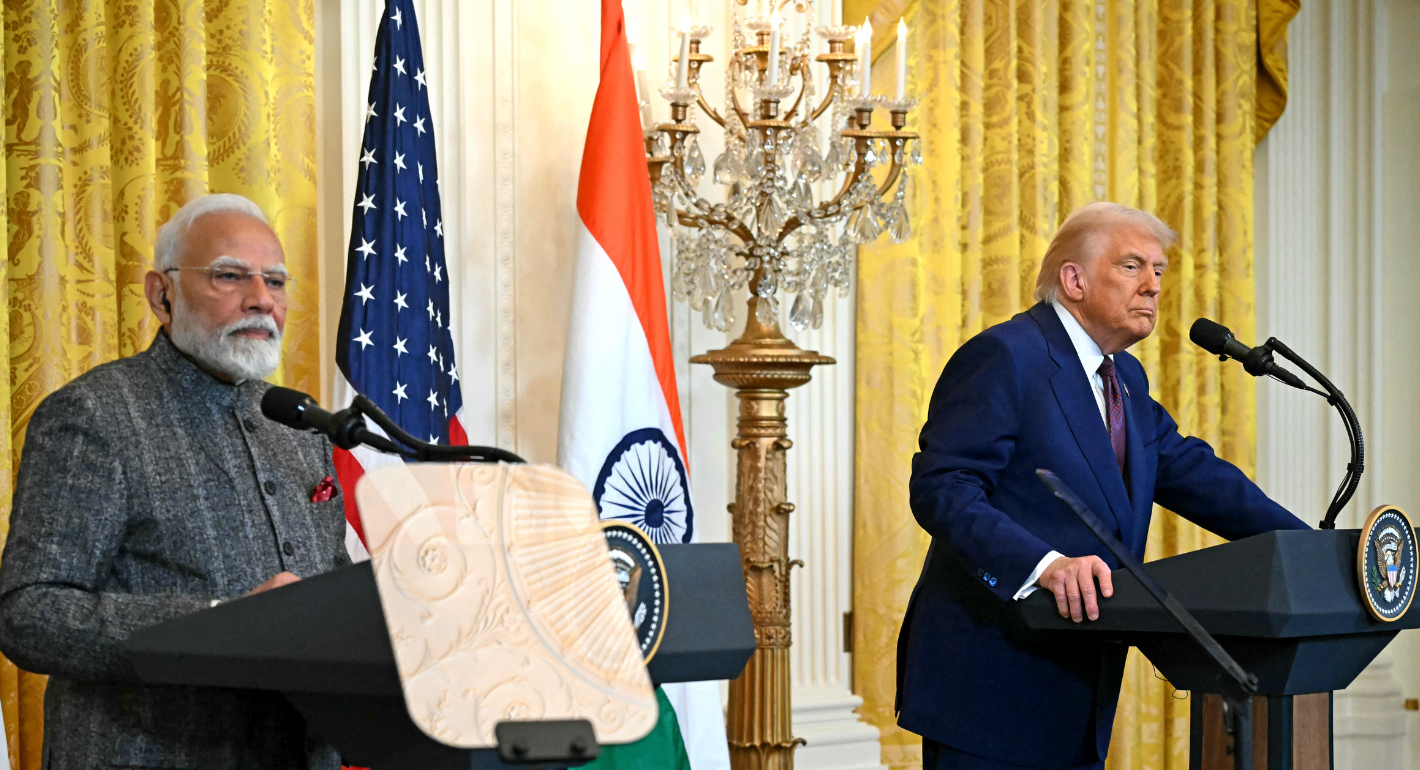
The India-U.S. relationship currently appears buffeted between three “Ts”—TRUST, Tariffs, and Trump.
Arun K. Singh
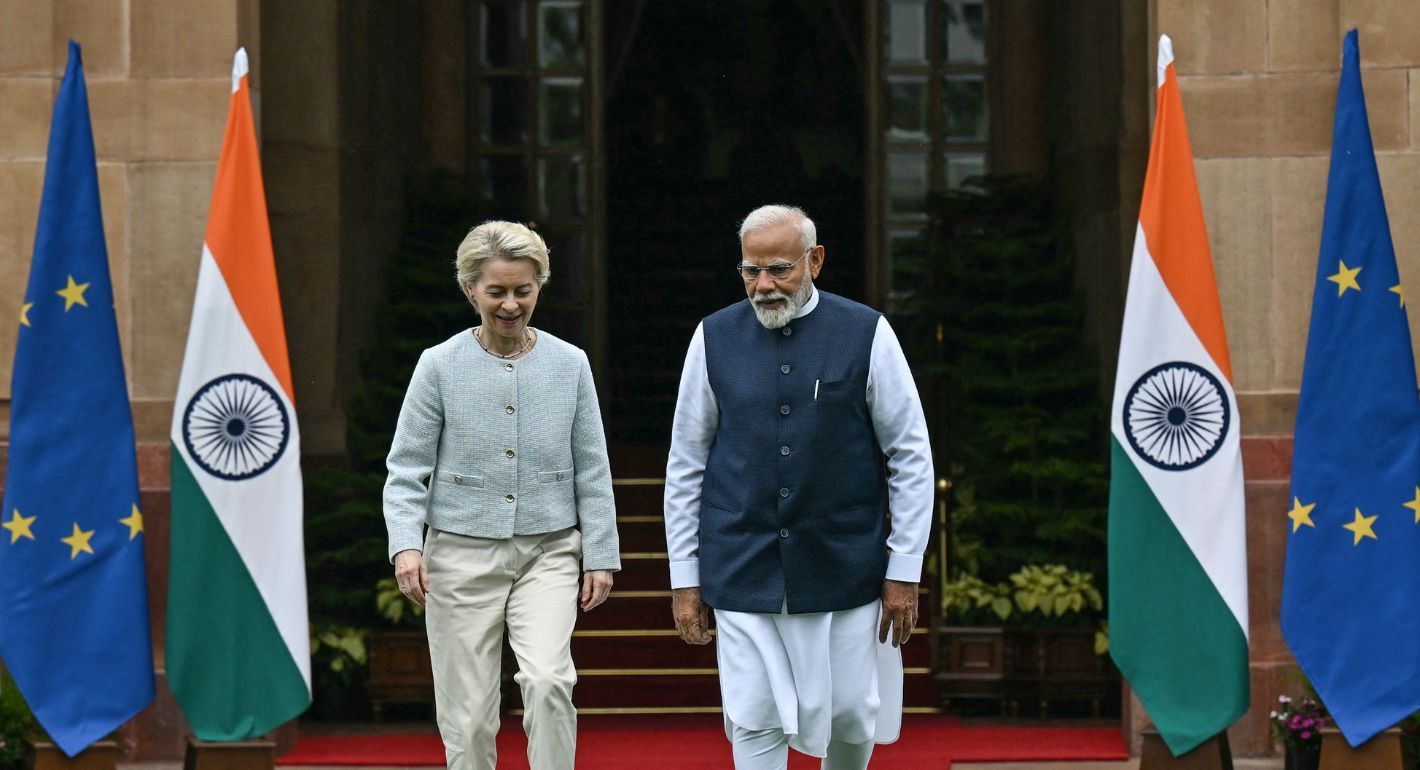
This article argues that the geopolitical circumstances have never been more conducive, not merely for the early conclusion of the free trade agreement (FTA) between India and the EU, but also for crafting a substantive and comprehensive strategic partnership.
Mohan Kumar