

Paper
Paul Salem
{
  "authors": [
    "Paul Salem"
  ],
  "type": "legacyinthemedia",
  "centerAffiliationAll": "",
  "centers": [
    "Carnegie Endowment for International Peace",
    "Carnegie Europe",
    "Malcolm H. Kerr Carnegie Middle East Center"
  ],
  "collections": [],
  "englishNewsletterAll": "",
  "nonEnglishNewsletterAll": "",
  "primaryCenter": "Malcolm H. Kerr Carnegie Middle East Center",
  "programAffiliation": "",
  "programs": [],
  "projects": [],
  "regions": [
    "Levant"
  ],
  "topics": [
    "Political Reform"
  ]
}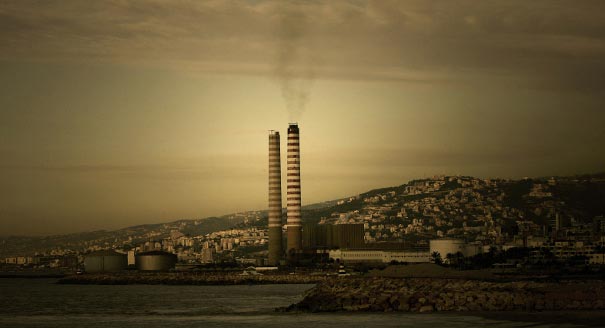
Source: Getty
Offshore gas deposits in the Mediterranean present an opportunity for regional cooperation. But in the current climate of conflict and distrust, such energy potentials could also fuel further contention.
Source: Al-Hayat

With Egyptian gas supplies under threat, these finds come at a critical time for Israel. They promise to make Israel not only energy self-sufficient but also an energy exporter. Israel’s export challenge, however, is large.
If Israel were at peace with its neighbors, the most cost-effective export route would be overland through the countries to its north and then on to Europe. But that route is closed to Israel, which is instead planning to channel its exports through Cyprus. Of course, that path is not without its own challenges: The easiest route from Cyprus would be to Turkey, but Israeli-Turkish relations today make that impossible. And moving the exports through Greece means a longer route that is also hampered by Turkey’s opposition.The other alternative would be for Israel to build a liquefied natural gas processing plant offshore or on Cyprus and then distribute its gas by ship to world markets. But this is an expensive option that is also vulnerable to regional tensions. Indeed, the downturn in Israeli-Turkish relations has come at a bad time for Israel’s energy-export ambitions.
Cyprus has suddenly become a strategic player, sitting astride the energy export routes of the region. It is being courted heavily by Israeli Prime Minister Benjamin Netanyahu, is the focus of visits by regional and international officials, and is under intense pressure from Ankara. Cyprus’s internal divide, however, is weighing it down. Turkish Cypriot leaders have objected to Nicosia securing its own contracts for offshore energy drilling. Those objections have been backed up by the Turkish navy, which threatens to hamper Greek Cypriot energy-exploitation progress.
Lebanon, meanwhile, has been slow to move on its energy potential. However, the country’s government and parliament have finally passed the necessary legislation to begin opening up Lebanese offshore zones for bidding by international energy companies. A wide range of major oil and gas companies from the United States, Europe, Russia, China, Japan, and Brazil have shown an interest in these potential deposits; even smaller regional players like Iran, Qatar, and Turkey have been looking for ways to become involved. Lebanon’s plans to establish an independent regulatory body were blocked in favor of having only an advisory body and concentrating the authority to decide on bids in the hands of the minister of energy.
The distribution of contracts is likely to be highly political, and given the coalition nature of the government and Lebanese politics in general, contracts are likely to be awarded to a variety of companies. The current energy minister is Gebran Bassil, a member of the Aounist “Change and Reform” bloc and an ally of Hezbollah. Hezbollah and its allies are likely to push for Russian companies in order to reward Russia for its support, particularly in Syria, and to cement emerging Russian patronage of the Iran-Iraq-Syria-Hezbollah axis. Lebanon’s Prime Minister Najib Mikati is likely to push for counterbalancing that by awarding contracts to Western companies, possibly French and/or American. Some Lebanese leaders feel that having both Eastern and Western engagement in Lebanon’s energy sector will help guarantee that the great powers have an interest in the sector’s long-term security and success.
Lebanon as a whole could benefit greatly from properly managed energy revenues, especially because they can help reduce the country’s massive debt and satisfy its rising energy needs. However, easy energy revenues could also fuel massive corruption and lead to economic imbalances that could hamper growth in other sectors.
The speaker of the parliament, Nabih Berri, has taken the lead on this issue in Lebanon; and Hezbollah has added “protecting Lebanon’s offshore energy reserves” to its mission under the heading of “national resistance.” Indeed, the Shi’i leadership might be well positioned to play a dominant role in this sector.
This could produce an interesting effect. If the country’s and community’s prosperity eventually depends on offshore energy platforms and on the security of multinational companies working there, Hezbollah will have to become a much more conservative power, working to preserve the stability that allows the wealth to flow. Offshore revenues might eventually provide an alternative source of revenue for Hezbollah if the relationship with Iran becomes more difficult. It wouldn’t be the first time that radical revolutionaries turned into conservative capitalists.
Internationally, U.S. energy companies are already involved in Israel and some might bid for Lebanese parcels; but the U.S. government is focused on trying to avoid conflict between Israel and Lebanon over an 800 square kilometer triangle of the Mediterranean Sea that is claimed by both of the countries. Washington has sent envoys to the region, and a resolution of the dispute might be announced in the next few weeks.
Europe is eager to diversify its gas sources but is frustrated with the conflict between Turkey, Cyprus, and Israel that is blocking progress in this area. Russia already has good relations with Israel, Cyprus, and Greece when it comes to gas issues, but part of Russia’s rising interest in Syria and its smaller Lebanese neighbor might be its desire to secure an additional foothold in this emerging energy market. The Russian naval base at the Syrian port of Tartus is part of this foothold. Turkish plans to make itself an anchor of the so-called “Arab Gas Pipeline” that would carry gas from Egypt, Lebanon, and Syria through Turkey to the west, have been shattered by the conflict in Syria and renewed Syrian-Turkish hostility.
There is no doubt that the energy finds in the eastern Mediterranean present an opportunity for regional cooperation to increase the benefits for and prosperity of everyone in the region. But in the current climate of conflict and distrust, such energy potentials could also fuel further contention. Israeli-Turkish tensions are at the heart of this challenge regionally; improvements in that relationship could provide a great boost to the extraction and transport of eastern Mediterranean energy supplies.
Clearly, energy will be a dominant factor in the future of the countries of this region. Whether it will be a force that promotes stability and prosperity or one that stirs up regional and international conflict is yet to be seen. The massive economic costs of the lack of regional stability and cooperation in this part of the world are brought to the fore once again. Regional and international powers should cooperate not only to exploit this resource but also to create a web of interest-based interdependencies that can form the foundation for sustainable cooperation in this unstable region.
This article originally appeared in Arabic in Al-Hayat.

Senior Fellow at the Middle East Institute
Paul Salem is a senior fellow at the Middle East Institute.
Recent Work
Paul Salem
Paul Salem
Carnegie India does not take institutional positions on public policy issues; the views represented herein are those of the author(s) and do not necessarily reflect the views of Carnegie, its staff, or its trustees.
As India’s economy recovers from the coronavirus pandemic, Indian businesses need efficient financial structures to regain their ground. Key reforms to India’s Insolvency and Bankruptcy Code could fill these gaps.

Anirudh Burman

Access to cross-border data is an integral piece of the law enforcement puzzle. India is well placed to lead the discussions on international data agreements subject to undertaking necessary surveillance reforms.

Smriti Parsheera, Prateek Jha
After the coronavirus pandemic wanes, how will China’s reorientation of the Belt and Road Initiative to address global health concerns influence its relationships with South Asian countries?


Deep Pal, Rahul Bhatia
Early in the outbreak, government researchers forecast several high-risk scenarios that were downplayed or ignored in public messaging.
Gautam I. Menon

Governments around the world are turning to new forms of digital surveillance to monitor the spread of the coronavirus, though they are mostly using existing laws to do so.
Anirudh Burman