

Commentary
Judy Dempsey
{
  "authors": [
    "Judy Dempsey"
  ],
  "type": "legacyinthemedia",
  "centerAffiliationAll": "",
  "centers": [
    "Carnegie Endowment for International Peace",
    "Carnegie Europe"
  ],
  "collections": [],
  "englishNewsletterAll": "",
  "nonEnglishNewsletterAll": "",
  "primaryCenter": "Carnegie Europe",
  "programAffiliation": "",
  "programs": [],
  "projects": [],
  "regions": [
    "Europe"
  ],
  "topics": [
    "Foreign Policy"
  ]
}
Source: Getty
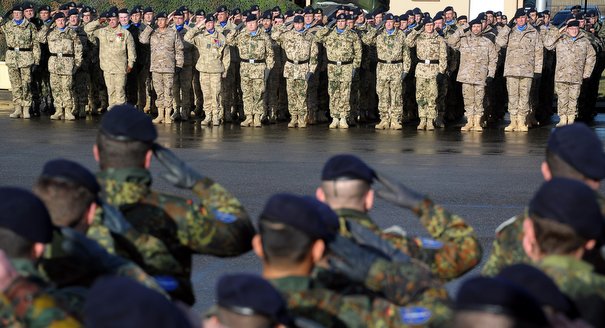
European nations will have to break their decades-old dependence on the United States to take care of their defense, provide the strategic thinking for them, and keep Europe’s own backyard stable.
Source: New York Times

This does not mean that the United States is going to walk away from NATO or that it will forget Europe. The ties are too deep and too important for that to happen.
What it does mean is that European nations will have to break their decades-old dependence on the United States for taking care of their defense, providing the strategic thinking for them and keeping Europe’s own backyard — the Balkans — stable.
So far, however, both the European Union and the European countries in NATO have reacted to this historic shift in a most extraordinary way. Judging from the lively debates at the just-concluded Bratislava Global Security Forum, few governments are doing long-term strategic thinking.
“Somehow, collectively, the Europeans are not serious about defense,” Nick Witney, a security analyst at the European Council on Foreign Relations, told the participants.For many months, the European Union has been discussing how to combine and share defense resources in order to reduce duplication of military equipment and increase efficiencies.
It would seem an ideal opportunity to do so, given the economic crisis that has led to drastic cuts in defense budgets in most European countries.
Yet despite all the lip service, hardly anything is being done to pool and share. One reason is that governments are loath to weaken their control over anything that involves defense. That would entail ceding some sovereignty and losing some jobs.
That seems to matter much more than the fact that pooling and sharing would allow the bloc to establish a credible long-term security and defense policy that could underpin its values. It could even make the European Union’s soft-power capabilities more effective.
After all, having at the disposal of the bloc a pool of helicopters and mobile medical hospitals, logistics and heavy strategic aircraft are also part of the panoply of soft power, not just hard power. But that does not get discussed.
“Pooling and sharing is about giving something up and someone else doing the job,” said Zbigniew Wlosowicz, the Polish deputy defense minister for defense policy. “These are very complex decisions. This is where the question of sovereignty kicks in.”
Several other European governments agree. Somehow, there is the suspicion that if a country gives up some kind of equipment, there is no certainty it can have access to it when it wants it.
And if one E.U. member state does not agree with a mission, could it then prevent others from using its equipment, or even block the operation?
There are no easy answers to these questions. But some defense experts in Bratislava argued that the United States should insist that Europe take on a bigger share of the burden instead of just complaining.
Only then, they say, would that concentrate the minds of the Europeans on finding answers.
Indeed, look what happened last year, when the standoff on the border between Kosovo and Serbia could have developed into a conflagration.
The catalyst was a trade dispute about the recognition of customs stamps. (Serbia does not recognize Kosovo as an independent state.)
To outsiders, the incident was just another spat between Kosovo and Serbia. But such episodes cannot be ignored. When it turned to violence, NATO and its hard power — not the European Union and its diplomatic overtures — prevented further escalation.
“As long as Europe does not take over the responsibility for its own security in the region, we will never develop a proper defense,” said Werner Fasslabend, president of the Austrian Institute for European and Security Policy and former defense minister.
“Why don’t we do it? I will tell you why,” Mr. Fasslabend added. “Because people believe the Americans will do it. But we should take over, gradually, the responsibility in Europe. It is the only way that we can be strong and efficient allies in the future.”
To do that, Europe would need a strategic culture that encompasses all of the European Union and European NATO countries.
A decision last year by Britain and France, Europe’s most important military and strategic powers, to agree to a major defense cooperation accord in order to cut costs showed their frustration, but also their ambiguity, in trying to forge such a culture.
The nations subsequently derailed proposals by Poland to establish an E.U. military planning headquarters that would have helped establish a common defense culture.
This lack of cohesion within Europe makes it even more difficult for the Europeans to decide how to respond to the U.S. shift toward the Asia-Pacific region.
Christian Schmidt, deputy defense minister of Germany, suggested that the Europeans and Americans should at least discuss the different perceptions of threats and challenges.
This would not necessarily mean agreeing with the United States, he maintained. But it would help clear Europe’s mind about what developments a European defense policy would need to provide for.
“We have to reach some cultural and political understanding about security,” he said.
Until the Europeans know what they want, analysts said, this understanding is a long way off.
This article was originally published in the New York Times.

Nonresident Senior Fellow, Carnegie Europe
Judy Dempsey is a nonresident senior fellow at Carnegie Europe
Recent Work
Judy Dempsey
Judy Dempsey
Carnegie India does not take institutional positions on public policy issues; the views represented herein are those of the author(s) and do not necessarily reflect the views of Carnegie, its staff, or its trustees.

After the chill in ties between 2020 and 2024 that brought India–China relations to their lowest point in several decades, the two countries have engaged each other afresh. This paper argues that there are predominantly four imperatives guiding India’s approach to China, and they exist in an order of priority.

Saheb Singh Chadha

This piece argues that India’s central challenge is not managing a single flashpoint but resolving the underlying tension between expansion and institutional coherency of the BRICS grouping.

Vrinda Sahai
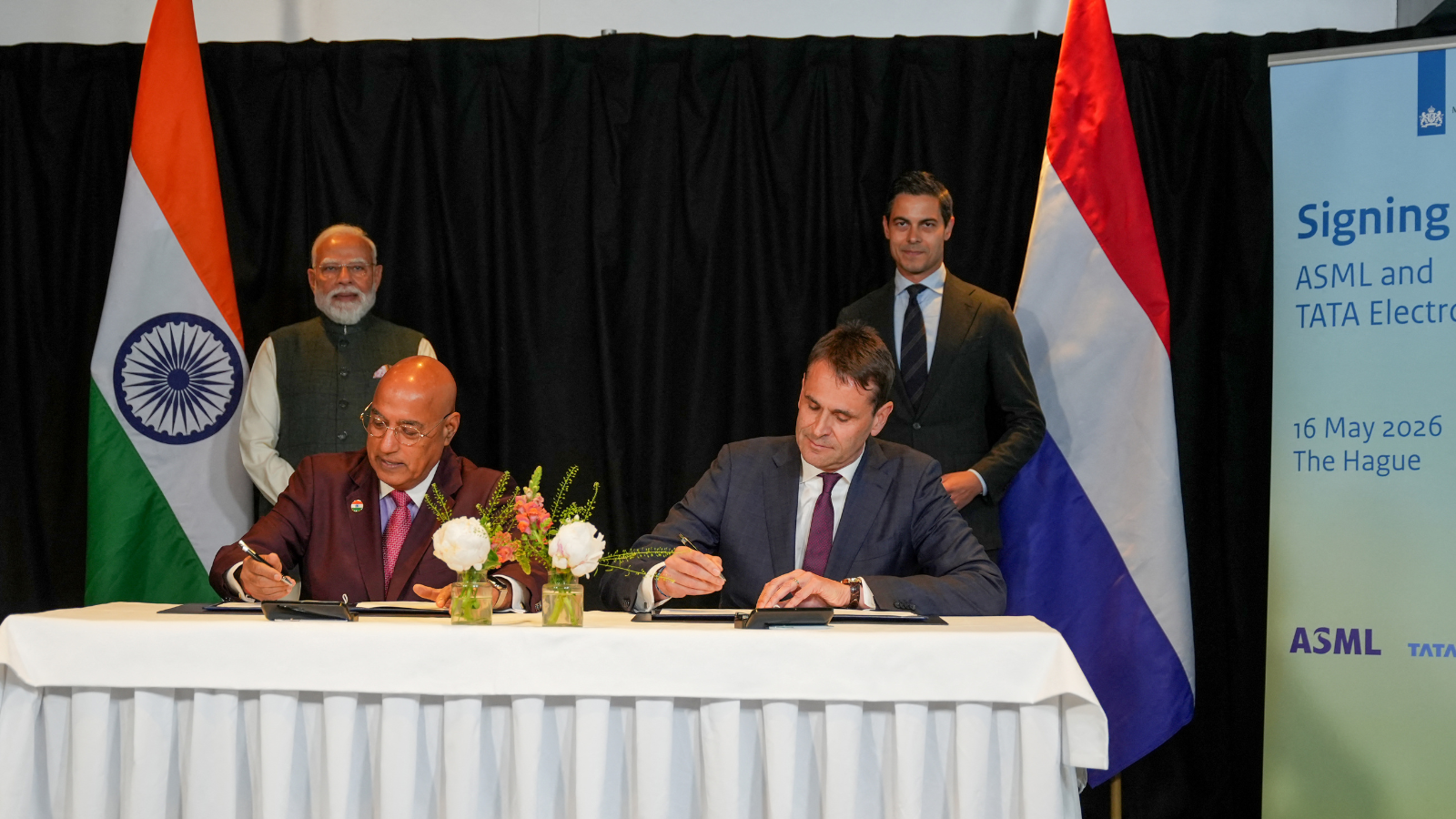
The ASML MoU with Tata Electronics is an indicator of how far the Indian semiconductor ecosystem has come. This ecosystem has been years in the making and represents real commercial logic.

Konark Bhandari

A partnership between India, a country of subcontinental size, and Africa, a continent of fifty-four countries, may seem asymmetric until one notes that both are home to nearly the same number of people—1.4 billion. This essay spells out the existing challenges to the partnership, its optimal potential, and the possible pathways to realize it over the next quarter-century.

Rajiv Bhatia

The India–EU Free Trade Agreement (FTA) is shaping up to be one of the most consequential trade negotiations, both economically and strategically. But, what’s in the agreement, what’s missing, and what will determine its success in the years ahead
Vrinda Sahai, Nicolas Köhler-Suzuki