

Research
- +10
Rosa Balfour, Frances Z. Brown, Yasmine Farouk, …
{
  "authors": [
    "Moisés Naím"
  ],
  "type": "legacyinthemedia",
  "centerAffiliationAll": "",
  "centers": [
    "Carnegie Endowment for International Peace",
    "Malcolm H. Kerr Carnegie Middle East Center"
  ],
  "collections": [],
  "englishNewsletterAll": "",
  "nonEnglishNewsletterAll": "",
  "primaryCenter": "Carnegie Endowment for International Peace",
  "programAffiliation": "",
  "programs": [],
  "projects": [],
  "regions": [
    "North America",
    "United States",
    "South Asia",
    "India",
    "East Asia",
    "China"
  ],
  "topics": [
    "Economy"
  ]
}
Source: Getty
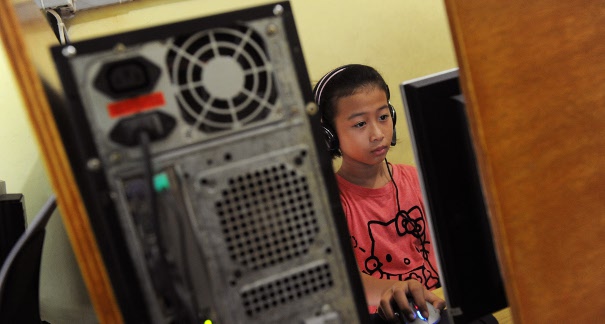
The popularization of internet has in many ways served to counteract the concentration of wealth, income, and power. But there is a real risk that those who have least will be more victimized through the web than those who have the means to protect themselves.
Source: El País

But the problem that is now looming and has to some extent already arrived, is that those who have least will be more victimized through the web than those who have the means to protect themselves. Protect themselves from what? Well, from the fangs of the “other” internet, the poisoned one. We know the problems, and have all suffered them: spam, viruses, hacking, cracking, loss of privacy, etc. These are not the only threats: web-based fraudulent transactions and identity theft are booming. The latter is one of the most dangerous due to its fast growth, and the significant damage it inflicts on its victims. Identity-theft victims not only suffer economic losses but also have to spend months or even years “cleansing” their name. According to a study by Symantec, a firm specialized in internet security, in 2012 the losses worldwide for crimes committed on the internet were $114 billion.
From this perspective it is not hard to predict that the internet experiences of a low-income user anywhere — in India, Italy or Canada, for example — will be different from their neighbors who have the means to buy the best protection money can buy. The “digital divide” between poor and rich nations will be reproduced within each country, since internet users of less means will live in an internet world far more dangerous than that of their wealthier compatriots. It will no longer be enough to have a simple – or cheap – antivirus program. It will be necessary to spend large sums on barriers and protections as sophisticated as the most advanced programs that poison the net – and improve them often. If intelligence agencies, big banks, large corporations and other institutions that invest huge sums in strengthening their defenses against cyber-attacks are regularly and successfully attacked by hackers, it is only natural that individuals are even more vulnerable.
The illicit profits that can be made by developing programs capable of penetrating antivirus defenses and other protections are enormous. Inevitably, therefore, throughout the world a large number of highly talented but unscrupulous individuals are incentivized to create products and programs that once on the net will make it an even more perilous habitat. A further complication is the fact that this criminal activity is easy to scale up and internationalize. Teenagers may start out hacking the networks of their schools and their friends’ emails, but it doesn’t take them too long to realize that they can apply their talents against juicier targets. The security director of a global bank told me that his institution suffers thousands of cyber-attacks per day. According to John Brennan, the White House’s main antiterrorism advisor, “Before the end of the next business day, companies in every sector of our economy will be subjected to another relentless barrage of cyber-intrusions. Intellectual property and designs for new products will be stolen. Personal information on US citizens will be accessed. Defense contractors’ sensitive research and weapons data could be compromised… Last year alone, there were nearly 200 known attempted or successful cyber-intrusions of the control systems that run these facilities, a nearly fivefold increase from 2010.”
But the inequality of internet does not derive only from people’s access to more or less expensive shields against web predators and vandals. Substantial divides will also develop between those who can access journalistic products of high quality, which will increasingly require payment, and those who can only access the free information that circulates on the net. Of the latter there will be ever more, generic and free of charge. As for content that helps you to objectively understand the meaning of all that information, or make sure it’s reliable, there will be much less. Quality journalism will increasingly reside behind paywalls. And this will divide us even more. Curbing these trends before they become too engrained is as urgent as it will be difficult.

Distinguished Fellow
Moisés Naím is a distinguished fellow at the Carnegie Endowment for International Peace, a best-selling author, and an internationally syndicated columnist.
Recent Work



Rosa Balfour, Frances Z. Brown, Yasmine Farouk, …
Moisés Naím
Carnegie India does not take institutional positions on public policy issues; the views represented herein are those of the author(s) and do not necessarily reflect the views of Carnegie, its staff, or its trustees.

In any defense establishment, change is an ongoing process. However, despite the best of intentions, existing bureaucracies, bound by habit and years of socialization, have their limits in implementing transformative change.

Anit Mukherjee

As AI grows more sophisticated, as the supply chains that power it become more contested, and as access to frontier models becomes geopolitically charged, India must begin to ask a different set of questions. Not what applications it can build on someone else’s infrastructure but what the world needs.

Konark Bhandari

The Indian Ocean Region hosts one of the densest concentrations of subsea cables in the world. Yet, despite accounting for a significant share of global internet traffic, India’s participation remains limited.

Charukeshi Bhatt

How is AI reshaping space security, creating governance challenges, and where does international diplomacy stand today?


Tejas Bharadwaj, Almudena Azcárate Ortega

After the chill in ties between 2020 and 2024 that brought India–China relations to their lowest point in several decades, the two countries have engaged each other afresh. This paper argues that there are predominantly four imperatives guiding India’s approach to China, and they exist in an order of priority.

Saheb Singh Chadha