

Commentary
Olga Shumylo-Tapiola
{
  "authors": [
    "Olga Shumylo-Tapiola"
  ],
  "type": "legacyinthemedia",
  "centerAffiliationAll": "",
  "centers": [
    "Carnegie Endowment for International Peace",
    "Carnegie Europe"
  ],
  "collections": [
    "Europe’s Eastern Neighborhood"
  ],
  "englishNewsletterAll": "",
  "nonEnglishNewsletterAll": "",
  "primaryCenter": "Carnegie Europe",
  "programAffiliation": "",
  "programs": [],
  "projects": [],
  "regions": [
    "Europe",
    "Eastern Europe"
  ],
  "topics": [
    "Foreign Policy"
  ]
}
Source: Getty
Ukraine is at an economic policy crossroads and its choice will not only affect trade flows with its two neighbors, but it will also indicate the speed and direction of its structural reforms.
Source: Russie.NEI.Reports

Ukraine is now at a crossroads. There are three possible roads to take. The first, and least probable, is to stay on its own and continue “business as usual,” i.e. to retain a relatively closed economy controlled by a small group of businessmen, with little competition and limited economic freedom. The second, and currently most feasible, is to sign an Association Agreement (AA) with the EU that includes a Deep and Comprehensive Free Trade Agreement (DCFTA). Negotiations with the EU are now finalized, with the agreement finally initialed at the end of March 2012—not without controversy. However, further steps, such as the signing and ratification of the agreement depend solely on the Ukrainian side. The third, and most controversial choice, is to join the Customs Union with Russia, Belarus, and Kazakhstan and embark on further Moscow-led integration projects.
Ukraine’s choice will not only affect trade flows with its two neighbors. It will also indicate the speed and direction of structural reforms, or lack thereof. Ukraine’s choice will also have an impact on the EU and Russia. Ukraine is a key country within the EU’s Eastern Partnership initiative (EaP). It is first of all the largest country in the EaP region, with a population of forty-six million. It is also the country that initially had the largest number of supporters among the EU member states. Ukraine was the first country to be offered deep economic integration and political association with the EU. Within the Partnership, the EU invested considerable political capital on Ukraine and the EU-Ukraine AA/DCFTA will serve as a model for relations with other EaP countries.For Russia, striving to rebuild a closely linked economic area within the post-Soviet space, Ukraine plays a key role. Without Ukraine, the post-Soviet space’s second largest economy, the Customs Union and further integration projects may be unsustainable in the long-term.
Over the past months, Ukraine’s leadership has repeatedly confirmed the country’s interest in signing and ratifying the Association Agreement with the EU. Meanwhile, Russia’s invitation to join the Customs Union has been consistently, but politely, declined. However, many Western and Russian observers still question the irreversibility and credibility of this decision. Membership in the Customs Union may bring cheap Russian gas that Kyiv is in dire need of. Ukrainian officials also keep making references to the Customs Union both in public debates and private conversations with EU officials.
Which path to take has yet to be decided, however. When the time comes, it will be made by President Yanukovych alone. Unfortunately for Ukraine, it will not be made based on expertise and calculations of the national interest; rather, it will be informed by the interests of the president and his entourage.
This paper was presented at a conference organized by Ifri in the framework of the Eurasian Trade Task Force (ETTF), 17 October 2011. The ETTF addresses the different commercial and economic integration projects in Eurasia and their impact on domestic and foreign policies of the states concerned.
This article was originally published in Russie.NEI.Reports.

Former Nonresident Associate, Carnegie Europe
Shumylo-Tapiola is a nonresident associate at Carnegie Europe in Brussels, where her research focuses on Eastern Europe and Eurasia.
Recent Work
Olga Shumylo-Tapiola
Olga Shumylo-Tapiola
Carnegie India does not take institutional positions on public policy issues; the views represented herein are those of the author(s) and do not necessarily reflect the views of Carnegie, its staff, or its trustees.

After the chill in ties between 2020 and 2024 that brought India–China relations to their lowest point in several decades, the two countries have engaged each other afresh. This paper argues that there are predominantly four imperatives guiding India’s approach to China, and they exist in an order of priority.

Saheb Singh Chadha

This piece argues that India’s central challenge is not managing a single flashpoint but resolving the underlying tension between expansion and institutional coherency of the BRICS grouping.

Vrinda Sahai
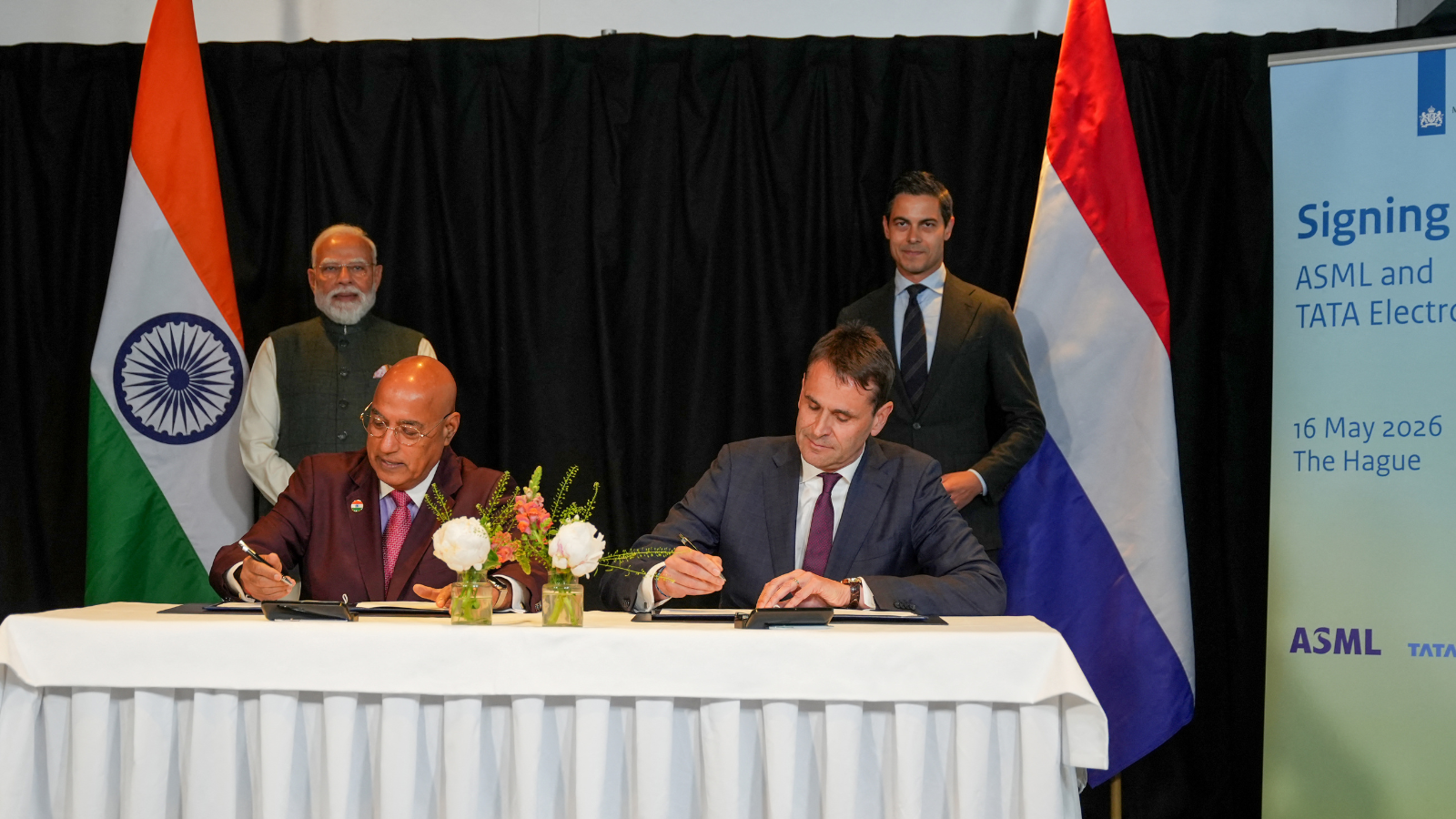
The ASML MoU with Tata Electronics is an indicator of how far the Indian semiconductor ecosystem has come. This ecosystem has been years in the making and represents real commercial logic.

Konark Bhandari

A partnership between India, a country of subcontinental size, and Africa, a continent of fifty-four countries, may seem asymmetric until one notes that both are home to nearly the same number of people—1.4 billion. This essay spells out the existing challenges to the partnership, its optimal potential, and the possible pathways to realize it over the next quarter-century.

Rajiv Bhatia

The India–EU Free Trade Agreement (FTA) is shaping up to be one of the most consequential trade negotiations, both economically and strategically. But, what’s in the agreement, what’s missing, and what will determine its success in the years ahead
Vrinda Sahai, Nicolas Köhler-Suzuki