

Commentary
Yukon Huang, Isaac B. Kardon, Matt Sheehan
{
  "authors": [
    "Yukon Huang"
  ],
  "type": "legacyinthemedia",
  "centerAffiliationAll": "dc",
  "centers": [
    "Carnegie Endowment for International Peace",
    "Carnegie China"
  ],
  "collections": [],
  "englishNewsletterAll": "asia",
  "nonEnglishNewsletterAll": "",
  "primaryCenter": "Carnegie China",
  "programAffiliation": "AP",
  "programs": [
    "Asia"
  ],
  "projects": [],
  "regions": [
    "East Asia",
    "China"
  ],
  "topics": [
    "Political Reform",
    "Economy"
  ]
}
Source: Getty
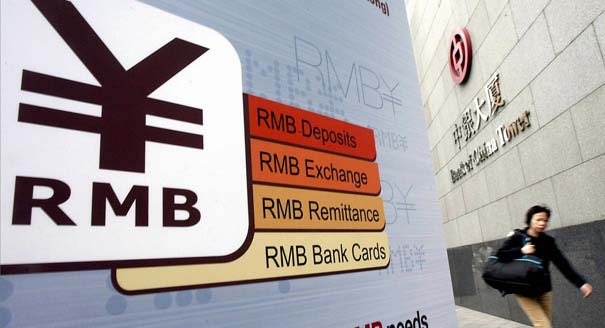
Although recent comment by China’s premier Wen Jiabao were taken by many as a signal that financial reform is finally on the agenda, this interpretation is mistaken.
Source: Financial Times

– Wen Jiabao
When China’s premier said this recently it was taken as a signal that financial reform is finally on the agenda. But his comments are misleading. The big four state commercial banks now command less than 50 per cent of banking assets compared with 75 per cent 20 years ago. The inevitable defaults from the 2008 stimulus program will eventually force the system to take a major write-off. These banks neither enjoy a monopoly position nor earn excessive profits.
More importantly, Mr Wen’s comments are not really about weaknesses in the financial system but about how China’s economic system secures and channels resources to serve the state. And the state appears increasingly out of sync with what is needed to serve the private sector.Many critics blame “financial repression”—keeping interest rates paid to savers below the rate of inflation, therefore discouraging consumption; encouraging investment; and distorting growth.
But the focus on negative real interest rates is misplaced. Negative real interest rates are not unusual. What makes China’s form of financial repression unique is the limited investment alternatives for household savings, a situation reinforced by capital controls. This makes it easier for the state to capture resources for its own spending purposes.
Financial repression has been exceptionally effective as an instrument to serve the government’s objectives. The choice was made decades ago when Beijing sought resources to jumpstart the economy. The challenge then was that government revenues had collapsed to a low of 11 per cent of gross domestic product by the mid-1990s from over 30 per cent in the late 1970s when the country opened up. Profits of industrial state enterprises, 15 per cent of GDP at one time, had also evaporated.
The easy and only feasible option was using financial repression to transfer resources from households through the banking system to the state. Judged as a tax on savings, this was more attractive compared with the alternative of higher consumption based taxes.
The implicit tax on savings was cheaper to collect, harder to evade, and progressive since the larger one’s savings, the more one paid. The hard option—relying more on the budget—would have meant heavier consumption based taxes that would have been more costly to collect, easier to evade, and regressive. The choice was simple.
Whether or not financial repression was worth it depends on how well the government used the easy option to meet its twin objectives—accelerating growth and maintaining stability. Against this yardstick, few would quibble with China’s double-digit growth rates over the previous three decades.
It probably led to a more rapid increase in the incomes of households than would have been the case otherwise. Moreover, this approach proved especially effective in propping up domestic demand during the various global financial crises and disasters with a timeliness and certainty that probably could not have been achieved through fiscal channels. Thus the easy option is now seen by many in the Communist party of China as an essential tool in reinforcing the credibility it needs as the unifying force for the state.
But continuing this policy is undesirable. Interest rates are now more important in influencing decisions, as China moves to an economy driven by an increasingly sophisticated private sector. Chinese households searching for higher yields from their savings have strayed into shadow banking and property speculation with unstable consequences. And the lack of transparency in bank lending has encouraged a culture of reckless and rent-seeking activities.
Thus the Mr Wen’s comments are not really about breaking the monopoly of the state banks, but the willingness of the government to give up financial repression to achieve its objectives in a modernising China. This means relying more on the budget to channel resources in a transparent and less distortionary way. The result would be less implicit support at the national level for state banks to fund strategic state enterprises and it would rein in the tendencies of local officials to rely on loans for expenditures. In the process, this would free up banks to support the private sector.
Mr Wen’s predicament is that turning to the hard option would not necessarily make life easier for the CPC. To the contrary, the process would become more bureaucratic and sacrifice some timeliness. But the change would encourage more representative, accountable, and transparent decision making, curb opportunities for corruption, and reduce the likelihood of waste—all issues that are now being debated more seriously in the wake of the Bo Xilai scandal.
China’s incoming leadership must come to terms with this politically charged question as it’s the prerequisite for acting on the much-needed reforms for both the financial and state enterprise sectors.
This article was originally published in the Financial Times.

Senior Fellow, Asia Program
Huang is a senior fellow in the Carnegie Asia Program where his research focuses on China’s economy and its regional and global impact.
Recent Work


Yukon Huang, Isaac B. Kardon, Matt Sheehan
Yukon Huang, Genevieve Slosberg
Carnegie India does not take institutional positions on public policy issues; the views represented herein are those of the author(s) and do not necessarily reflect the views of Carnegie, its staff, or its trustees.

On March 10, 2026, India’s Union Cabinet approved amendments to Press Note 3, a regulation that mandated government approval on all foreign direct investment (FDI) from countries sharing a land border with India. This amendment raises questions primarily about whether its stated benefits will materialize and if the risks have been adequately weighed. This piece will address the same.

Konark Bhandari

This piece examines India’s response to U.S. sanctions and tariffs, specifically assessing the immediate market consequences, such as alterations in import costs, and the broader strategic implications for India’s energy security and foreign policy orientation.

Vrinda Sahai

This paper examines the evolution of India-China economic ties from 2005 to 2025. It explores the impact of global events, bilateral political ties, and domestic policies on distinct spheres of the economic relationship.

Santosh Pai

This article examines the scale and impact of Chinese IUU fishing operations globally and identifies the nature of the challenge posed by IUU fishing in the Indian Ocean Region (IOR). It also investigates why existing maritime law and international frameworks have struggled to address this growing threat.


Ajay Kumar, Charukeshi Bhatt
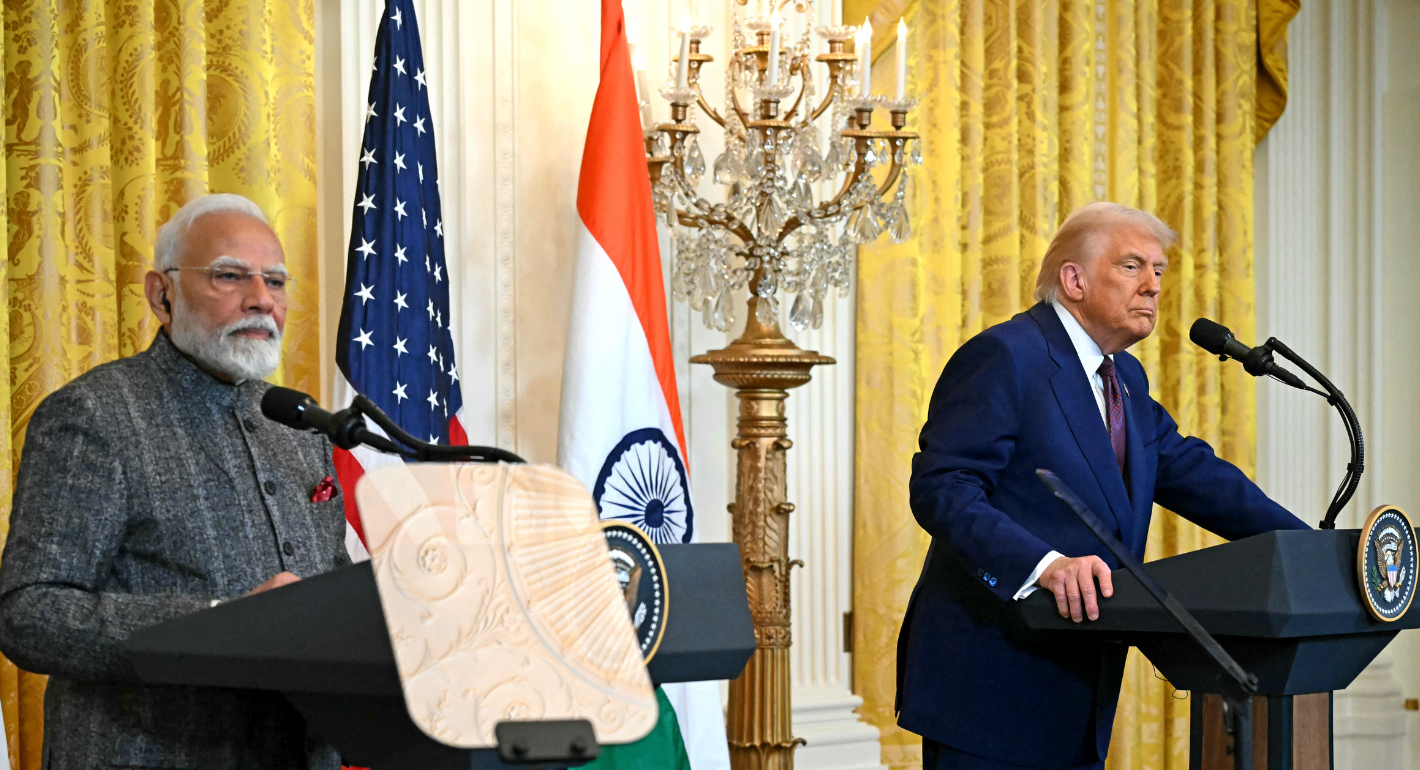
The India-U.S. relationship currently appears buffeted between three “Ts”—TRUST, Tariffs, and Trump.
Arun K. Singh