

Commentary
How is AI reshaping space security, creating governance challenges, and where does international diplomacy stand today?
Tejas Bharadwaj, Almudena Azcárate Ortega
{
  "authors": [
    "Deborah Gordon",
    "Steven M. Anderson Mr."
  ],
  "type": "legacyinthemedia",
  "centerAffiliationAll": "dc",
  "centers": [
    "Carnegie Endowment for International Peace"
  ],
  "collections": [],
  "englishNewsletterAll": "ctw",
  "nonEnglishNewsletterAll": "",
  "primaryCenter": "Carnegie Endowment for International Peace",
  "programAffiliation": "SCP",
  "programs": [
    "Sustainability, Climate, and Geopolitics"
  ],
  "projects": [
    "Carnegie Oil Initiative"
  ],
  "regions": [
    "North America",
    "United States"
  ],
  "topics": [
    "Climate Change"
  ]
}
Source: Getty
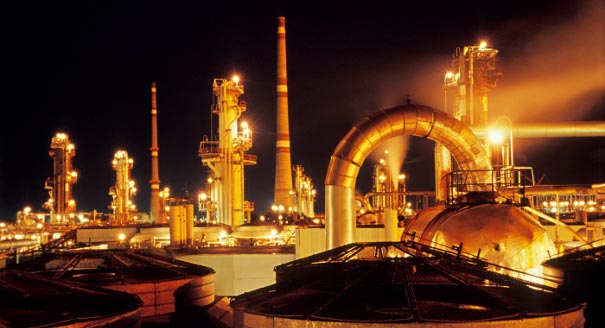
Cautious, deliberate guidelines based on up-to-date data and information are needed to manage the increasingly diverse assortment of unconventional oils.
Source: Hill

The deeper we drill down, the more apparent it becomes that new domestic oil supplies cannot guarantee U.S. geopolitical and economic security. What’s more, the heterogeneous assortment of oils, if pursued absent cautious, deliberate guidelines, could cause collateral damage.
New hydrocarbon resources that can be reached or transformed into oil raise the specter of climate security risks. There is precious little public information available about the vast pools of carbon contained in oil sands, oil shale, and other new oil supplies. At a time when the world is struggling to limit carbon emissions, prying open new carbon sources before we fully understand what they are and how to manage them could be a serious security miscalculation.
New oils are being produced from increasingly heavy, complex, isolated, and carbon-laden resources. These stores are often locked up deep in the earth, in remote and harsh environments, tightly trapped between or bound to sand, tar, and rock. They require increasingly capital-intensive infrastructure to extract, involve more intensive processing and additives, and yield more high carbon byproducts. The high carbon contents and unfavorable energy balances of many new oils impose high climate burdens.
Despite the political rhetoric in the United States about the science of climate change, it is a legitimate threat to U.S. national security.
Climate change is a threat multiplier that accelerates global conflict through droughts, desertification, floods, famines, and crop failures. Empirical evidence suggests that climate change can cause domestic and international disputes. Scientists have determined that long-term fluctuations of war frequently follow cycles of temperature change. According to United Nations Environment Programme, climate change exacerbates military conflict—instigating mass migration, armed insurrection, and a further destabilization of volatile regions.
Concerns of climate-driven conflict pose a real and present danger. As such, the higher the carbon burden of new oil, the higher the cost in terms of global security.
Policymakers have a responsibility to protect the public, bringing solutions to bear. The more new sources of oil deviate from conventional crude, the more citizens will rely on policymakers and industry to demystify oil resources and the risks they pose.
The solution rests in strategies that restructure both oil demand and oil supply. The realities of the global market make it clear that reducing oil demand—through increased efficiency, fuel diversification, and expanded travel choice—is an important step along the path to twenty-first century energy security. Every barrel of oil that we avoid consuming makes our economy stronger and less vulnerable to the volatility of the current marketplace.
But we also must adopt new rules for the new fuels that are entering the market. Left up to industry, the boomtown approach will likely prevail. The current information vacuum about the climate and other local impacts of North American oil gives industry an advantage.
Bridging information gaps and shedding light through up-to-date data on new oils will be key to managing them. The first step along this path is generating robust global data collection that is independently monitored and verified. As new facts surface about oil sources—chemically, geographically, technologically, and commercially—the need for unbiased information will be increasingly important.
Armed with information, the next step is to develop appropriate and durable policy guidelines that entail transparency, longevity, and consistency. Ultimately, new oil development will be highly responsive to prudent climate policies. But such policies do not currently exist. If anything, prevailing government policies worldwide have provided fiscal subsidies to accelerate the production of new oil, with limited regulatory oversight and no global leadership.
Without better policy, such as an emission fee on carbon, backed by robust, objective analysis, new oils will have a significant market advantage over low-carbon alternatives. One way to guarantee that investment decisions take climate change into account is to price carbon. Pricing carbon could go a long way to address energy security (demand reduction) and climate security (supply reduction).
The great irony is that while North American oil supplies cannot ensure domestic economic security, they may actually make global climate security worse. The less we depend on oil, the more knowledgeable we are about new oils, and the more robust the rules for managing new hydrocarbon supplies, the safer we’ll all be.

Former Director and Senior Fellow, Energy and Climate Program
Gordon was director of Carnegie’s Energy and Climate Program, where her research focuses on oil and climate change issues in North America and globally.
Steven M. Anderson, Mr.
Relyant
Carnegie India does not take institutional positions on public policy issues; the views represented herein are those of the author(s) and do not necessarily reflect the views of Carnegie, its staff, or its trustees.

How is AI reshaping space security, creating governance challenges, and where does international diplomacy stand today?


Tejas Bharadwaj, Almudena Azcárate Ortega

The U.S.–India semiconductor cooperation story is well-stocked with top-level strategic intent. What remains unresolved, however, are some underlying challenges that will determine whether the cooperation actually functions. Three such friction points stand out.

Shruti Mittal

India and the United States are close to concluding a Reciprocal Defense Procurement Agreement (RDPA) that will allow firms from the two countries to sell to each other’s defense establishments more easily. While this may not remedy the specific grievances both sides may have regarding larger bilateral issues, an RDPA could restore some momentum, following the trade deal announcement.

Konark Bhandari

On the last day of the India AI Impact Summit, India signed Pax Silica, a U.S.-led declaration seemingly focused on semiconductors. While India’s accession to the same was not entirely unforeseen, becoming a signatory nation this quickly was not on the cards either.
Konark Bhandari

This piece examines India’s response to U.S. sanctions and tariffs, specifically assessing the immediate market consequences, such as alterations in import costs, and the broader strategic implications for India’s energy security and foreign policy orientation.

Vrinda Sahai