• Research
  • About
  • Experts
Carnegie India logoCarnegie lettermark logo
{
  "authors": [
    "Alexey Malashenko"
  ],
  "type": "other",
  "centerAffiliationAll": "",
  "centers": [
    "Carnegie Endowment for International Peace",
    "Carnegie Russia Eurasia Center"
  ],
  "collections": [],
  "englishNewsletterAll": "",
  "nonEnglishNewsletterAll": "",
  "primaryCenter": "Carnegie Russia Eurasia Center",
  "programAffiliation": "",
  "programs": [],
  "projects": [
    "Eurasia in Transition"
  ],
  "regions": [
    "Central Asia",
    "Turkmenistan"
  ],
  "topics": []
}
Source: Getty

Other
Carnegie Russia Eurasia Center

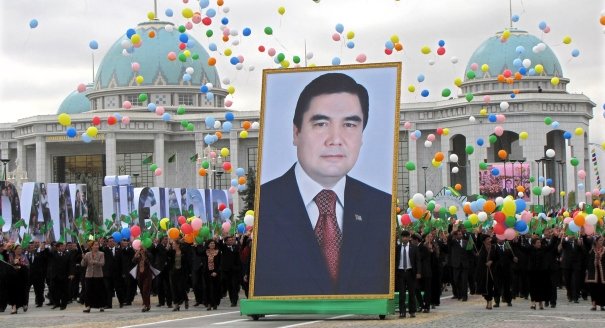
Turkmenistan: Has There Been a Thaw?

While the regime in Turkmenistan remains the most authoritarian of all Central Asian states, its stability depends on the availability of financial resources coming from the gas sales.

Link Copied
By Alexey Malashenko
Published on Sep 30, 2012
Project hero Image

Project

Eurasia in Transition

Learn More

In his new Briefing, Alexey Malashenko writes about the post-Soviet development of Turkmenistan, the current situation in this Central Asian country, and its prospects.
Key Conclusions:

  • In contrast to other CIS states, Turkmenistan is characterized by a tribal culture and the fact that under the first president, Saparmurat Niyazov, a totalitarian regime had been established there.
     
  • After a certain liberalization carried out under the second president, Gurbanguly Berdymukhamedov, the current regime still remains the most authoritarian of all Central Asian states. However, recent changes have led to the establishment of a multi-party system, the abolishment of Niyazov’s personality cult, and holding at least formally free elections.
     
  • Islam did not play a political role in Turkmenistan until the 1990s, when Niyazov attempted to monopolize religion in order to strengthen his own power. However, this tendency has faded away under Berdymukhamedov.
     
  • The country’s economy, regime stability, and success of its populist ideology depend on the availability of financial resources coming from the sales of gas. The aggravation of relations with Moscow in 2008 led Ashgabat to change the direction of its gas exports from the north to the east (China, India, and Pakistan) and south (Iran).
     
  • Opinions among experts on how long Berdymukhamedov will stay in power differ, yet most of them agree that society in Turkmenistan is not ready for mass protest.

About the Author

Alexey Malashenko

Former Scholar in Residence, Religion, Society, and Security Program

Malashenko is a former chair of the Carnegie Moscow Center’s Religion, Society, and Security Program.

    Recent Work

  • Commentary
    What Will Uzbekistan’s New President Do?

      Alexey Malashenko

  • Commentary
    Preserving the Calm in Russia’s Muslim Community

      Alexey Malashenko

Alexey Malashenko
Former Scholar in Residence, Religion, Society, and Security Program
Alexey Malashenko
Central AsiaTurkmenistan

Carnegie India does not take institutional positions on public policy issues; the views represented herein are those of the author(s) and do not necessarily reflect the views of Carnegie, its staff, or its trustees.
More Work from Carnegie India

  • Commentary
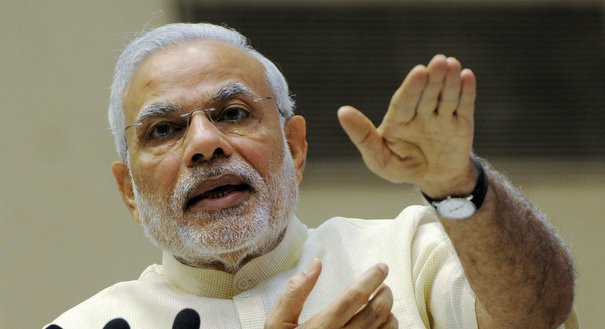
    A Passage to Inner Asia

    Modi’s trip to Central Asia is a welcome change in India’s relations in the area, but he will need a long-term strategy to overcome the constraints on India’s regional role.

      C. Raja Mohan

Get more news and analysis from
Carnegie India
Carnegie India logo, white
Unit C-4, 5, 6, EdenparkShaheed Jeet Singh MargNew Delhi – 110016, IndiaPhone: 011-40078687
  • Research
  • About
  • Experts
  • Projects
  • Events
  • Contact
  • Careers
  • Privacy
  • For Media
Get more news and analysis from
Carnegie India
© 2026 Carnegie Endowment for International Peace. All rights reserved.