

Other
François Godement, Ashley J. Tellis
{
  "authors": [
    "François Godement"
  ],
  "type": "legacyinthemedia",
  "centerAffiliationAll": "dc",
  "centers": [
    "Carnegie Endowment for International Peace",
    "Carnegie Europe",
    "Carnegie China"
  ],
  "collections": [
    "China’s Foreign Relations"
  ],
  "englishNewsletterAll": "asia",
  "nonEnglishNewsletterAll": "",
  "primaryCenter": "Carnegie China",
  "programAffiliation": "AP",
  "programs": [
    "Asia"
  ],
  "projects": [],
  "regions": [
    "East Asia",
    "China",
    "Western Europe",
    "France",
    "Asia",
    "Europe"
  ],
  "topics": [
    "Economy",
    "Trade",
    "Foreign Policy"
  ]
}
Source: Getty
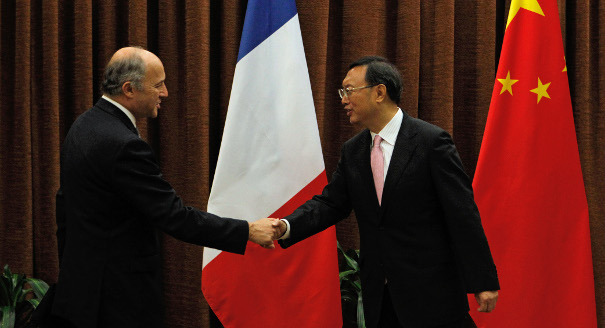
Redefining relations with China will require economic coordination with Europe, as France opens to Chinese investment while demanding more regulation and transparency from Beijing.
Source: RealClearWorld

Are these compelling reasons for France to court the People's Republic? Viewed from the perspective of the euro crisis, it is unrealistic to think that Chinese leaders will base their lending and investment decisions on the quality of their political relations with Europeans. Their nagging fear is the eventuality of losing the stash of cash that a quarter of a century of mercantilist policies have brought to China. Ultimately, for France, it is the prospect of a successful leadership and coordination role among European countries in the relationship towards China, the possibility to establish new links with other big emerging countries, and a constant openness to Chinese proposals, whenever they include implementation of international rules, which will lead to a successful China policy.
Engaging with China is a perilous exercise, which has put to the test successive French presidents. Valery Giscard d'Estaing dared to redefine France as a large medium power ("une grande puissance moyenne") in 1975. Chinese diplomacy skilfully kept alive the French hope for a privileged relationship with China, based on De Gaulle's recognition of the People's Republic in 1964. Jacques Chirac, an unabashed admirer of China as a "grande puissance", held the illusion of politically based trade - big business deals founded on good intergovernmental relations. His predecessor, François Mitterrand, had remained fairly indifferent to China; he was however unable to find a suitable trade policy or the international partnerships that would have enabled France to balance the relationship.
Two opposite stances have defined the terms of the debate for a China policy. The first one is adaptation, and eventually compliance, to China's requirements. The choice doesn't bear much relation with domestic politics: in the UK and Germany in fact, the conservative governments of Merkel and Cameron haven't been shy in their political criticism of China, while Schröder, Blair or Brown were much more inclined to praise Beijing. In private, many large European companies fret about China's increasing economic clout. But the fear of retaliatory measures is so great that no CEO dares to publicly share his/her concerns. German industry figures, who have captured a 50% share of European exports to China, are an occasional exception, as they do not practice this kind of self-censorship when their direct interests are at stake.
The other stance is about reassertion - and in some cases, openly voicing criticism. It is easier to practice this attitude from the benches of the opposition. Indeed, nothing should deter us from speaking about democracy and the rule of law in China. Chinese leaders occasionally maintain that these are empty lessons coming from an arrogant and exhausted West, but the truth is that they are sensitive to an evolution their own reformers believe to be inevitable.
Nicolas Sarkozy tried to forge a new path. He inherited Jacques Chirac's quest for big business deals mindset but widened the effort to India and Brazil - two major emerging economies and competitors of China. He tried to separate politics from economics, and the warnings he voiced during the violent events in Tibet in 2008 were not that different from the position adopted by France in 1989 during the Tiananmen crisis. On the economic front, Nicolas Sarkozy made two new choices: firstly, a necessary Europeanization of China policy (none of the EU member-states can afford any longer to go it alone), and secondly, an open attitude towards China on issues of global financial governance. Indeed, it is not realistic to ask China for major changes of behaviour on the one hand, yet to deny it more international leverage and standing on the other. All this included as well a measure of doublespeak: France has been pushing in Brussels for reciprocity on public markets and investments. But at the same time, it had already welcomed Chinese investments in its energy companies despite the sensitive issue of national sovereignty. In 2011 France has in fact become the first destination of Chinese investments in Europe.
France and Europe find themselves in a triangular relationship with the U.S and China. Washington has better tools than Brussels both to find the right opening to Chinese investments and to put the necessary safeguards in place. Building a Chinese policy requires an opening to its capital while at the same time engaging in a battle for more regulation and transparency. This may imply working towards a standardization of European legislations in several fields, going from railway infrastructure to banking legislation, which are of a disconcerting complexity to newcomers. In return, China should give up its tradition of state support for its firms on the global market, and start opening more widely its own companies to foreign alliances and cross-participation.
Europe and France will only be able to reclaim a position of strength if they demonstrate their ability to coordinate economically. From this perspective, the Franco-Chinese relation is a strategic case-study.

Former Nonresident Senior Fellow, Asia Program
Godement, an expert on Chinese and East Asian strategic and international affairs, was a nonresident senior fellow in the Asia Program at the Carnegie Endowment for International Peace.
Recent Work
François Godement, Ashley J. Tellis

François Godement, Abigaël Vasselier
Carnegie India does not take institutional positions on public policy issues; the views represented herein are those of the author(s) and do not necessarily reflect the views of Carnegie, its staff, or its trustees.

After the chill in ties between 2020 and 2024 that brought India–China relations to their lowest point in several decades, the two countries have engaged each other afresh. This paper argues that there are predominantly four imperatives guiding India’s approach to China, and they exist in an order of priority.

Saheb Singh Chadha

This piece argues that India’s central challenge is not managing a single flashpoint but resolving the underlying tension between expansion and institutional coherency of the BRICS grouping.

Vrinda Sahai
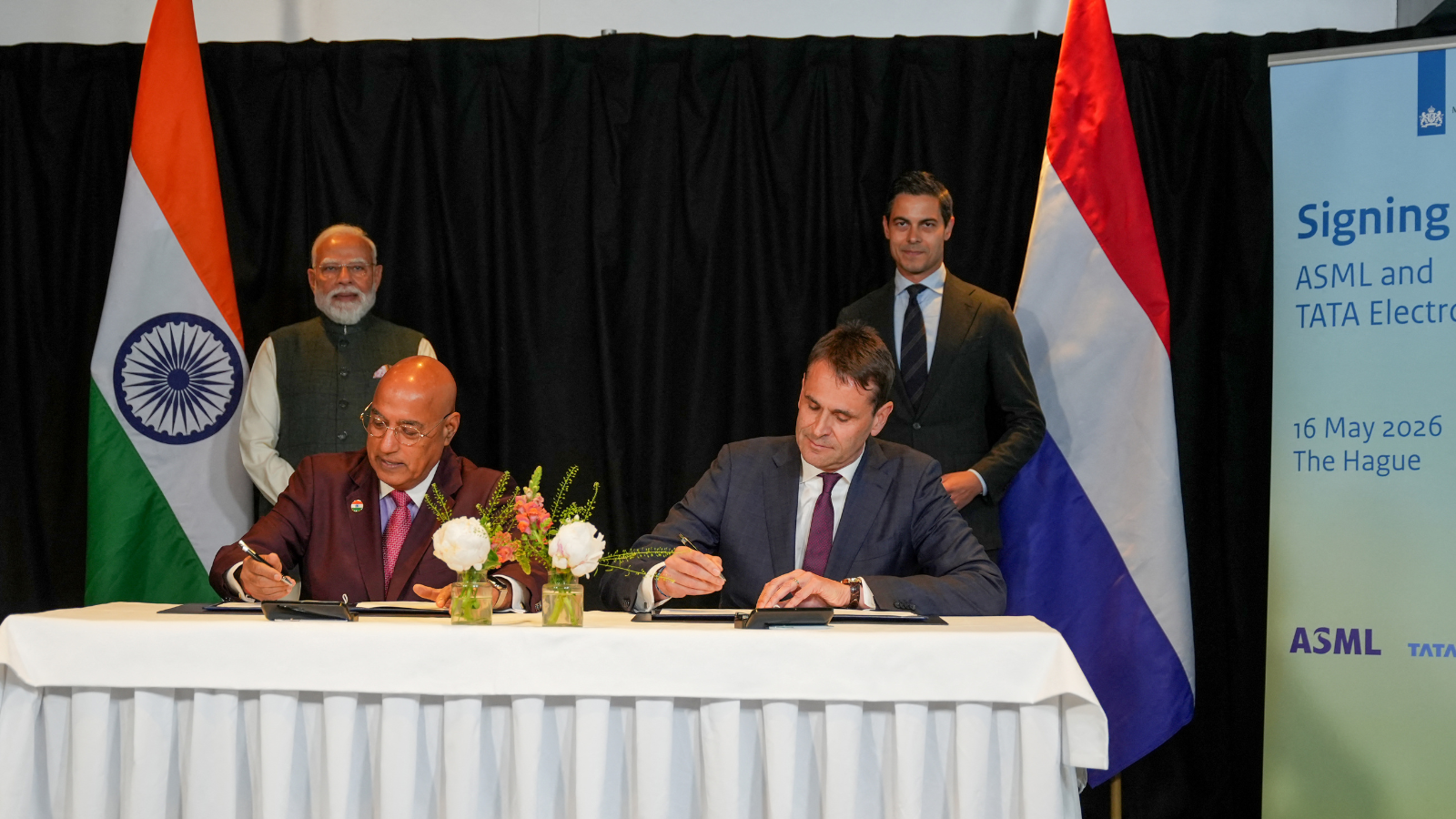
The ASML MoU with Tata Electronics is an indicator of how far the Indian semiconductor ecosystem has come. This ecosystem has been years in the making and represents real commercial logic.

Konark Bhandari

A partnership between India, a country of subcontinental size, and Africa, a continent of fifty-four countries, may seem asymmetric until one notes that both are home to nearly the same number of people—1.4 billion. This essay spells out the existing challenges to the partnership, its optimal potential, and the possible pathways to realize it over the next quarter-century.

Rajiv Bhatia

The India–EU Free Trade Agreement (FTA) is shaping up to be one of the most consequential trade negotiations, both economically and strategically. But, what’s in the agreement, what’s missing, and what will determine its success in the years ahead
Vrinda Sahai, Nicolas Köhler-Suzuki